Theopolis Logo

Writing

Explore our collection of theological essays, biblical studies, and reflections on faith and culture.

See all
communion
Biblical Horizons

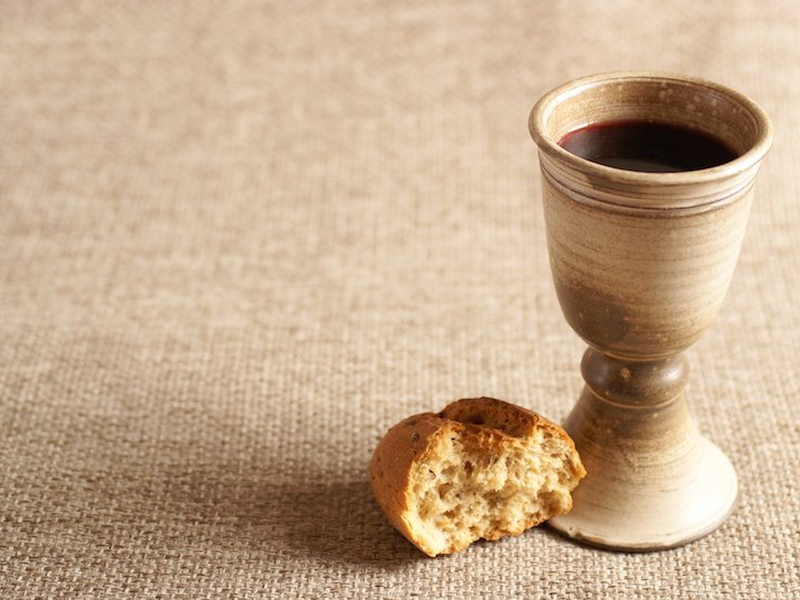
The Peril of Weekly Communion

A while back a friend told me that his church had finally introduced weekly communion. He told me that they were having an 8:00 a.m. service on Sundays for anyone who wanted to have communion. At present only about five people were coming to this service, but he was hopeful…

by James B. JordanDecember 5, 1993

priscilla-du-preez-x_jaypjskyi-unsplash-2
Deuteronomy

The Structure of Deuteronomy 12

According to James B. Jordan’s outline of Deuteronomy, the first commandment section runs from 6:1 to 11:32, and the second commandment section begins with 12:1. 1 That this division of the text is sound is confirmed by a comparison of 6:1 with 12:1. Deuteronomy 6:1 announces that "this is the…

by Peter LeithartNovember 20, 1993
screen-shot-2023-04-04-at-5-01-54-pm
Ezra

The Holy City

Calling Jerusalem the "holy city" comes so naturally to Christians that it comes as something of a surprise to realize how infrequently the phrase is used in Scripture. Not only is Jerusalem rarely called holy, but in the Old Testament this classification is found only in texts that refer to…

by Peter LeithartNovember 17, 1993
jelleke-vanooteghem-gnxb59lgu1m-unsplash
John

Born From Above

Nicodemus’s conversation with Jesus in John 3:1-15 is often regarded as an illustration of the tremendous stupidity of the Jews of our Lord’s day. Those who take the passage this way fail to recognize the profound nature of Nicodemus’s questions and of Jesus’ answers. In verse 3, Jesus tells Nicodemus…

by James B. JordanNovember 5, 1993
trnava-university-beeyeib-am8-unsplash
Deuteronomy

1994? — Not! (Part 3)

In his book 1994? , Harold Camping asserts that the life spans of the primeval patriarchs of Genesis 5 & 11 were actually epochs, one after another. This together with other mistakes in interpretation yields for him a creation date of 11013 B.C. From here, Camping tries to work out…

by James B. JordanNovember 5, 1993
tim-mossholder-arqiwcmola8-unsplash
1 Corinthians

The Woman’s Head Covering in 1 Corinthians 11:2-16

I have received a number of letters asking for my comments on this difficult passage. Here is my best shot! 2. Now I praise you because you remember me in everything, and hold firmly to the traditions, just as I delivered them to you. This statement opens a new section…

by James B. JordanOctober 5, 1993

Showing page 283 of 309

See all
See all

Necessity of Incarnation

Would the Son have been incarnate if Adam had not sinned? 1 Corinthians 15:44-45 provides a prooftext for an affirmative answer. Verse 44 says that the “spiritual body” is implied by the existence of the “natural body.” Human beings were created in a natural state, but they were destined from…

August 12, 2006
Philosophy

Decentered Self of Modernity

Bishop Joseph Butler of Durham worried about the consequences of Locke’s empiricism: “That personality is not a permanent, but a transcient thing: that it lives and dies, begins and ends continually: that no one can any more remain one and the same person two moments together, than two successive moments…

August 12, 2006
History

Embedded mind

Modernity ignores the social, linguistic, and political context of thought, and the way interest shapes the mind; postmodernity foregrounds all this. Perhaps, but . . . . Descartes said that his travels demonstrates that “all those who hold notions strongly contrary to our own are not for that reason barbarians…

August 12, 2006
History

Self and World

For premoderns - ancients and medievals - there was a homology between the self and the world. Man was seen as microcosm, and, as Seigel puts it, they believed that “the world, like the self, is structured so as to fulfill intelligible moral ends.” The initial shift in early modernity,…

August 12, 2006
Philosophy

Birth of the Modern Self?

Seigel views with “considerable skepticism” the notion that Descartes constructed “a general theory of the human self and subject on the basis of the cogito .” In his treatise on the Passions of the Soul , Descartes claimed that the soul was linked with the body, which acts on the…

August 12, 2006
History

Purity

According to Seigel, “Descartes’s view of reason as most pure and solid when it was free of corruption by the world’s confusions implied nothing less than the attempt to break free of all social and cultural experience.” Not for the first time, I wish there were an anthropological history of…

August 12, 2006

Showing page 1812 of 2212

Browse by Category

In Medias Res

Your weekly digest for all things Theopolis.

Donate

Theopolis is nearly 100% donor-supported. Consider joining us on our mission.