Theopolis Logo

Writing

Explore our collection of theological essays, biblical studies, and reflections on faith and culture.

See all
tanner-mardis-xuxghzhibn4-unsplash-1-2
Biblical Studies

Tweets-turned-Notes on the Bible’s Chronology

Summary In what follows, I will consider the “year-stamps” employed in Scripture, i.e., statements of the form, “Such-and-such an event took place in the Xth year of Y.” In the process, I will suggest some ways in which the Biblical narrative might relate to events in the extra-Biblical world, though…

by James BejonJuly 16, 2019
durer-prodigal-son-2
Luke

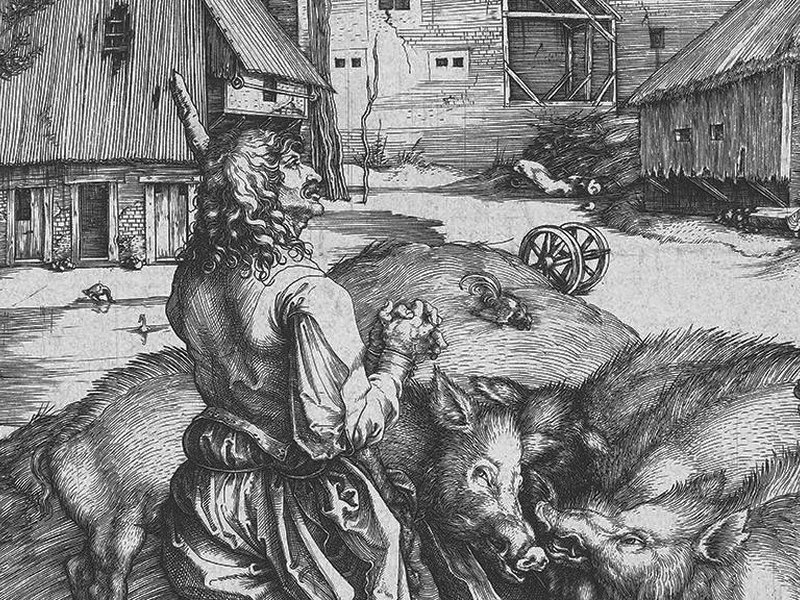
Perspectives on the Prodigal, (Part 2)

In the first essay on the parable of the Prodigal Son, I suggested that the problems commentators and others encounter in interpreting Jesus three-part parable are not accidental. These are not just problems in our ignorance of cultural background. They are intentional features of the stories —stories designed to poke…

by Ralph Allan SmithJuly 11, 2019
durer-prodigal-son-2
Luke

Perspectives on the Prodigal, (Part 1)

The story of the Prodigal Son is perhaps the most well-known story in the Bible. As others have observed, it may also be one of the most misunderstood. In two short essays, I will point out features of this story that are commonly neglected, aspects of Jesus’ parable that might…

by Ralph Allan SmithJuly 9, 2019
de-rijke-man-en-de-arme-lazarus-by-jacopo-da-ponte-16th-century
Luke

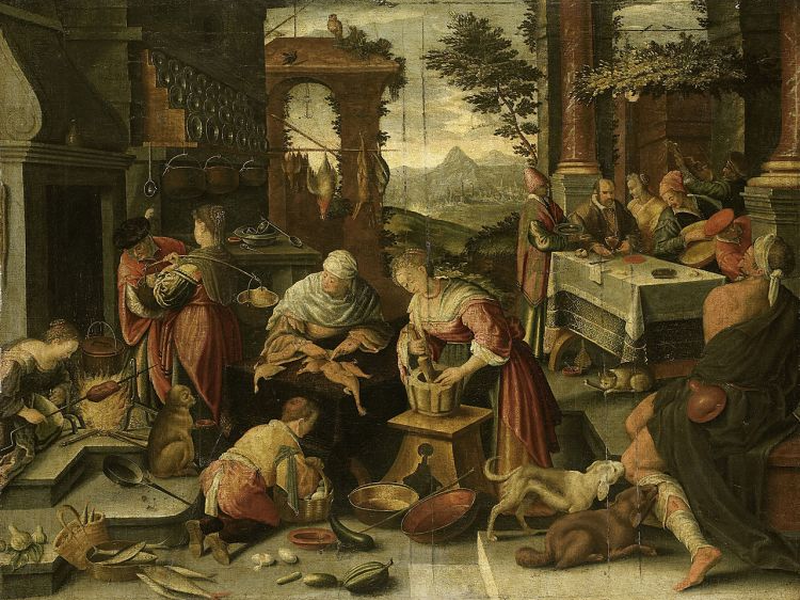
Lazarus and the Rich Man

The parable of Lazarus and the nameless rich man is not an independent story. It is part of a long context that begins in Luke 15:1, where Jesus is eating with tax collectors and sinners and the scribes and Pharisees grumble. In response to their hardheartedness, Jesus tells a three-part…

by Ralph Allan SmithJuly 4, 2019
aaron-burden-uynrnfdkjwg-unsplash
Luke

Everybody has Dropsy - Luke 14:1-24

The Bible is written so that even when a reader cannot pick up on what might be deeper or more detailed aspects of a text, there is virtually always a message to be heard. In the ancient world, where the “reader” of Scripture would likely be a church official facing…

by Ralph Allan SmithJuly 2, 2019
communion
Biblical Theology

Fruit Trees and Grain Plants

The distinction between garden (or vineyard) and field begins in Genesis 2. This relates to the ordering of the formless world. Plants of the field are contrasted with the garden planted by God in Genesis 2:5&8. Later on, under the Old Covenant the Israelites will be required to keep their…

by James B. JordanJune 27, 2019

Showing page 77 of 309

See all
See all

Mediated fellowship

1 John 1:1-3 describes how those who never saw, heard, or handled the incarnate word of life can come to have fellowship with the Father through Jesus. First, the apostles (“we”) witnessed the Word in flesh directly. Second, they proclaim that testimony. Third, through believing their testimony, we come to…

December 3, 2005

Feast of Booths

John Kleinig suggests that Luke’s account of the Transfiguration alludes to the feast of booths: Luke “alone of the Gospel writers relates that the transfiguration occurred on the eighth day after Peter’s confession of faith (Lk 9:28). The transfiguration was the epiphany of Jesus as God’s Son. It showed Peter,…

December 1, 2005
History

Modern heroism

Zygmunt Bauman, in the book mentioned above, traces the shifts in Western cultural imagination from the ancient hero through the Christian martyr, to the revival of the ancient heroic ideal in the early modern period, to our current cult of celebrity. According to Bauman, the modern hero was born “or…

November 29, 2005
History

Conservator

An etymology of “conservative” from the online Dictionary of the History of Ideas (http://etext.lib.virginia.edu/DicHist/dict.html): In Latin conservare means to protect, preserve, save; the noun of agency, conservator, appears as a synonym for the substantives custos, servator. Just as the Greek S?ter (“Savior”) was adopted from the religious realm by the…

November 29, 2005
History

Modern sacralization

Still on Bauman: “In most of its descriptions, modernity is presented as a time of secularization (‘everything sacred was profaned,’ as young Marx and Engels memorably put it) and disenchantment. What is less often mentioned, however, though it should be, is that modernity also deified and enchanted the ‘nation,’ the…

November 29, 2005
History

Desire and resistance

More on Bauman, since that last post was getting too long: Consumerism, we (especially Christians) tend to think, is driven by desire; if so, perhaps the solution is to limit or suppress desire. Bauman points out that the goal of consumer economies is to render desires irrelevant to consumption. Desires…

November 29, 2005

Showing page 1918 of 2212

Browse by Category

In Medias Res

Your weekly digest for all things Theopolis.

Donate

Theopolis is nearly 100% donor-supported. Consider joining us on our mission.