Theopolis Logo

Writing

Explore our collection of theological essays, biblical studies, and reflections on faith and culture.

See all
aaron-burden-qjdzyt_k8xg-unsplash
Biblical Horizons

Twelve Fundamental Avenues of Revelation, Part 2

Theophanic revelation is historically progressive, or eschatological, in character. First of all, in Genesis 1:2, the Spirit appeared inside the creation, sent by the Father. After the creation of man, the Spirit worked and works with humanity to bring us to maturity, from Daughter to Bride to fruitful Mother. He…

by James B. JordanFebruary 28, 1997

gang-coo-nt7tyrsofwk-unsplash
Biblical Studies

The Calf of the Purification Offering

On the eighth day of the rite of "filling the hand," Aaron began his service at the altar. His first offering was a "calf" (Heb. `egel ), which served as a purification offering for himself and (apparently) his household (Leviticus 9:2, 8). This is striking for a couple of reasons.…

by Peter LeithartFebruary 27, 1997
sergey-shmidt-koy6flccy5s-unsplash
Exodus

A Blossom of Yahweh’s Garden

One of the distinctive items of the high priest’s clothing was the "golden plate" inscribed with the words "Holy to Yahweh" (Exodus 28:36-38). The word translated as "plate" is tsits , which literally means "flower." The verbal and noun forms are both used in Numbers 17:8, which describes Aaron’s rod…

by Peter LeithartFebruary 27, 1997
davide-ragusa-slgtmf8ejye-unsplash
Biblical Horizons

Squaring Off and Crossing Up

The square, rectangle, and cross shapes appear all over the sanctuaries God reveals in the Bible: Tabernacle, Solomon’s Temple, Ezekiel’s Temple, New Jerusalem. One thing that can be said right away about these designs, and the occasional perfect circle (the lavers), is that they do not occur in nature. They…

by James B. JordanJanuary 28, 1997
schlanger_jonah_prison_090913_620px
Biblical Studies

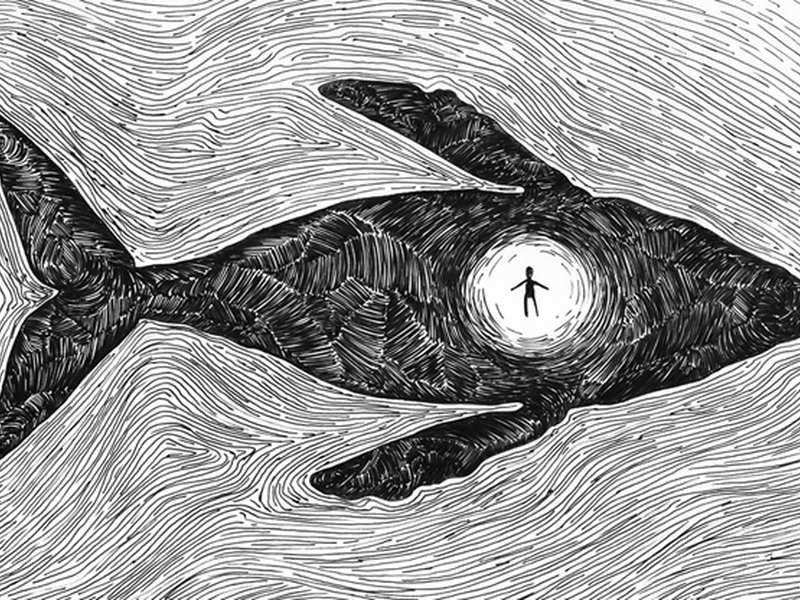
In the Fish: The Church as Tomb

"For just as Jonah was three days and three nights in the belly of the sea-monster, so will the Son of Man be three days and three nights in the heart of the earth" (Matthew 12:40). Some reflections on Jonah’s Big Fish have led to the following essay. Let me…

by James B. JordanJanuary 28, 1997
Hermeneutics

God Most High

Citing Melchizedek in Genesis 14:18-20, James Jordan has written that "the name of God in use among the nations was God Most High’" (Hebrew, `el `elyon ; in Through New Eyes , p. 176). In addition to Melchizedek, one could cite the example of Balaam, who invokes the Lord both…

by Peter LeithartJanuary 27, 1997

Showing page 260 of 309

See all
See all
Philosophy

Autonomy and Tragedy

Early in his Tragic Sense of Life , Unamuno captures the profound connection between autonomy and tragic character in a passage of hyperventilating passion: “The visible universe, the universe that is created by the instinct of self-preservation, becomes all to narrow for me. It is like a cramped cell, against…

December 10, 2003

Chiasm in Romans 3:19-31

There’s something chiastic going on in 3:19-31 (or maybe 2:25-3:30). A. by works of law no flesh shall be justified, 19-20 B. Apart from law, righteousness of God is revealed, 21 C. righteousness through faith in Jesus—> for all have sinned, 22-23 D. being justified as a gift through Jesus…

December 10, 2003
Literature

Spenserian Humor

A touch of Spenserian humor: Spenser has a witch create a false Florimell (Book 3) for her slothful and unattractive son, who is smitten with the beauty of the real Florimell. The witch uses materials from Petrarchan love sonnets to construct the lady ?Eactual lamps for eyes, actual golden wire…

December 9, 2003
Literature

Spenser and Milbank

Spenser might provide a Milbankian response to Milbank’s endorsement of homosexual sex and “threesomes.” In Book 3 of The Faerie Queene , Spenser’s heroine is Britomart, the lady knight who represents a militant chastity directed toward marital and sexual consummation rather than a fearful virginity that simply avoids sex. Britomart…

December 9, 2003
Literature

Hero and Eros

William Allan Oram in a book on Spenser writes that “one of the fruitful false etymologies of the Renaissance was the derivation of HERO from EROS: by this understanding, love does not hinder noble deeds but spurs them on.”

December 9, 2003
Literature

Shakespeare for Readers

Also in the November 7 TLS (belatedly on my desk) is a review of Lukas Erne’s Shakespeare as Literary Dramatist , in which Erne challenges the popularly accepted notion that Shakespeare was writing for viewers rather than readers. He shows that plays were being written for publication in Shakespeare’s time,…

December 9, 2003

Showing page 2154 of 2212

Browse by Category

In Medias Res

Your weekly digest for all things Theopolis.

Donate

Theopolis is nearly 100% donor-supported. Consider joining us on our mission.