Theopolis Logo

Writing

Explore our collection of theological essays, biblical studies, and reflections on faith and culture.

See all
aaron-burden-h8s0pf2rcqs-unsplash
Galatians

The Restoration of the Galatians

While controversies over the writings of Paul continue in various corners of the intellectual globe, the word of God given through Paul and his scribe and all of the church’s interpreters and translators over the last two millennia is still readily available to the lofty and the lowly. Paul, as…

by Grace LangnessMarch 25, 2013

kiwihug-l4gw27xzn1i-unsplash
Deuteronomy

Law and History: How to Read the Law of Moses (Part 2)

The second in a series of studies in Deuteronomy. Deuteronomy 22:30: A man shall not take his father’s wife, and shall not uncover his father’s wing (Hebrew: kanaf ). There are a number of unusual features in this law that mark it out from the previous context, indicating that it…

by Ralph Allan SmithMarch 20, 2013
200403-moss-pilate-tease_pncfq5
History

Victimhood and the Gospel

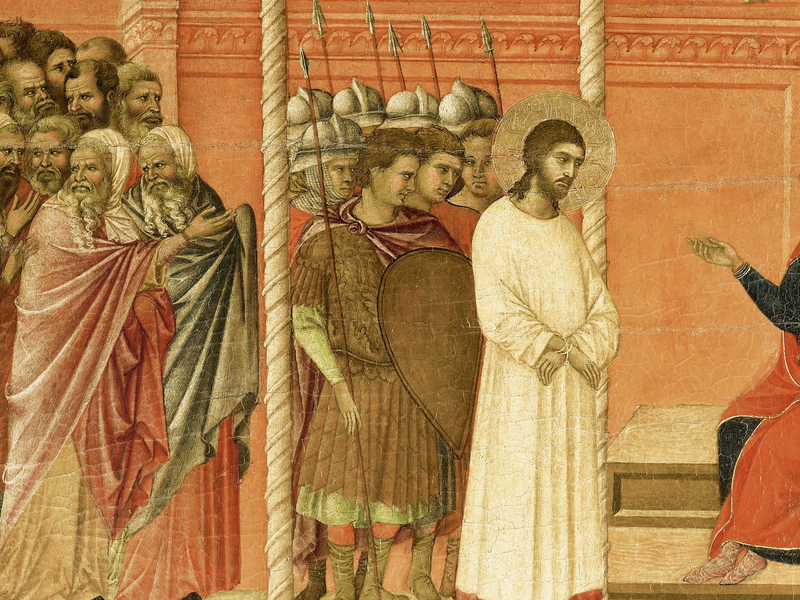
The texts of Christianity have been slowly at work, under the power of the Holy Spirit for 2000 years now. If we could be magically transported back into the world of two millennia ago, modern Americans would be shocked at the cruelty of that world. There was no concern for…

by Richard BledsoeMarch 18, 2013
aaron-burden-1ebsmyrau-s-unsplash
Luke

The Dysfunctional Family of the Gadarene Madman

The Story of the Gadarene Madman is told in all three synoptic Gospels (Matthew 8:28-34, Mark 5:1-20, Luke 8:26-37). Jesus ventures into a Gentile area when He passes over the Sea of Galilee. Upon disembarking from his boat, he is immediately met by a demon-possessed madman. Upon meeting Jesus, he…

by Richard BledsoeMarch 13, 2013
aaron-burden-1ebsmyrau-s-unsplash
Deuteronomy

Law and History: How to Read the Law of Moses

Part 1 of a multi-part series of studies on Deuteronomy 22:30-23:8. Eric Auerbach, in his classic work on Western literature, devotes his first chapter to contrasting Homer with the Bible. Of Homer, he writes of the “need of Homeric style to leave nothing which it mentions half in darkness and…

by Ralph Allan SmithMarch 12, 2013
markus-winkler-aid-xyrtlec-unsplash
Theopolis News

James Jordan in Korea, Japan

Trinity House Fellow James B. Jordan will be a speaker at an International Conference on Biblical Symbolism that will be held in Seoul on Monday, May 27 in 2013. He will address "The Importance of Biblical Symbolism and Symbolic Interpretation of the Bible." The conference will have three other speakers…

by Peter LeithartMarch 9, 2013

Showing page 197 of 309

See all
See all
Shakespeare

The Trap of Law

M arjorie Garber ( Shakespeare After All , 300–2) nicely captures the Pauline resonances of the trial scene in Merchant of Venice : “Shylock will provide a scale to weigh the pound of flesh, but not a surgeon to staunch the wound. He will, that is, provide the emblem of…

October 21, 2016

2 + 2 = Apples

I n a 1911 article on “The Ant Colony as Organism,” William Morton Wheeler argued that an ant colony was not only organism-like but an actual organism: “Like a cell or the person, it behaves as a unitary whole, maintaining its identity in space, resisting dissolution...neither a thing nor a…

October 21, 2016

Under Which Altar?

I an Boxall gets a lot right in his commentary on Revelation 6:9–11 (in his excellent The Revelation of Saint John , 113). He knows that the blood of a purification offering is poured out at the base of the altar, the very position where the souls of the martyrs…

October 21, 2016

View from Patmos

W riting in 1888, J. Theodore Bent described a visit to Patmos, during which he read the Apocalypse. One day, he recounted, “I stood by the sea looking south-west, I distinctly saw Thera, as it was anciently called, rising out of the sea. This island is now also called Thera…

October 21, 2016

Sons of the Right Hand

Bede ( Latin Commentaries on Revelation , 133-5) interprets the list of Israel's tribes in Revelation 7 by etymologizing the names. The list forms a sequence, from Judah to Benjamin. Judah means “confession or praise” and is placed first because “before the beginning of confession, no one attains the heights…

October 21, 2016

Notes on Usury

V iolent malice can be directed against God, the self, and the neighbor, Virgil tells Dante ( Inferno 11) as they huddle under the lid of one of the tombs in the sixth circle of hell. Virgil takes a moment to explain the moral theology that organizes hell. He explicates…

October 20, 2016

Showing page 241 of 2212

Browse by Category

In Medias Res

Your weekly digest for all things Theopolis.

Donate

Theopolis is nearly 100% donor-supported. Consider joining us on our mission.