Theopolis Logo

Writing

Explore our collection of theological essays, biblical studies, and reflections on faith and culture.

See all
31-03-0213
Hermeneutics

Apocalyptic Eyes

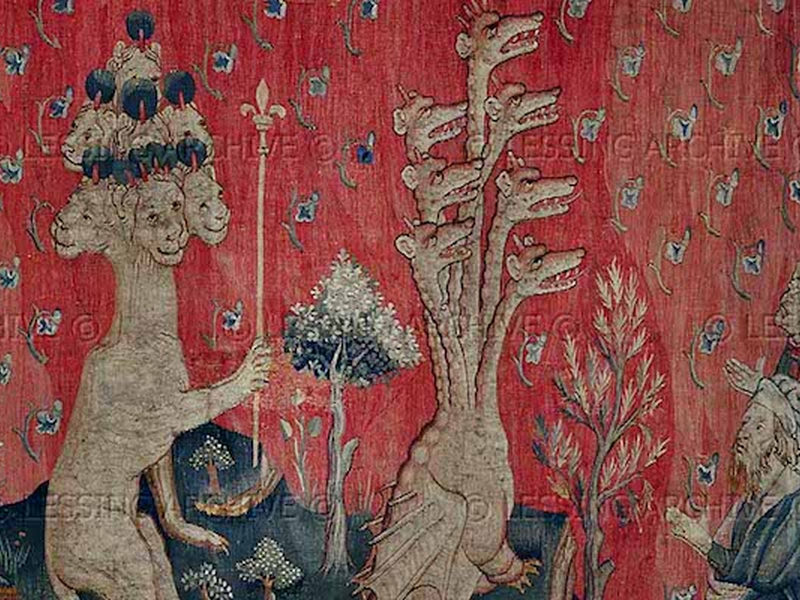
Flying scrolls. Red horses. Beasts coming out of the sea. Winged women. The list goes on. Apocalyptic literature in the Bible is like a cross between science fiction and Marvel comics. And the Bible has a fair bit of this sort of thing. Daniel sees visions in Babylon, Zechariah sees…

by Toby SumpterNovember 4, 2014

bhm-skyline-2
Theopolis News

New Name, New Look

Trinity House Institute has taken a new name, the Theopolis Institute. This striking new name expresses our unique vision and mission and captures the unified purpose behind all our specific programs and activities. We still have Bible, liturgy, and culture in our tagline. We still offer the same courses on…

by TheopolisNovember 4, 2014
istock_000012860926small
Atonement

Not Fearing the Devil

Adam Kotsko offers a socio-political variation on the Christus Victor atonement theory in his 2010 study, The Politics of Redemption: The Social Logic of Salvation . He does this by explaining "the devil" in terms of the Hegelian concept of "objective spirit," Geist . As Kotsko puts it, Geist "refers…

by Peter LeithartOctober 13, 2014
jez-timms-8muutamcwu4-unsplash
Leviticus

The Meaning of Sacrifice

Two factors keep Nahtali Meshel from discussing the meaning of sacrifice until late in his The "Grammar" of Sacrifice . The first has to do with the texts he draws from: "P says little about the meaning of its rituals" (174). The other has to do with the grammatical theory…

by Peter LeithartOctober 8, 2014
jez-timms-8muutamcwu4-unsplash
Leviticus

Praxemics

Chapter 5 of Naphtali Meshel's The "Grammar" of Sacrifice focuses on "praxemics," the physical actions of sacrificial ritual. Praxemes are constituted by six elements: an "atomact," an elementary physical act or gesture; an actor; an object that is acted up; a target for the action and often for the object…

by Peter LeithartOctober 6, 2014
markus-winkler-aid-xyrtlec-unsplash
Leviticus

Jugation and Hierarchy

Two chapters of Naphtali Meshel’s The “Grammar” of Sacrifice cover what he calls “jugation” and “hierarchies.” The first involves the addition of other materials to an animal offering. Jugates include wine, cereal, and oil that are added to the animals (zoemes) that are offered in sacrifice. Some jugates are coordinated…

by Peter LeithartOctober 1, 2014

Showing page 167 of 309

See all
See all
Liberalism

The Limits of Subsidiarity

D.C. Schindler ( Communio , 2013, 600-1) argues that the Catholic appeal to subsidiarity isn't adequate on its own to meet the challenge of totalitarian liberalism. Subsidiarity assumes “a strong conception of what are referred to as ‘intermediate communities,' such as the family.” The problem that Schindler discerns is that…

September 9, 2016
Liberalism

Liberalism's Immodesty

Liberal polities claim to lack competency in religious matters, and so they leave them to private choice. It sounds modest. It isn't. If it were truly modest about its incompetency, it would seek guidance from the competent - that is, from religious organizations that can guide the state in deciding,…

September 9, 2016

Inside Out

A ll the rites of Israel’s sacrificial system move from outside in. When a priest offers a purification offering for himself or for all the people, he slaughters the animal in the courtyard before bringing its blood into the holy place (Leviticus 4). When the high priest performs the rites…

September 8, 2016

Hrothgar, Heorot, and Threats to Heroism

B eowulf revolves around three battles between the hero and threatening monsters—Grendel, Grendel's mother, and a dragon. The central focus of the first two fights is Heorot, the mead-hall of Hrothgar, king of Denmark. The mead-hall is the focus of a complex of imagery. As in the Odyssey and Macbeth…

September 8, 2016

Lest You Dash Your Feet

I n Matthew 4, the devil takes Jesus to the pinnacle of the temple and demands that he throw himself down, trusting His Father to send angels to keep Him from dashing His foot against a stone. Jesus replies by quoting Deuteronomy 6:16: “You shall not put the Lord your…

September 7, 2016

Entering the Oikoumene

I n his commentary on Hebrews , William Lane disputes the common view that Hebrews 1:6 refers to the incarnation when it says that God brought the “firstborn into the world.” The Greek word behind “world” is oikoumene , which, Lane argues, typically refers to “habitable land, in contrast to…

September 6, 2016

Showing page 256 of 2212

Browse by Category

In Medias Res

Your weekly digest for all things Theopolis.

Donate

Theopolis is nearly 100% donor-supported. Consider joining us on our mission.