Theopolis Logo

Writing

Explore our collection of theological essays, biblical studies, and reflections on faith and culture.

See all
sinitta-leunen-dvibhmzsy8e-unsplash
Epistemology

A Cheer for the Mystics

Mystical theologians are often unguarded, extreme, un-nuanced, pressing to the edges of heresy, sometimes beyond. Still, the mystics are worthy of study. Why? Many reasons. Unlike some late medieval and post-Reformation dogmaticians, mystical theologians are often instinctively and richly Trinitarian. Historical-critical approaches to Scripture left mystical theologians virtually untouched; mystics…

by Peter LeithartSeptember 2, 2013
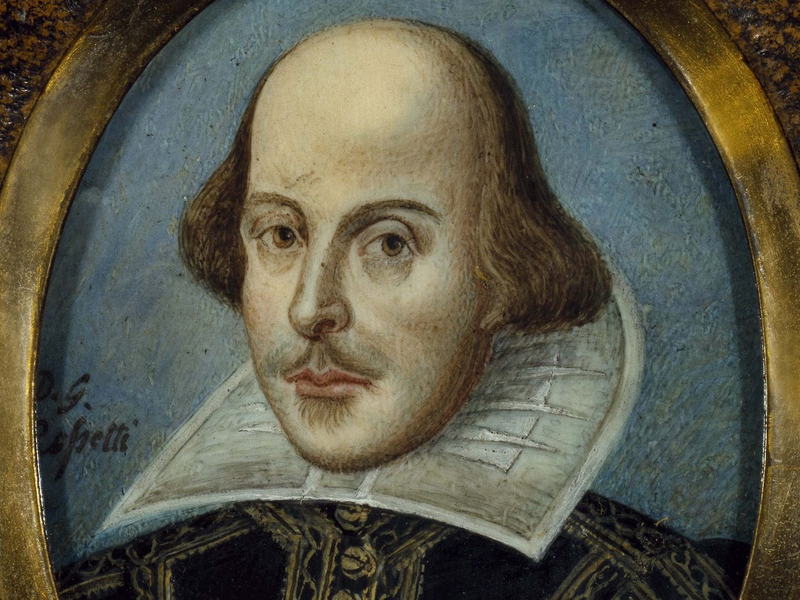
portrait-of-william-shakespeare-1564-1616-ca-1865
Literature

Shadow and Substance in Shakespeare's Venice

Portia of Belmont is a “lady richly left,” as Bassanio says of her in the first Act of The Merchant of Venice . Plus, she’s beautiful and wise. Suitors clamber to Belmont in hope. Her father knew it would be so, and in his will set up a fairy-tale test…

by Peter LeithartAugust 28, 2013
carlo-alberto-burato-smdx3gleu_m-unsplash
Liturgy

Liturgy Traps

[fve]http://vimeo.com/72195198[/fve]

by James B. JordanAugust 26, 2013
screen-shot-2022-05-12-at-12-07-23-pm
Deuteronomy

Victory Food

In the nature of the case, “the” Christian meditation on Deuteronomy 14:1-21 cannot be written. Meditation offers too many possibilities, opens too many doors. There is not one and only one correct set of associations for a Christian to consider when thinking of Deuteronomy 14:1-21. We could, for example, consider…

by Ralph Allan SmithAugust 21, 2013
aaron-burden-1ebsmyrau-s-unsplash
Romans

David's Sin and Israel's Salvation, Part I

Having retold the story of the cumulative sin of Israel leading to the great atonement on the cross, Paul then reemphasizes that, just as both Jew and Gentiles were locked into sin and judgment, now they are both justified by faith: Then what becomes of our boasting? It is excluded.…

by Mark HorneAugust 20, 2013
ben-white-w8qqn1pmqh0-unsplash
Deuteronomy

You are what you eat

Deuteronomy 14 is full of allusions to events of Israel’s history and other portions of Scripture. What would an Israelite learn by mediation on these allusions? The answer, I believe, is at least fourfold. Faith, Worship, War For the ancient Israelite first hearing Moses’ sermon, or perhaps hearing it read…

by Ralph Allan SmithAugust 15, 2013

Showing page 189 of 309

See all
See all
Liberalism

The Limits of Subsidiarity

D.C. Schindler ( Communio , 2013, 600-1) argues that the Catholic appeal to subsidiarity isn't adequate on its own to meet the challenge of totalitarian liberalism. Subsidiarity assumes “a strong conception of what are referred to as ‘intermediate communities,' such as the family.” The problem that Schindler discerns is that…

September 9, 2016
Liberalism

Liberalism's Immodesty

Liberal polities claim to lack competency in religious matters, and so they leave them to private choice. It sounds modest. It isn't. If it were truly modest about its incompetency, it would seek guidance from the competent - that is, from religious organizations that can guide the state in deciding,…

September 9, 2016

Inside Out

A ll the rites of Israel’s sacrificial system move from outside in. When a priest offers a purification offering for himself or for all the people, he slaughters the animal in the courtyard before bringing its blood into the holy place (Leviticus 4). When the high priest performs the rites…

September 8, 2016

Hrothgar, Heorot, and Threats to Heroism

B eowulf revolves around three battles between the hero and threatening monsters—Grendel, Grendel's mother, and a dragon. The central focus of the first two fights is Heorot, the mead-hall of Hrothgar, king of Denmark. The mead-hall is the focus of a complex of imagery. As in the Odyssey and Macbeth…

September 8, 2016

Lest You Dash Your Feet

I n Matthew 4, the devil takes Jesus to the pinnacle of the temple and demands that he throw himself down, trusting His Father to send angels to keep Him from dashing His foot against a stone. Jesus replies by quoting Deuteronomy 6:16: “You shall not put the Lord your…

September 7, 2016

Entering the Oikoumene

I n his commentary on Hebrews , William Lane disputes the common view that Hebrews 1:6 refers to the incarnation when it says that God brought the “firstborn into the world.” The Greek word behind “world” is oikoumene , which, Lane argues, typically refers to “habitable land, in contrast to…

September 6, 2016

Showing page 256 of 2212

Browse by Category

In Medias Res

Your weekly digest for all things Theopolis.

Donate

Theopolis is nearly 100% donor-supported. Consider joining us on our mission.