Theopolis Logo

Writing

Explore our collection of theological essays, biblical studies, and reflections on faith and culture.

See all
kiwihug-l4gw27xzn1i-unsplash
Hermeneutics

Beginning and New Beginning in Luke

Although the events are, of course, not perfectly parallel, Luke in his gospel intends us to connect Jesus’ birth from the womb and His re-birth from the tomb. Luke 1:27 introduces us to Joseph and in verse 30 we learn that his betrothed wife was named Mary. An angel appeared…

by James B. JordanDecember 28, 1996
screenshot-2023-08-30-at-11-50-23-am
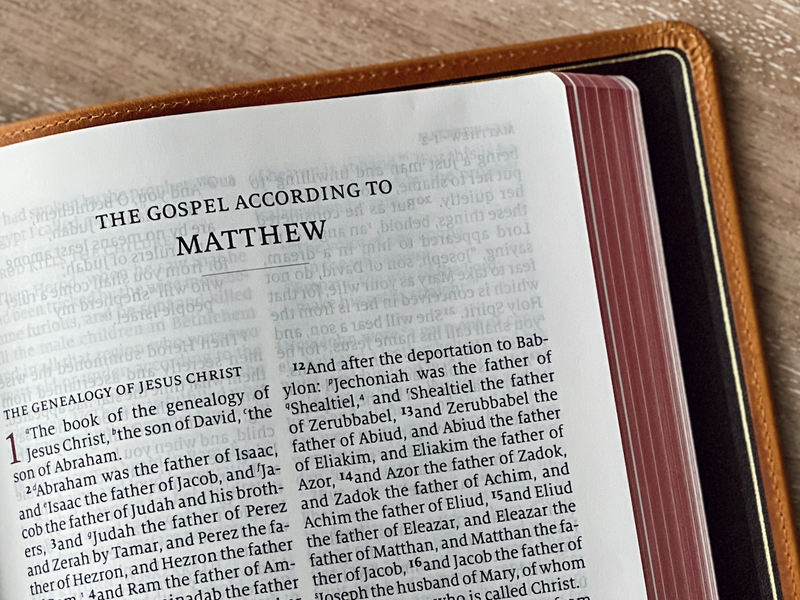
Matthew

A Note on Matthew

The apostle Matthew is also known as Levi son of Alphaeus. While not much is said about this man, the few things that are told us are significant. Matthew in Greek is Matthaios and comes from the Hebrew name Mattithiah, or Mattith-Yah, "Gift of Yah(weh)." Matthew’s other name is Levi,…

by James B. JordanDecember 28, 1996

aaron-burden-qjdzyt_k8xg-unsplash
Biblical Horizons

Twelve Fundamental Avenues of Revelation (Part 1)

Theologians often speak of "special" and "general" revelation, or of "natural" and "supernatural" revelation, or of "word" and "deed" revelation. While there are many worthwhile insights in these discussions, particularly in the discussions in Cornelius Van Til’s Introduction to Systematic Theology , I have not found any that satisfied my…

by James B. JordanDecember 28, 1996
jan-kahanek-g3o5ztrk2e4-unsplash
Ezekiel

Countdown to Exile IV: Ezekiel and the Structure of History

Ezekiel’s 430 Years In Ezekiel 4, the prophet is told to begin his ministry by setting up a model of Jerusalem and lying on his side and prophesying against it. He is to do this for 430 days, a day for a year. 390 days are against "Israel," and 40…

by James B. JordanDecember 28, 1996

img_7664
Biblical Horizons

The Oddness of the Feast of Booths

The Feast of Ingathering in the seventh month of the Sinaitic calendar is also called the Feast of Sukkoth, of Booths, also called Feast of Tabernacles. I have usually called it by that last phrase, and it is the most common today; but there is a problem: A tabernacle is…

by James B. JordanDecember 28, 1996

sixteen-miles-out-ki3hr9t8t7a-unsplash
Ezekiel

Countdown to Exile III: Warnings Against False Hopes

The End of Jehoiakim’s Reign We have seen that Jehoiakim rejected Jeremiah’s prophetic warnings at the beginning of his reign. Let us now make a year-by-year survey of his reign down to its end. In the spring of 605 BC, Nebuchadnezzar defeated the Egyptians at Carchemish. In the summer, he…

by James B. JordanNovember 28, 1996

Showing page 261 of 309

See all
See all

Classifying God

The “do Muslims and Christians worship the same God?” controversy surges on, reported most recently in the Economist . It's worth revisiting. In an earlier post, I charged that the claim that Muslims and Christians worship the same God (what I will call the “identity theory”) implicitly denies a central…

January 15, 2016

Empire with the Soul of a Church

In an article on Revelation, J. Daryl Charles observes that the Roman Empire “had brought about the ‘solution' - ‘salvation' for the human race - and was thus worthy of popular adoration. Empire-adoration necessitated a personal symbol which the ancient city-state could not generate. In the Imperial cult resided the…

January 15, 2016

Spaces of Apocalyptic

In his packed little book, Theology and the Spaces of Apocalyptic , Cyril O'Regan observes that “there seems to be a binary opposition in the modern world between apocalyptic and the discipline of theology” (15). Heterodox apocalyptic is everywhere, in Milton and Blake and Romanticism, among Hegelians, especially those on…

January 15, 2016

The Great City

G. Biguzzi asks whether the city “Babylon” (Revelation 17-18) represents Rome or Jerusalem. The first option was presented early, by Victorinus. He “(i) gives the circumlocution, ‘city of Rome,' as toe equivalent of Babylon: . . . ruina Babylonis, id est civitatis Romanae, (ii) identifies the seven mountains of Rev…

January 14, 2016

Anagogy in Modernity

Medieval biblical scholars read Scripture through the lens of the quadriga, fourfold sense of Scripture. Texts had a literal sense, an allegorical or Christological sense, a tropological or moral sense, and an anagogical sense. In his recent study of de Lubac, Between Apocalypse and Eschaton , Joseph Flipper focuses on…

January 14, 2016

How To Write An Introduction

Here's some seasoned advice to young scholars on how to write an introduction. 1. Write the book first. You don't know what the book is about until you finish it, and you can't introduce what you don't know. This may seem backwards, but it is inevitable, because a thing is…

January 14, 2016

Showing page 332 of 2212

Browse by Category

In Medias Res

Your weekly digest for all things Theopolis.

Donate

Theopolis is nearly 100% donor-supported. Consider joining us on our mission.