Theopolis Logo

Writing

Explore our collection of theological essays, biblical studies, and reflections on faith and culture.

See all
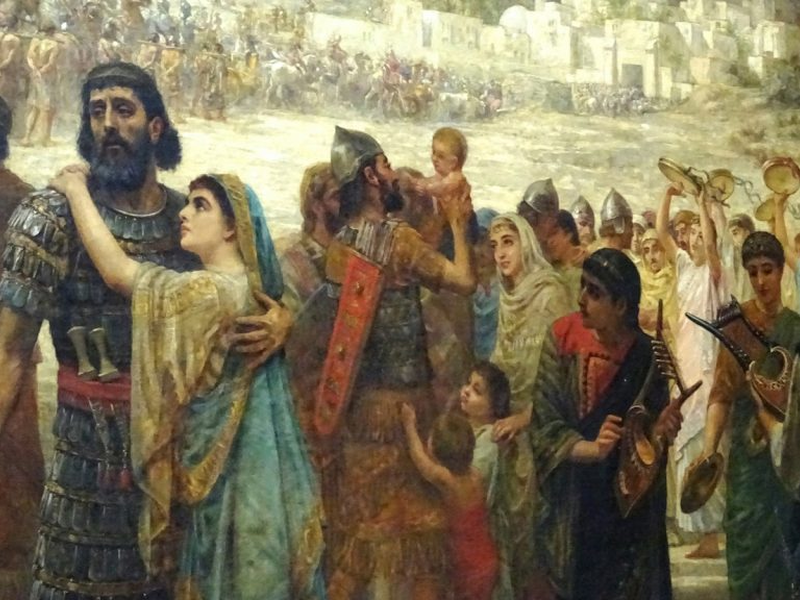
jephthahs-vow-by-edwin-long
Judges

The Jephthah-Jesus Connection

Why there is more to Jephthah than meets than eye It was not that long ago that I realized the Jephthah-story and the Jesus-story were basically the same story. Sounds crazy, I know. But here is a one-paragraph synopsis of both: The people of God have gone their own way,…

by Eric RobinsonDecember 27, 2018
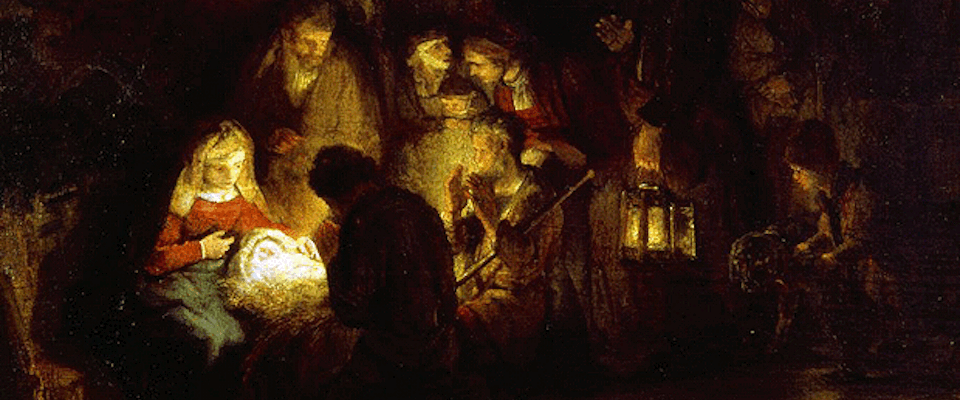
nativity-2
Advent

Jesus Rejoiced

G.K. Chesterton famously said that the Gospels don’t reveal Jesus’ mirth. It’s true we never catch Jesus laughing. But can we believe He never did? I don’t think so. Laughter is human, and Jesus was fully human. Jesus promised that those who mourned would laugh. He mourned; would He not…

by Peter LeithartDecember 25, 2018
74686
Advent

New Exodus

Matthew 2 has all the elements of an exodus story. There’s a murderous king, who slaughters Jewish babies. There’s a infant who will be Israel’s future deliverer, saved from the murderous king so He can later return to save His people and lead them to the Promised land. There’s an…

by Peter LeithartDecember 20, 2018
tpc-worship
Church Calendar

Is the Church Calendar Desirable?

The calendar of Israel was primarily theological, centered on commemorating the salvific acts of God, but also agricultural, celebrating the creation-restoring effects of those salvific acts. The feasts of the first month celebrated the reviving of the world in the Spring, and typified the cutting off of the Savior in…

by James B. JordanDecember 18, 2018
hebrew-manuscript-2
Chiasm

Chiasms and Life

The chiastic shape corresponds to the shape of human life. This should not surprise us, because we are made in the image of God, and God is manifest in Word and Spirit. If we are living epistles, our lives will look a bit like the literary shape of the books…

by James B. JordanDecember 14, 2018
sailing-shop-storm-crop
Biblical Theology

Boat Stories

Back in January, Venkatesh Rao wrote a fascinating post on the Ribbonfarm blog, discussing different forms of models of narrative. Engaging with Ursula LeGuin’s talk ‘The Carrier Bag Theory of Fiction’ , Rao explores her contrast between the (male) ‘hero narrative’ and the (female) ‘carrier-bag story’, and suggests a third…

by Alastair RobertsDecember 11, 2018

Showing page 83 of 309

See all

Showing page 5 of 43

See all

Jesus’ silence

During his trial, Jesus is frequently, remarkably silent. This is particularly striking in John, where Jesus has been identified as the eternal Word of the Father. But when Jew and Gentile combine to put the Word of the Father in the dock, the Word says nothing. Is there here perhaps…

March 6, 2007

Sermon notes, Third Sunday of Lent

INTRODUCTION Scripture demands that we honor our fathers and mothers, the past of our family. But families only exist because of a break with the past. To form a family, a man and woman leave their families and cleave to one another to form a new family for the future.…

March 5, 2007

Exodus to light

John 9 tells an exodus story: The man born blind crosses through water, from darkness to light. Perhaps this is also a Jordan crossing, because as soon as he passes through the water he is involved in warfare with the Jews. But there’s another liminal moment in the story: Having…

March 5, 2007

Infant baptism

The man born blind in John 9 is reborn by clay, spittle, and a bath in Siloam. He is so transformed that people don’t know if he’s the same man (v. 9). At this point, he barely knows who Jesus is. Pressured by the Pharisees, he confesses Jesus as a…

March 5, 2007

Eucharistic meditation, Second Sunday of Lent

Luke 22:18-19: Jesus said, I say to you, I will not drink of the fruit of the vine from now on until the kingdom of God comes. And when he had taken some of the bread and given thanks, He broke it and gave it to them, saying, This is…

March 4, 2007
Theology

Exhortation, Second Sunday of Lent

Churches, families, and nations have memories, just as much as individuals. But while individual memory tends to be more or less automatic unless there is some physiological problem, group memories need to be cultivated. Over the course of generations, groups don’t maintain their memory without conscious effort. Groups maintain memories…

March 4, 2007

Showing page 1709 of 2212

Browse by Category

In Medias Res

Your weekly digest for all things Theopolis.

Donate

Theopolis is nearly 100% donor-supported. Consider joining us on our mission.