Theopolis Logo

Writing

Explore our collection of theological essays, biblical studies, and reflections on faith and culture.

See all
e99a9334
Advent

Stretching Christmas

For many people Christmas comes on December 25 and is over December 26. The tree is taken down along with the lights and the other decorations, and everyone begins setting the house in order for the new year. No more Christmas hymns. No more celebrations (well, until New Year’s Eve).…

by Steve WilkinsDecember 24, 2016
ascension
Advent

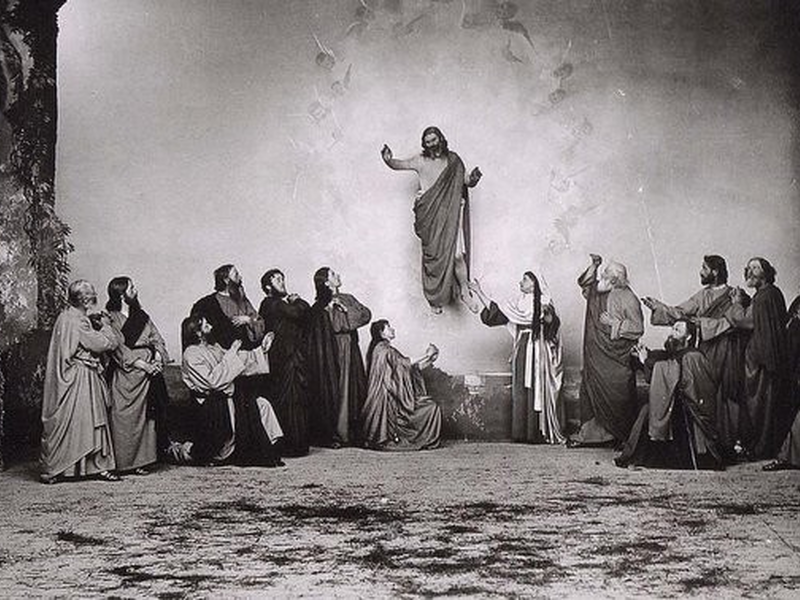
Ascension and Incarnation

The Ascension and the Incarnation should not be disconnected in our Christmas thinking or celebrations. As N.T. Wright notes, the ascension is "a central and vital feature without which all sorts of other things start to go demonstrably wrong. . . . where the ascension has been ignored or misunderstood,…

by Roy AtwoodDecember 23, 2016
nativity-rembrandt
Advent

Christmas Light

“In the Word was life, and the life was the light of men. And the light shines in the darkness.” Thus John describes the incarnation of the Son. He comes as the living and life-giving light of the world. That’s good news. In the beginning, God spoke and light shone…

by Peter LeithartDecember 23, 2016
nativity-chagall
Advent

The Spirit of Christmas

Christmas is all about Jesus. The angels announce Jesus’ birth, shepherds and wise men come to see Jesus, Herod wants to kill Jesus. We occasionally think of the Father who sent the Son, but we keep returning to the Son made flesh in Bethlehem’s manger. Meanwhile, as always, the Spirit…

by Peter LeithartDecember 22, 2016
nativity
Advent

The Humility of God

Christmas is about many things, but one of the chief things revealed in the gospel of Christmas is the humility of God. We don't often think of humility as an attribute of God. If God is glorious and exalted, we think, He must be haughty and proud and self-centered. We…

by Peter LeithartDecember 21, 2016
screenshot-2025-12-15-at-8-35-45-am
Advent

Advent of Unity

John famously begins his Gospel with a piece of theology: “In the beginning was the Word, and the Word was with God, and the Word was God.” Matthew starts with a genealogy. John celebrates Advent with a hymn, Matthew with a list. For John, Jesus is the Word of creation…

by Peter LeithartDecember 20, 2016

Showing page 120 of 309

See all

Showing page 5 of 43

See all

“The King”

2 Kings 16:12 describes Ahaz’s consecration of the altar built from the prototype in Damascus. Three times in that verse he is called “the king,” and in this designation, the author of Kings picks up the technique employed in 1 Kings 13 to describe Jeroboam’s consecration of the altar at…

April 20, 2006

Feminine temple

Psalm 144:12 asks that the Lord make “our daughters as corner pillars cut after the pattern of a palace.” “Pattern” is TABNIT, the noun used to describe the pattern that Moses sees on the mountain and later guides the building of the tabernacle. “Palace” is HEYKAL, the word used for…

April 20, 2006
History

Nature/Supernature, Gift and Grace

McGrath offers the following genealogy of the distinction of nature and supernature: Prior to the 12th century, theologians defined grace as a “gift of God” without distinguishing various kinds of gifts. But this left open the question of whether “all of God’s gifts” should be “identified as God’s grace.” Is…

April 20, 2006
History

Augustine Misunderstood

CS Lewis said that the courtly love tradition arose from “Ovid misunderstood.” Medieval soteriology might be said to have arisen from “Augustine misunderstood.” Everyone was Augustinian and no one wanted to be Pelagian, but Augustine’s actual teaching was confused by transmission problems both of his own works and of conciliar…

April 20, 2006

Faith = Jesus?

What happens to Paul’s doctrine of justification if “faith” in the phrase “justified by faith” is a name for Jesus, as it appears to be in Gal 3:23, 25, on analogy with the use of PISTOS as a name in Rev 19:11? Or, perhaps, if “faith” is shorthand for “faith…

April 20, 2006

Deeper justice

Cicero says, justice is rendering to each man his due, and Pelagius agrees. Paul says, justice is God’s giving ungodly sinners eternal life, and Augustine follows Paul. Remigius of Auxerre noted the contrast: “Mea iustitia est malum pro malo reddere. Tu solus iustus, quam circa nos ostendisti, reddens bonum pro…

April 20, 2006

Showing page 1853 of 2212

Browse by Category

In Medias Res

Your weekly digest for all things Theopolis.

Donate

Theopolis is nearly 100% donor-supported. Consider joining us on our mission.