
Theopolis Logo

Writing

Explore our collection of theological essays, biblical studies, and reflections on faith and culture.

See all
banner
Theopolis News

Theopolis Fellows Program Postponed

Since Theopolis began in 2013, we have been aiming for the fall of 2016 as the launch date for our year-long Fellows Program. As it turned out, we had only a handful of applicants, most withdrew for one reason or another (none for lack of interest), and we are left…

by Peter LeithartJuly 6, 2016
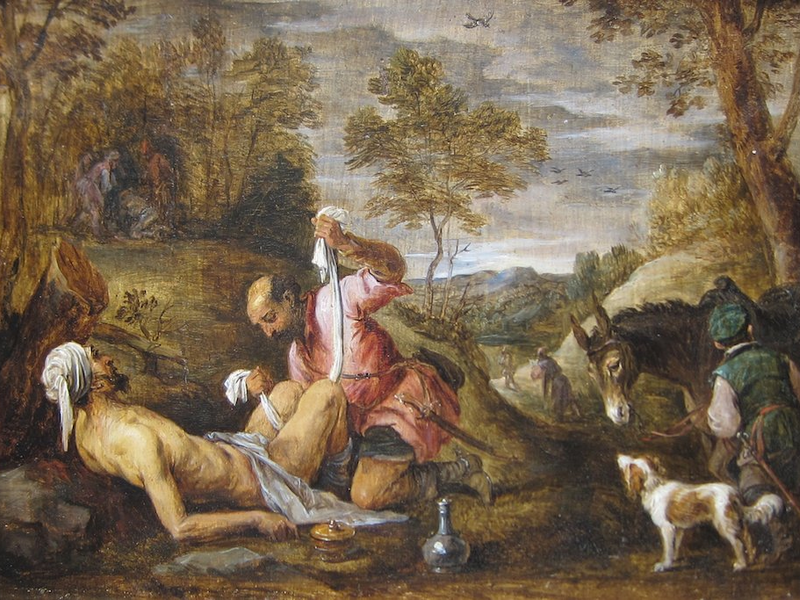
good-samaritan-2
Justice

Aiming at Shalom, (Part 1)

Charles Spurgeon once quipped, “If you give a man the gospel, wrap it in a sandwich. And if you give a man a sandwich, wrap it in the gospel.” With those words, the great Baptist preacher captured the essence of the church’s mission in the world. The church’s mission is…

by Rich LuskJuly 5, 2016
city-heaven
Contentment

Learning Contentment, (Part 2)

This is a continuation of a previous essay by Lindsey Tollefson . 6. We own everything . Sometimes the biggest thing that is keeping us discontent is because we are not happy with what we have been given in material possessions. Especially in the United States it is so easy…

by Lindsey TollefsonJune 30, 2016
medievalilluminatedmanuscript

Do Not Forget

Proverbs 3:1-12 form a section marked off by the reference to the father-son relationship at the beginning and end (vv. 1, 12). Within this section, Solomon gives a series of six commands to his son (vv. 1, 3, 5, 7, 9, 11), the first and the last (vv. 1, 11)…

by Peter LeithartJune 28, 2016
e99a1883
Theopolis News

Year-End Letter

A letter from Theopolis President Peter Leithart as our fiscal year draws to an end . Dear Friend of Theopolis: It was one of those moments when you realize that other people understand you better than you understand yourself. I was having lunch with a pastor friend at a BJ’s…

by TheopolisJune 27, 2016
sky-from-bridge
Contentment

Learning Contentment, (Part 1)

Learning to be content and completely satisfied in Christ is certainly a life-long process and a lesson that we are always learning, and always being tested on. As I am learning and wrestling against discontent, I am always looking for practical and tangible ways to set my course towards joy…

by Lindsey TollefsonJune 23, 2016

Showing page 129 of 309

See all

Showing page 5 of 43

See all

Conveniens

Bauerschmidt notes that Aquinas frequently argues, especially when speaking of the incarnation, not for “proof” of doctrine but for its “fittingness.” Reason has the role of “manifesting how [the incarnation] fits together (convenire means literally ‘to come together’) with other things that Christians hold true about God.” Perhaps this can…

March 23, 2006

Extra-Augustinisticum

In Epistle 137, Augustine writes: “The Christian teaching nowhere holds that God was so poured into human flesh as either to desert or lose - or to transfer and, as it were, compress within this frail body - the care of governing the universe. This is the thought of people…

March 23, 2006

Thomas on Merit

Commenting on ST I-II, q. 109, Frederick Bauerschmidt says that Thomas uses the word “merit” analogically when we speak of God rewarding human action “since we can act in the first place only because God has given us the capacity to act.” This applies even to Jesus: “even when Thomas…

March 23, 2006

On Seneca, de Beneficiis, Books 1-2

Seneca suggests that ingratitude is the worst of vices, and nothing is more “harmful to society” than ingratitude (I.1). Later in Book I, he lists a series of moral ills that plague society – “homicides, tyrants, thieves, adulterers, ravishers, sacrilegious, traitors” – but concludes that “worse than all these is…

March 23, 2006
Literature

Prospero the Magus

I am grateful to Ralph Smith for references to Frances Yates’ work on Shakespeare’s plays. In an analysis of The Tempest, Frances Yates writes: “It is inevitable and unavoidable in thinking of Prospero to bring in the name of John Dee, the great mathematical magus of whom Shakespeare must have…

March 22, 2006
History

Elizabethan Magic

Educated Elizabethans lived in a world of similitudes. As EMW Tillyard argued, the Elizabethan world picture was constituted by a series of analogous chains of being. The social world manifested and was manifested by the natural world; the universe as a whole resembled human beings; there was a hierarchy among…

March 22, 2006

Showing page 1867 of 2212

Browse by Category

In Medias Res

Your weekly digest for all things Theopolis.

Donate

Theopolis is nearly 100% donor-supported. Consider joining us on our mission.