
Theopolis Logo

Writing

Explore our collection of theological essays, biblical studies, and reflections on faith and culture.

See all
giammarco-zeh-ljawhtg-unsplash
Biblical Horizons

OPEN BOOK: Views and Reviews

Isaac E. Mozeson, The Word: The Dictionary that Reveals the Hebrew Sources of English (Northvale, NJ: Jacob Aaronson Inc., 1995), 310 pp. Reviewed by James B. Jordan. Once there was only one language in the world, the language God spoke to Adam. At the Tower of Babel, there came to…

by James B. JordanJune 28, 1996
tim-wildsmith-j6jv-mkdzqs-unsplash
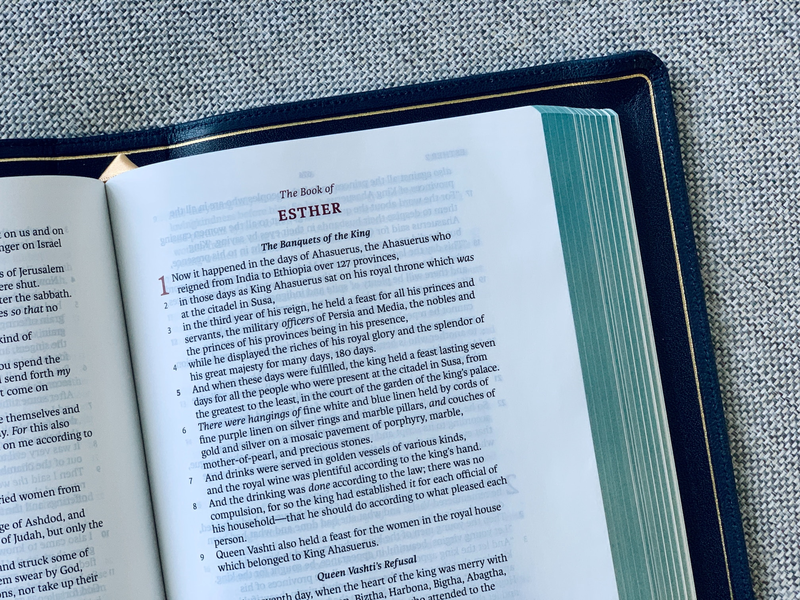
Esther

Esther: Historical & Chronological Comments (IV)

2. The Setting of the Book of Esther A. Xerxes (continued from previous issue) Ezra 6:14 says that the Jews finished building "according to the command of the God of Israel and the decree of Cyrus and Darius and Artaxerxes king of Persia." The problem with this verse is that…

by James B. JordanJune 28, 1996

ales-krivec-4mibe6zg5r0-unsplash
Acts

Jesus and Amalek

This essay goes with our previous study of the Amalek pattern back in Biblical Horizons No. 2. Since many do not have this essay, entitled "The Battle of Gog and Magog," let me cite the relevant paragraphs: Note in Genesis 12-15 that Abram moves into the land after escaping Pharaoh…

by James B. JordanJune 28, 1996

aaron-burden-1ebsmyrau-s-unsplash
Proverbs

The Strange Woman

Proverbs 7:6-23 is one of several passages early in the Proverbs in which Solomon warns his son about the wiles and dangers of the "strange woman." It is certainly quite proper to take these as straightforward warnings against sexual sins, and these are certainly warnings that need to be impressed…

by Peter LeithartJune 27, 1996
jan-kahanek-g3o5ztrk2e4-unsplash
Biblical Studies

Some Observations

1. In Luke 4:20 we read that after Jesus finished reading from Isaiah, "the eyes of all in the synagogue were fixed upon Him." This is usually taken in a psychological sense: They were amazed at Jesus somehow. I suggest that, as always, a merely psychological reading is a modern…

by James B. JordanMay 28, 1996
tim-wildsmith-j6jv-mkdzqs-unsplash
Esther

Esther: Historical & Chronological Comments (III)

2. The Setting of the Book of Esther Up to now we have assumed what we must prove, that the king in Esther is Darius the Great. While Biblical chronologists have usually taken this position, commentators on the book of Esther have often taken others as the king. One view,…

by James B. JordanMay 28, 1996

Showing page 265 of 309

See all

Showing page 5 of 43

See all

Exhortation, Third Epiphany

According to what has become the “traditional” interpretation of the Constitution, every American woman has the right to kill her unborn baby. Since the Roe v. Wade decision in January of 1973, over 45 million babies have been killed, and, though the abortion rate has slowed since 1990, more than…

January 22, 2006
Philosophy

Same and Other

Evaluating Levinas and his criticisms of Husserl, Derrida probes the coherence of Levinas’ notion of “infinitely other.” Contrary to Levinas, who argues that we are incorrectly seduced by everyday life to think of the other as an “alter ego,” Derrida says: “The other as alter ego signifies the other as…

January 21, 2006
Media

Art for Art

Adorno points out in an essay on television that “it would be romanticizing to assume that formlerly art was entirely pure, that the creative artist thought only in terms of the inner consistency of the artifact and not also of its effect upon the spectators. Theatrical art, in particular, cannot…

January 20, 2006

Sermons and such

Auden said, “In my opinion sermons should be a) fewer b) longer c) more theologically instructive and less exhortatory. I must confess that in my life I have very seldom heard a sermon from which I derived any real spiritual benefit. Most of them told me that I should love…

January 20, 2006

Totality and Dialogue

In “Violence and Metaphysics,” Derrida says that no “logos as absolute knowledge can comprehend the dialogue and the trajectory toward the other” because “the other is the other” and “all speech is for the other.” For Derrida, “A total logos still, in order to be logos, would have to let…

January 19, 2006
Philosophy

Eros and epistemology

For Aquinas, knowledge begins with knowledge of the effects of a thing. When faced with those effects, we naturally have a “desire to know about the cause what it is. This desire is one of wonder and causes inquiry.” The inquiry ceases when we arrive at knowledge of the essence…

January 19, 2006

Showing page 1896 of 2212

Browse by Category

In Medias Res

Your weekly digest for all things Theopolis.

Donate

Theopolis is nearly 100% donor-supported. Consider joining us on our mission.