
Theopolis Logo

Writing

Explore our collection of theological essays, biblical studies, and reflections on faith and culture.

See all
emmanuel-phaeton-1bwmfmvybi8-unsplash
Federal Vision

The Righteous Judge

God is a righteous judge, And a God who has indignation every day. If a man does not repent, He will sharpen His sword; He has bent His bow and made it ready (Psalm 7.11, 12). David’s inspired lyrics do not sound very encouraging to modern ears–especially to modern Christian…

by Mark HorneJune 7, 2003
screenshot-2024-06-07-at-11-46-17-am
Luke

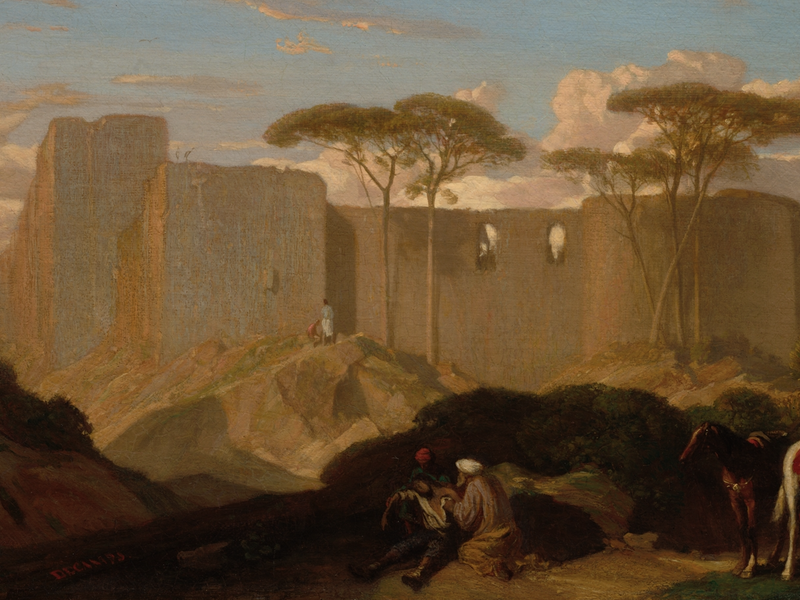
The Justification of the Good Samaritan

The story of the Good Samaritan (Lk. 10:25-37) is one of the best known and most loved of Jesus’ parables. I am not going to attempt to exegete the passage, as that has been done admirably and ably by others. Rather, I want to briefly examine what bearing the passage…

by Rich LuskJune 7, 2003
kelly-sikkema-gpoh17dxqdm-unsplash
1 Corinthians

The Grace of Judgment According to Works

In Romans 2.6-16, Paul writes, He will render to each one according to his works: to those who by patience in well-doing seek for glory and honor and immortality, he will give eternal life; but for those who are self-seeking and do not obey the truth, but obey unrighteousness, there…

by Mark HorneJune 7, 2003
karsten-wurth-imegmbunara-unsplash
Matthew

The Extra Mile: Matthew 5:38-42

It was still dark as David approached the crest of the little ridge. The eastern horizon was not even gray. It was early. But he knew this trail well. Every morning before dawn and every evening before dark, he would walk down to the well and carry water back to…

by Jeff MeyersJune 7, 2003
briana-tozour-mrfapsuyy8a-unsplash
Romans

Romans and God's Covenant Loyalty

The theme of Romans is the righteousness of God (Rom. 1:16-17). That is to say, Romans is something of a theodicy. Paul is defending God’s covenant faithfulness, particularly in light of Jewish unfaithfulness. How does it work? Without getting into exegetical details, we can still sketch out the big picture.…

by Rich LuskJune 6, 2003
jan-kahanek-g3o5ztrk2e4-unsplash
Federal Vision

Putting the New Perspective into Perspective: Some Thoughts on Second Temple Judaism

The New Perspective on Paul (NPP) is a loosely defined movement held together primarily by a common understanding of Second Temple Judaism. All NPP theologians basically adhere, with varying degrees of intensity and consistency, to Ed Sanders’ claims with regard to the nature of pre-70 A.D. Judaism. Sanders has sought…

by Rich LuskJune 6, 2003

Showing page 229 of 309

See all

Showing page 5 of 43

See all

Mediated fellowship

1 John 1:1-3 describes how those who never saw, heard, or handled the incarnate word of life can come to have fellowship with the Father through Jesus. First, the apostles (“we”) witnessed the Word in flesh directly. Second, they proclaim that testimony. Third, through believing their testimony, we come to…

December 3, 2005

Feast of Booths

John Kleinig suggests that Luke’s account of the Transfiguration alludes to the feast of booths: Luke “alone of the Gospel writers relates that the transfiguration occurred on the eighth day after Peter’s confession of faith (Lk 9:28). The transfiguration was the epiphany of Jesus as God’s Son. It showed Peter,…

December 1, 2005
History

Modern heroism

Zygmunt Bauman, in the book mentioned above, traces the shifts in Western cultural imagination from the ancient hero through the Christian martyr, to the revival of the ancient heroic ideal in the early modern period, to our current cult of celebrity. According to Bauman, the modern hero was born “or…

November 29, 2005
History

Conservator

An etymology of “conservative” from the online Dictionary of the History of Ideas (http://etext.lib.virginia.edu/DicHist/dict.html): In Latin conservare means to protect, preserve, save; the noun of agency, conservator, appears as a synonym for the substantives custos, servator. Just as the Greek S?ter (“Savior”) was adopted from the religious realm by the…

November 29, 2005
History

Modern sacralization

Still on Bauman: “In most of its descriptions, modernity is presented as a time of secularization (‘everything sacred was profaned,’ as young Marx and Engels memorably put it) and disenchantment. What is less often mentioned, however, though it should be, is that modernity also deified and enchanted the ‘nation,’ the…

November 29, 2005
History

Desire and resistance

More on Bauman, since that last post was getting too long: Consumerism, we (especially Christians) tend to think, is driven by desire; if so, perhaps the solution is to limit or suppress desire. Bauman points out that the goal of consumer economies is to render desires irrelevant to consumption. Desires…

November 29, 2005

Showing page 1918 of 2212

Browse by Category

In Medias Res

Your weekly digest for all things Theopolis.

Donate

Theopolis is nearly 100% donor-supported. Consider joining us on our mission.