
Theopolis Logo

Writing

Explore our collection of theological essays, biblical studies, and reflections on faith and culture.

See all
giammarco-zeh-ljawhtg-unsplash
Biblical Horizons

OPEN BOOK: Views and Reviews

Isaac E. Mozeson, The Word: The Dictionary that Reveals the Hebrew Sources of English (Northvale, NJ: Jacob Aaronson Inc., 1995), 310 pp. Reviewed by James B. Jordan. Once there was only one language in the world, the language God spoke to Adam. At the Tower of Babel, there came to…

by James B. JordanJune 28, 1996
tim-wildsmith-j6jv-mkdzqs-unsplash
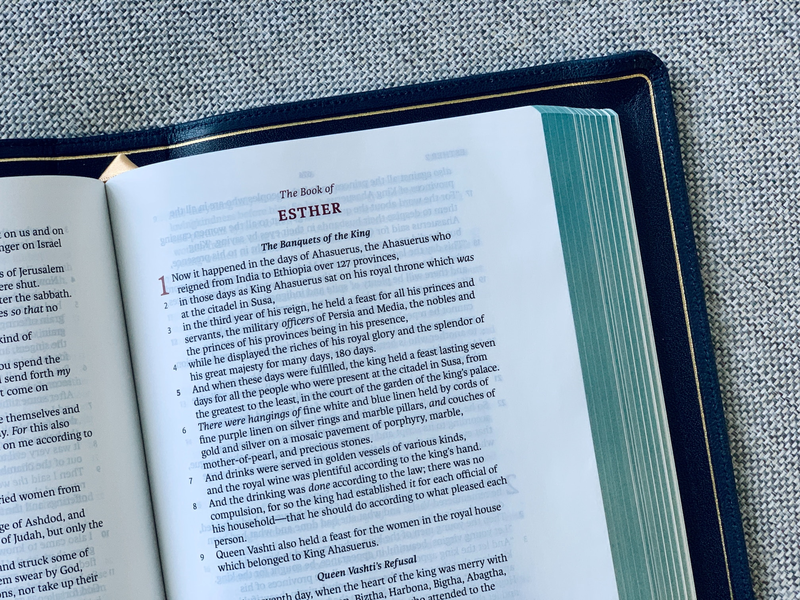
Esther

Esther: Historical & Chronological Comments (IV)

2. The Setting of the Book of Esther A. Xerxes (continued from previous issue) Ezra 6:14 says that the Jews finished building "according to the command of the God of Israel and the decree of Cyrus and Darius and Artaxerxes king of Persia." The problem with this verse is that…

by James B. JordanJune 28, 1996

ales-krivec-4mibe6zg5r0-unsplash
Acts

Jesus and Amalek

This essay goes with our previous study of the Amalek pattern back in Biblical Horizons No. 2. Since many do not have this essay, entitled "The Battle of Gog and Magog," let me cite the relevant paragraphs: Note in Genesis 12-15 that Abram moves into the land after escaping Pharaoh…

by James B. JordanJune 28, 1996

aaron-burden-1ebsmyrau-s-unsplash
Proverbs

The Strange Woman

Proverbs 7:6-23 is one of several passages early in the Proverbs in which Solomon warns his son about the wiles and dangers of the "strange woman." It is certainly quite proper to take these as straightforward warnings against sexual sins, and these are certainly warnings that need to be impressed…

by Peter LeithartJune 27, 1996
jan-kahanek-g3o5ztrk2e4-unsplash
Biblical Studies

Some Observations

1. In Luke 4:20 we read that after Jesus finished reading from Isaiah, "the eyes of all in the synagogue were fixed upon Him." This is usually taken in a psychological sense: They were amazed at Jesus somehow. I suggest that, as always, a merely psychological reading is a modern…

by James B. JordanMay 28, 1996
tim-wildsmith-j6jv-mkdzqs-unsplash
Esther

Esther: Historical & Chronological Comments (III)

2. The Setting of the Book of Esther Up to now we have assumed what we must prove, that the king in Esther is Darius the Great. While Biblical chronologists have usually taken this position, commentators on the book of Esther have often taken others as the king. One view,…

by James B. JordanMay 28, 1996

Showing page 265 of 309

See all

Showing page 5 of 43

See all

Just Quitting

One day, Henry just quit. He had soldered wires for he didn’t know what in the back room of the Magnavox plant for thirteen years, and enough was enough. His eyes itched, the watery coffee from the machine was bitter, the pinups in the maintenance room never changed, and he…

November 24, 2005

Sermon Outline, First Advent

INTRODUCTION When Christians speak of the “holy family,” they normally have in mind Jesus’ “nuclear family,” Joseph and Mary and his siblings. But Matthew begins with Jesus’ larger family, tracing his descent from Abraham and David. THE TEXT “The book of the genealogy of Jesus Christ, the Son of David,…

November 24, 2005
Philosophy

A word for Scotus

Jonathan McIntosh, a student at the University of Dallas, challenges Vanhoozer’s (and Radical Orthodoxy’s) reading of Scotus that I summarized in a previous post, arguing that Scotus does not deny analogy. He has a point. The following discussion of Scotus’ understanding of the univocity of being is taken largely from…

November 24, 2005
History

History of the Sentence

Ian Robinson’s The Establishment of Modern English Prose in the Reformation and the Enlightenment (Cambridge, 1998) is a fascinating discussion of the history of the sentence and of English punctuation, and, despite its heavy-handed title, is a delight to read. Does the sentence have a history? Robinson shows that it…

November 24, 2005
Philosophy

Postmodern Theology

Kevin Vanhoozer has done a great service by editing the Cambridge Companion to Postmodern Theology (2003). Though the authors of the various articles differ among themselves, they are all well-informed about postmodern thought and culture and are making an effort to respond from the stance of Christian theology. In his…

November 24, 2005
Theology

Images of God

In the Summa theologiae (1.1.9), Thomas argues that “it is more fitting that divine matters should be conveyed under the figure of lowly bodies than of noble bodies.” Rocks are better figures for God than ideal forms. Thomas gives three reasons for this preference: First, if “lowly” bodies provide the…

November 24, 2005

Showing page 1921 of 2212

Browse by Category

In Medias Res

Your weekly digest for all things Theopolis.

Donate

Theopolis is nearly 100% donor-supported. Consider joining us on our mission.