Theopolis Logo

Writing

Explore our collection of theological essays, biblical studies, and reflections on faith and culture.

See all
tanner-mardis-xuxghzhibn4-unsplash-1-2
Biblical Studies

Tweets-turned-Notes on the Bible’s Chronology

Summary In what follows, I will consider the “year-stamps” employed in Scripture, i.e., statements of the form, “Such-and-such an event took place in the Xth year of Y.” In the process, I will suggest some ways in which the Biblical narrative might relate to events in the extra-Biblical world, though…

by James BejonJuly 16, 2019
durer-prodigal-son-2
Luke

Perspectives on the Prodigal, (Part 2)

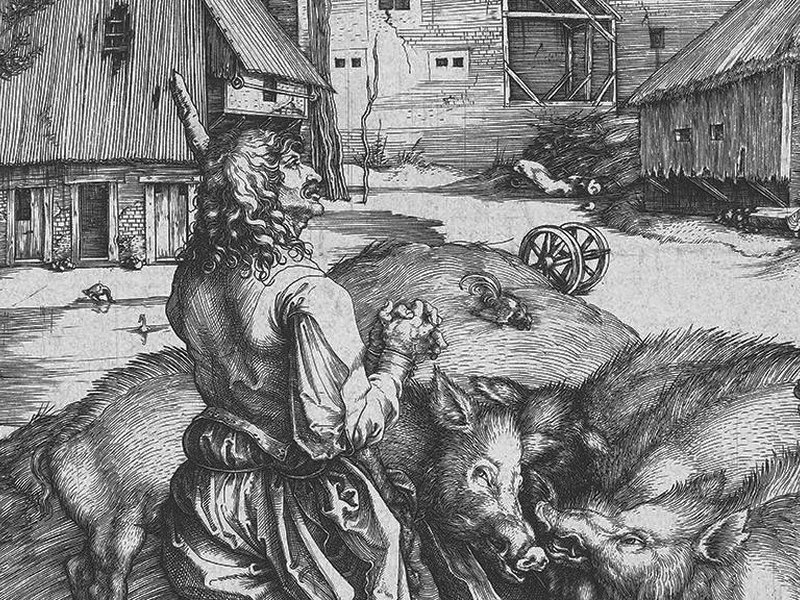
In the first essay on the parable of the Prodigal Son, I suggested that the problems commentators and others encounter in interpreting Jesus three-part parable are not accidental. These are not just problems in our ignorance of cultural background. They are intentional features of the stories —stories designed to poke…

by Ralph Allan SmithJuly 11, 2019
durer-prodigal-son-2
Luke

Perspectives on the Prodigal, (Part 1)

The story of the Prodigal Son is perhaps the most well-known story in the Bible. As others have observed, it may also be one of the most misunderstood. In two short essays, I will point out features of this story that are commonly neglected, aspects of Jesus’ parable that might…

by Ralph Allan SmithJuly 9, 2019
de-rijke-man-en-de-arme-lazarus-by-jacopo-da-ponte-16th-century
Luke

Lazarus and the Rich Man

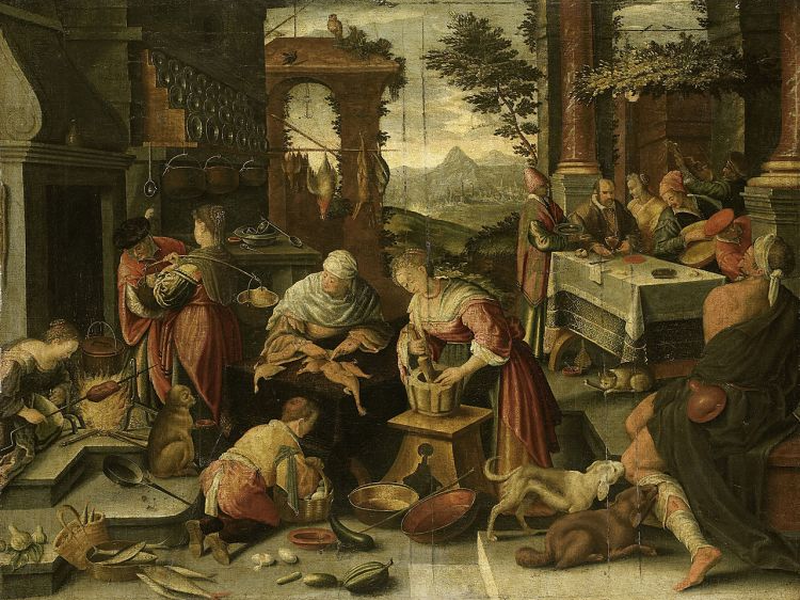
The parable of Lazarus and the nameless rich man is not an independent story. It is part of a long context that begins in Luke 15:1, where Jesus is eating with tax collectors and sinners and the scribes and Pharisees grumble. In response to their hardheartedness, Jesus tells a three-part…

by Ralph Allan SmithJuly 4, 2019
aaron-burden-uynrnfdkjwg-unsplash
Luke

Everybody has Dropsy - Luke 14:1-24

The Bible is written so that even when a reader cannot pick up on what might be deeper or more detailed aspects of a text, there is virtually always a message to be heard. In the ancient world, where the “reader” of Scripture would likely be a church official facing…

by Ralph Allan SmithJuly 2, 2019
communion
Biblical Theology

Fruit Trees and Grain Plants

The distinction between garden (or vineyard) and field begins in Genesis 2. This relates to the ordering of the formless world. Plants of the field are contrasted with the garden planted by God in Genesis 2:5&8. Later on, under the Old Covenant the Israelites will be required to keep their…

by James B. JordanJune 27, 2019

Showing page 77 of 309

See all

Showing page 5 of 43

See all

David and Esau

Mark Biddle of the Baptist Theological Seminary in Richmond examines some of the intertextual connections between 1 Sam 25 and the Jacob narratives in Genesis ( JBL 121/4 [2002]). He discovers analogies between Nabal and Laban, Saul and Laban, and of course Nabal and Saul. Abigail is comparable to Rebekah…

June 16, 2004
History

Luther und Melanchthon

Timothy Wengert’s article in the Lutherjahrbuch 66 (1999) offers an analysis of the controverted relationship between Luther and Melanchthon. Wengert puts aside psychological assessments of the relationship, and does not focus on theological similarities and differences, which might have the effect of reducing the two men to their ideas. Instead,…

June 16, 2004

Ruth and Judges

In a 1989 article in the WTJ , Warren Gage, now of Knox Theological Seminary, explores the connections between the Gibeah incident recorded at the end of Judges and the story of Ruth. He argues that there are literary and thematic connections and contrasts between the two narratives. As usual,…

June 16, 2004
Literature

Hamlet

Edward Oakes offers a fascinating review of several new books on Shakespeare in the June/July issue of First Things . He gives this summary of the recent argument of Stephen Greenblatt concerning Shakespeare’s views on Purgatory: “Shakespeare’s choice of Wittenberg as the palce where Hamlet spent time as a student…

June 16, 2004
Media

In Praise of Censorship

David Bentley Hart offers a lively and wide-ranging defense of censorship in an article in the current issue of First Things . He savages the standard arguments against censorship: the slippery-slope argument (Hart: “Apparently, as a society, we are poised precariously upon the narrowest precipice of a sheer escarpment as…

June 16, 2004
Literature

Latin Limericks

According to the NB column in the May 28 TLS , the first recorded example of a limerick meter and rhyme occurs in a 13th-century prayer: Si vitiorum meorum evacuatio Concupiscentiae et libidinis exterminatio, Caritatis et patientiae, Humilitatis et obedientiae, Omniumque virtutum augmentatio . As NB goes on to say,…

June 16, 2004

Showing page 2083 of 2212

Browse by Category

In Medias Res

Your weekly digest for all things Theopolis.

Donate

Theopolis is nearly 100% donor-supported. Consider joining us on our mission.