
Theopolis Logo

Writing

Explore our collection of theological essays, biblical studies, and reflections on faith and culture.

See all
kiwihug-l4gw27xzn1i-unsplash
Hermeneutics

Beginning and New Beginning in Luke

Although the events are, of course, not perfectly parallel, Luke in his gospel intends us to connect Jesus’ birth from the womb and His re-birth from the tomb. Luke 1:27 introduces us to Joseph and in verse 30 we learn that his betrothed wife was named Mary. An angel appeared…

by James B. JordanDecember 28, 1996
screenshot-2023-08-30-at-11-50-23-am
Matthew

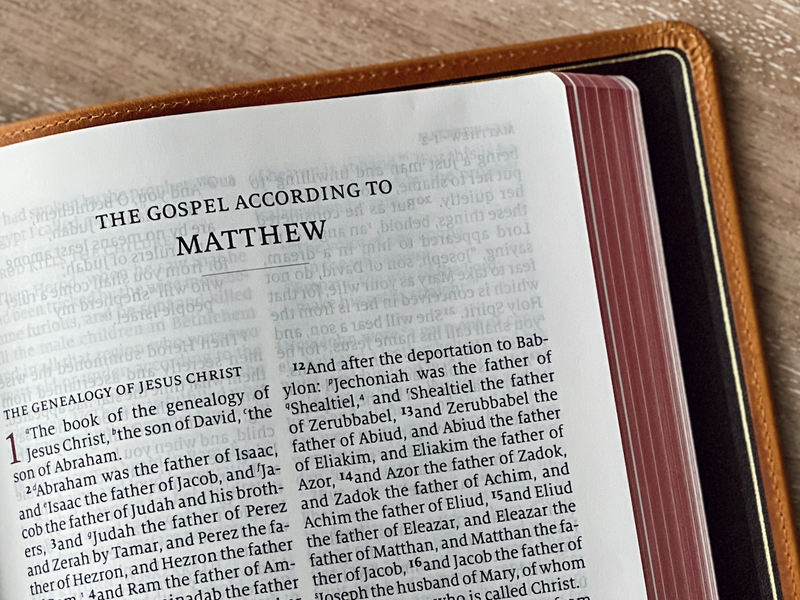
A Note on Matthew

The apostle Matthew is also known as Levi son of Alphaeus. While not much is said about this man, the few things that are told us are significant. Matthew in Greek is Matthaios and comes from the Hebrew name Mattithiah, or Mattith-Yah, "Gift of Yah(weh)." Matthew’s other name is Levi,…

by James B. JordanDecember 28, 1996

aaron-burden-qjdzyt_k8xg-unsplash
Biblical Horizons

Twelve Fundamental Avenues of Revelation (Part 1)

Theologians often speak of "special" and "general" revelation, or of "natural" and "supernatural" revelation, or of "word" and "deed" revelation. While there are many worthwhile insights in these discussions, particularly in the discussions in Cornelius Van Til’s Introduction to Systematic Theology , I have not found any that satisfied my…

by James B. JordanDecember 28, 1996

jan-kahanek-g3o5ztrk2e4-unsplash
Ezekiel

Countdown to Exile IV: Ezekiel and the Structure of History

Ezekiel’s 430 Years In Ezekiel 4, the prophet is told to begin his ministry by setting up a model of Jerusalem and lying on his side and prophesying against it. He is to do this for 430 days, a day for a year. 390 days are against "Israel," and 40…

by James B. JordanDecember 28, 1996

img_7664
Biblical Horizons

The Oddness of the Feast of Booths

The Feast of Ingathering in the seventh month of the Sinaitic calendar is also called the Feast of Sukkoth, of Booths, also called Feast of Tabernacles. I have usually called it by that last phrase, and it is the most common today; but there is a problem: A tabernacle is…

by James B. JordanDecember 28, 1996

sixteen-miles-out-ki3hr9t8t7a-unsplash
Ezekiel

Countdown to Exile III: Warnings Against False Hopes

The End of Jehoiakim’s Reign We have seen that Jehoiakim rejected Jeremiah’s prophetic warnings at the beginning of his reign. Let us now make a year-by-year survey of his reign down to its end. In the spring of 605 BC, Nebuchadnezzar defeated the Egyptians at Carchemish. In the summer, he…

by James B. JordanNovember 28, 1996

Showing page 261 of 309

See all

Showing page 5 of 43

See all
Literature

The Bible and Other Tragedies

In a book written in the late 1370s, the surgeon John Arderne prescribed “the Bible and other tragedies” as remedies. These books were good sources, as Henry Ansgar Kelly explains in summarizing Arderne’s point, “for humorous stories of a good and decent kind that doctors can use to provoke their…

January 28, 2004
Theology

Barth on Faith

Barth defines faith as the “determination of human action by the being of the Church and therefore by Jesus Christ, by the gracious address of God to man.” While there may be weaknesses with this, there are several commendable things about the definition: 1) It does not polarize faith and…

January 27, 2004
Theology

Theology as Science Again

If, as Barth says, theology NEED not be part of the genus “science,” why has it been so designated? It appears that the impetus is an effort to achieve precisely the things that Barth says it does NOT need from science. Barth says, “As regards method, [theology] has nothing to…

January 27, 2004
Theology

Theology as Science?

Barth quotes from J. Gerhard, who rejected the designation of theology as a science. One of his grounds was: ” scientiae certitudo ab internis et inhaerentibus principiis, fidei vero ab externis videlicet ab autoritate revelantis pendet ,” which in substance means that science derives its certainty from principles that are…

January 27, 2004

The Oikoumene in the NT

Jim Jordan has pointed out that the Greek word “oikoumene” is used in the NT to refer to the Hellenistic and Helleno-Roman world, rather than to the entire inhabited earth. It could be translated as “empire.” Against this background, the usage in Heb 2:5 is very striking, since it talks…

January 27, 2004

Adam and the Dragon

A discussion of death in the prefall world led to this thought: What was Adam supposed to do when a big dragon came to his wife and began tempting her to sin? I think he was supposed to do exactly what the Last Adam did: Crush the serpent’s head. But…

January 26, 2004

Showing page 2131 of 2212

Browse by Category

In Medias Res

Your weekly digest for all things Theopolis.

Donate

Theopolis is nearly 100% donor-supported. Consider joining us on our mission.