Theopolis Logo

Writing

Explore our collection of theological essays, biblical studies, and reflections on faith and culture.

See all
sixteen-miles-out-al48tflf4e8-unsplash
Food

Gluttony In The Bible (As Opposed To Gluttony In The American Church)

In the Bible, fatness is such a blessing, that it is especially hard to understand why wicked men are permitted to enjoy such a state. It requires a theodicy and faith in God. Thus: “For they have no pangs until death; their bodies are fat and sleek . They are…

by Mark HorneAugust 12, 2013

jeremy-yap-j39x2xx_8cq-unsplash
How to Worship

Biblical Worship (Video with James B. Jordan)

[fve]http://vimeo.com/71901553[/fve]

by Peter LeithartAugust 8, 2013
chris-bair-ndczc5739ck-unsplash
Deuteronomy

Holy Things for Holy People

The allusion to the Exodus story is contained in the first words of Deuteronomy 14:1 — “ye are the sons of Yahweh your God” — as well as in 14:2 in the use of the technical term translated “treasured possession,” “His own possession,” “peculiar people,” “precious people,” and so forth.…

by Ralph Allan SmithAugust 5, 2013
adam-and-eve-in-the-garden-of-eden-wenzel-peter
Deuteronomy

Forbidden Foods

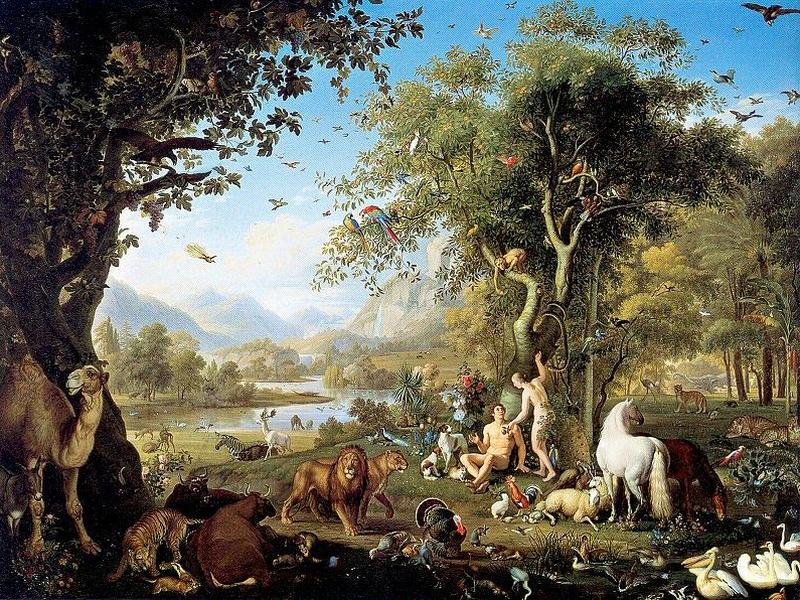
I have argued that Deuteronomy 14:1-21 is an independent literary unit that applies the Third Word to the lives of Israelites from the time of Moses and Joshua. In this short pericope, Moses suggests broad and deep meaning by means of literary allusion to the stories of the creation and…

by Ralph Allan SmithJuly 31, 2013
david-weber-fwuo_zluhnw-unsplash
How to Worship

Pro-Sacramental Reformation

In his recently republished The New Creation , the late, delightful Herbert McCabe defends the priesthood of the plebs as roundly as anyone could want. Citing Hebrews, he claims that "there is an essential difference between the Christian community and the community of the Old Law, or any other religious…

by Peter LeithartJuly 29, 2013
eric-ward-7kqe_8meex8-unsplash
Augustine

Sexual Idolatry

Augustine famously prayed, “Our hearts our restless until they rest in You.” True indeed. Being creatures, we inherently sense our ontological poverty—our innate condition of dependence—and are compelled to find a sense of security. And it is also true—as Augustine’s own narrative painfully illustrates—that one of the things we most…

by Gerald HiestandJuly 24, 2013

Showing page 190 of 309

See all

Showing page 5 of 43

See all
Shakespeare

The Trap of Law

M arjorie Garber ( Shakespeare After All , 300–2) nicely captures the Pauline resonances of the trial scene in Merchant of Venice : “Shylock will provide a scale to weigh the pound of flesh, but not a surgeon to staunch the wound. He will, that is, provide the emblem of…

October 21, 2016

2 + 2 = Apples

I n a 1911 article on “The Ant Colony as Organism,” William Morton Wheeler argued that an ant colony was not only organism-like but an actual organism: “Like a cell or the person, it behaves as a unitary whole, maintaining its identity in space, resisting dissolution...neither a thing nor a…

October 21, 2016

Under Which Altar?

I an Boxall gets a lot right in his commentary on Revelation 6:9–11 (in his excellent The Revelation of Saint John , 113). He knows that the blood of a purification offering is poured out at the base of the altar, the very position where the souls of the martyrs…

October 21, 2016

View from Patmos

W riting in 1888, J. Theodore Bent described a visit to Patmos, during which he read the Apocalypse. One day, he recounted, “I stood by the sea looking south-west, I distinctly saw Thera, as it was anciently called, rising out of the sea. This island is now also called Thera…

October 21, 2016

Sons of the Right Hand

Bede ( Latin Commentaries on Revelation , 133-5) interprets the list of Israel's tribes in Revelation 7 by etymologizing the names. The list forms a sequence, from Judah to Benjamin. Judah means “confession or praise” and is placed first because “before the beginning of confession, no one attains the heights…

October 21, 2016

Notes on Usury

V iolent malice can be directed against God, the self, and the neighbor, Virgil tells Dante ( Inferno 11) as they huddle under the lid of one of the tombs in the sixth circle of hell. Virgil takes a moment to explain the moral theology that organizes hell. He explicates…

October 20, 2016

Showing page 241 of 2212

Browse by Category

In Medias Res

Your weekly digest for all things Theopolis.

Donate

Theopolis is nearly 100% donor-supported. Consider joining us on our mission.