Theopolis Logo

Writing

Explore our collection of theological essays, biblical studies, and reflections on faith and culture.

See all
johann-siemens-epy0gbjzzzu-unsplash
Apologetics

A Sabbath Conversation: How Old is the Earth?

As Adam and Eve walked to the center of the Garden of Eden to meet with the LORD on their first Sabbath they conversed about the origin and age of the earth. Adam: You know, honey, we spent a lot of time yesterday making preparations for our house, and we…

by Jeff MeyersOctober 3, 1997
img_1043
Biblical Horizons

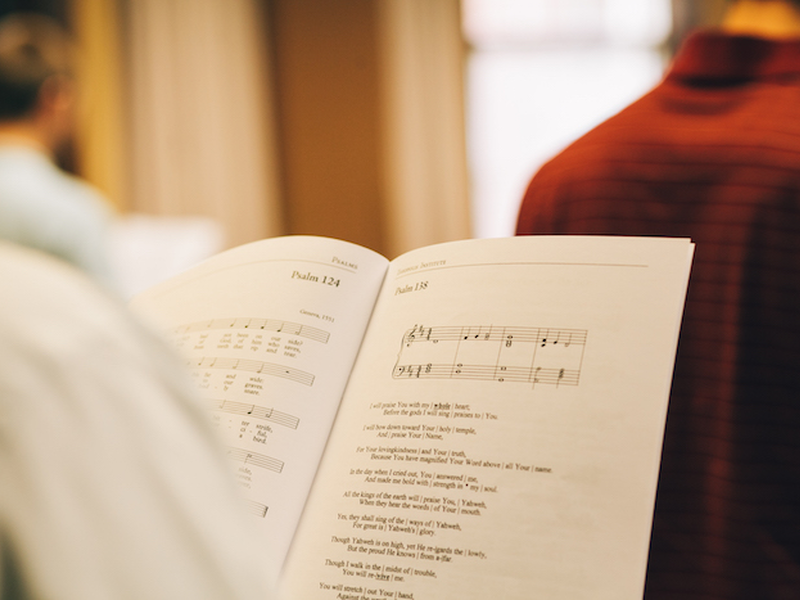
Psalms for Exile: The Narrative Progression in the Fifth Book of the Psalter

Some of our forefathers believed in reading/singing the psalms in order. Today, when the psalms are even used at all, they tend to be used randomly, though sometimes tied to a church calendar or to the pastor’s sermon. The Bible does not bind us to any particular practice, but there…

by James B. JordanSeptember 4, 1997
jordan-wozniak-xp_agmeea6s-unsplash-2
Biblical Chronology

The Anthropomorphic Days of C. John Collins, Part 2

Dr. Collins begins his essay with a brief statement of the Day Age view and then a brief statement of the Six Day view, focussing on the challenge to that view posed by modern "science." He ends this discussion by writing: "Two crucial points are at stake here: first, the…

by James B. JordanSeptember 4, 1997
john-salzarulo-wtjrpjzabcq-unsplash
Biblical Horizons

Paperweights and the Puzzles of Secularism

In his The Construction of Social Reality , Berkeley philosopher John Searle puzzles over the ontology of the products of human construction. Certain things – granite, platypi, weeping willows – occur naturally; while other realities – stone walls, zoos and parks, Chase Manhattan Bank – exist only as products of…

by Peter LeithartAugust 27, 1997
ales-krivec-4mibe6zg5r0-unsplash
Biblical Chronology

The Anthropomorphic Days of C. John Collins, Part 1

In the journal Presbyterion 20 (1994):109-130, published by Covenant Theological Seminary, Dr. C. John Collins sets forth a revision of the Day Age approach in his essay, "How Old Is the Earth? Anthropomorphic Days in Genesis 1:1–2:3." Dr. Collins’s essay has been widely accepted in evangelical Presbyterian circles as an…

by James B. JordanAugust 4, 1997
screenshot-2023-09-04-at-10-37-01-am
Biblical Horizons

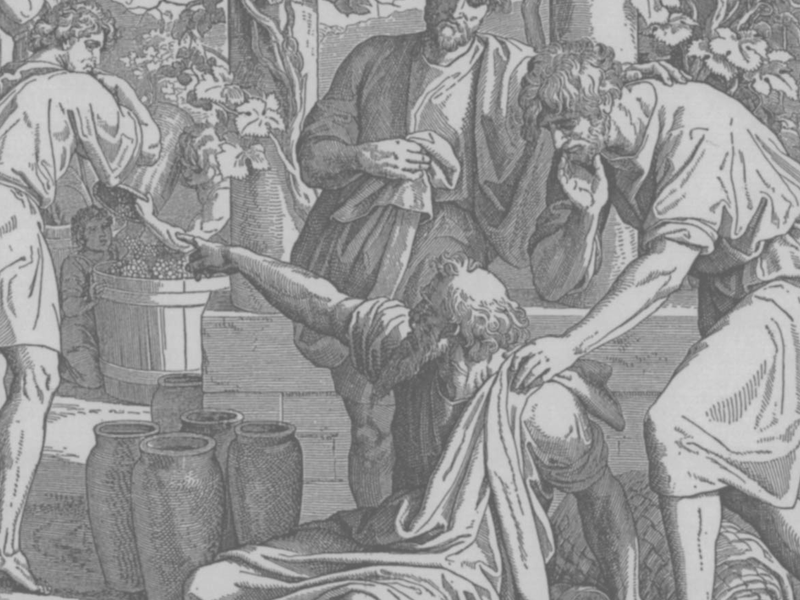
The Sin of Ham and the Curse of Canaan, Part 3 (An Exposition of Genesis 9:20-27)

The Righteousness of Shem and Japheth As noted above, the action of Shem and Japheth was purely symbolic. They did not need to cover Noah with a garment, for he was already covered by the tent. Their action was a symbolic affirmation of Noah’s authority, a symbolic rejection of Ham’s…

by James B. JordanAugust 4, 1997

Showing page 254 of 309

See all

Showing page 5 of 43

See all
Shakespeare

The Trap of Law

M arjorie Garber ( Shakespeare After All , 300–2) nicely captures the Pauline resonances of the trial scene in Merchant of Venice : “Shylock will provide a scale to weigh the pound of flesh, but not a surgeon to staunch the wound. He will, that is, provide the emblem of…

October 21, 2016

2 + 2 = Apples

I n a 1911 article on “The Ant Colony as Organism,” William Morton Wheeler argued that an ant colony was not only organism-like but an actual organism: “Like a cell or the person, it behaves as a unitary whole, maintaining its identity in space, resisting dissolution...neither a thing nor a…

October 21, 2016

Under Which Altar?

I an Boxall gets a lot right in his commentary on Revelation 6:9–11 (in his excellent The Revelation of Saint John , 113). He knows that the blood of a purification offering is poured out at the base of the altar, the very position where the souls of the martyrs…

October 21, 2016

View from Patmos

W riting in 1888, J. Theodore Bent described a visit to Patmos, during which he read the Apocalypse. One day, he recounted, “I stood by the sea looking south-west, I distinctly saw Thera, as it was anciently called, rising out of the sea. This island is now also called Thera…

October 21, 2016

Sons of the Right Hand

Bede ( Latin Commentaries on Revelation , 133-5) interprets the list of Israel's tribes in Revelation 7 by etymologizing the names. The list forms a sequence, from Judah to Benjamin. Judah means “confession or praise” and is placed first because “before the beginning of confession, no one attains the heights…

October 21, 2016

Notes on Usury

V iolent malice can be directed against God, the self, and the neighbor, Virgil tells Dante ( Inferno 11) as they huddle under the lid of one of the tombs in the sixth circle of hell. Virgil takes a moment to explain the moral theology that organizes hell. He explicates…

October 20, 2016

Showing page 241 of 2212

Browse by Category

In Medias Res

Your weekly digest for all things Theopolis.

Donate

Theopolis is nearly 100% donor-supported. Consider joining us on our mission.