Theopolis Logo

Writing

Explore our collection of theological essays, biblical studies, and reflections on faith and culture.

See all
sixteen-miles-out-al48tflf4e8-unsplash
Food

Gluttony In The Bible (As Opposed To Gluttony In The American Church)

In the Bible, fatness is such a blessing, that it is especially hard to understand why wicked men are permitted to enjoy such a state. It requires a theodicy and faith in God. Thus: “For they have no pangs until death; their bodies are fat and sleek . They are…

by Mark HorneAugust 12, 2013

jeremy-yap-j39x2xx_8cq-unsplash
How to Worship

Biblical Worship (Video with James B. Jordan)

[fve]http://vimeo.com/71901553[/fve]

by Peter LeithartAugust 8, 2013
chris-bair-ndczc5739ck-unsplash
Deuteronomy

Holy Things for Holy People

The allusion to the Exodus story is contained in the first words of Deuteronomy 14:1 — “ye are the sons of Yahweh your God” — as well as in 14:2 in the use of the technical term translated “treasured possession,” “His own possession,” “peculiar people,” “precious people,” and so forth.…

by Ralph Allan SmithAugust 5, 2013
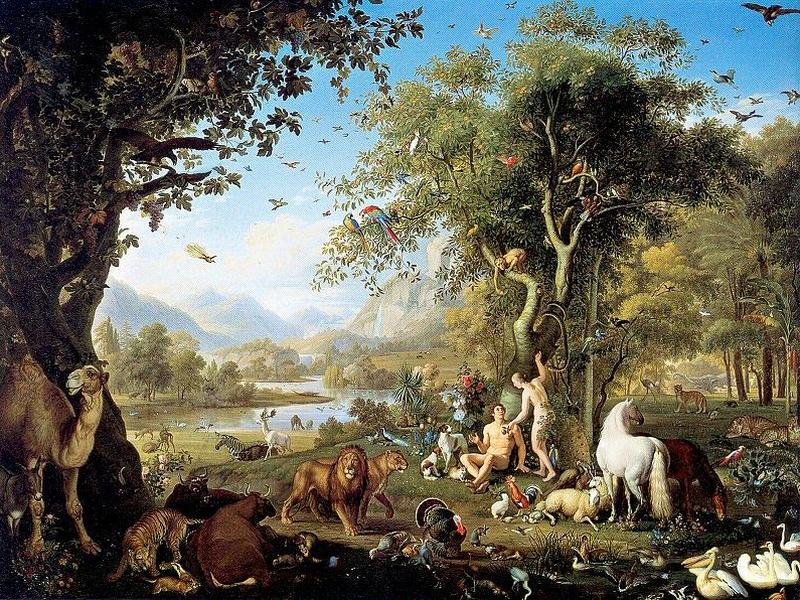
adam-and-eve-in-the-garden-of-eden-wenzel-peter
Deuteronomy

Forbidden Foods

I have argued that Deuteronomy 14:1-21 is an independent literary unit that applies the Third Word to the lives of Israelites from the time of Moses and Joshua. In this short pericope, Moses suggests broad and deep meaning by means of literary allusion to the stories of the creation and…

by Ralph Allan SmithJuly 31, 2013
david-weber-fwuo_zluhnw-unsplash
How to Worship

Pro-Sacramental Reformation

In his recently republished The New Creation , the late, delightful Herbert McCabe defends the priesthood of the plebs as roundly as anyone could want. Citing Hebrews, he claims that "there is an essential difference between the Christian community and the community of the Old Law, or any other religious…

by Peter LeithartJuly 29, 2013
eric-ward-7kqe_8meex8-unsplash
Augustine

Sexual Idolatry

Augustine famously prayed, “Our hearts our restless until they rest in You.” True indeed. Being creatures, we inherently sense our ontological poverty—our innate condition of dependence—and are compelled to find a sense of security. And it is also true—as Augustine’s own narrative painfully illustrates—that one of the things we most…

by Gerald HiestandJuly 24, 2013

Showing page 190 of 309

See all

Showing page 5 of 43

See all
Liberalism

The Limits of Subsidiarity

D.C. Schindler ( Communio , 2013, 600-1) argues that the Catholic appeal to subsidiarity isn't adequate on its own to meet the challenge of totalitarian liberalism. Subsidiarity assumes “a strong conception of what are referred to as ‘intermediate communities,' such as the family.” The problem that Schindler discerns is that…

September 9, 2016
Liberalism

Liberalism's Immodesty

Liberal polities claim to lack competency in religious matters, and so they leave them to private choice. It sounds modest. It isn't. If it were truly modest about its incompetency, it would seek guidance from the competent - that is, from religious organizations that can guide the state in deciding,…

September 9, 2016

Inside Out

A ll the rites of Israel’s sacrificial system move from outside in. When a priest offers a purification offering for himself or for all the people, he slaughters the animal in the courtyard before bringing its blood into the holy place (Leviticus 4). When the high priest performs the rites…

September 8, 2016

Hrothgar, Heorot, and Threats to Heroism

B eowulf revolves around three battles between the hero and threatening monsters—Grendel, Grendel's mother, and a dragon. The central focus of the first two fights is Heorot, the mead-hall of Hrothgar, king of Denmark. The mead-hall is the focus of a complex of imagery. As in the Odyssey and Macbeth…

September 8, 2016

Lest You Dash Your Feet

I n Matthew 4, the devil takes Jesus to the pinnacle of the temple and demands that he throw himself down, trusting His Father to send angels to keep Him from dashing His foot against a stone. Jesus replies by quoting Deuteronomy 6:16: “You shall not put the Lord your…

September 7, 2016

Entering the Oikoumene

I n his commentary on Hebrews , William Lane disputes the common view that Hebrews 1:6 refers to the incarnation when it says that God brought the “firstborn into the world.” The Greek word behind “world” is oikoumene , which, Lane argues, typically refers to “habitable land, in contrast to…

September 6, 2016

Showing page 256 of 2212

Browse by Category

In Medias Res

Your weekly digest for all things Theopolis.

Donate

Theopolis is nearly 100% donor-supported. Consider joining us on our mission.