Theopolis Logo

Writing

Explore our collection of theological essays, biblical studies, and reflections on faith and culture.

See all
528977ldsdl
Theologia

Reflections on the Importance of Predestination in the Christian Mindset

But I say to you who hear, love your enemies, do good to those who hate you, bless those who curse you, pray for those who mistreat you. Whoever hits you on the cheek, offer him the other also; and whoever takes away your coat, do not withhold your shirt…

by Mark HorneJune 4, 1998

aaron-burden-1ebsmyrau-s-unsplash
Biblical Horizons

The Case Against Western Civilization, Part 5

Part 5: Laying New Foundations in a Dying World As I mentioned above, the history of Israel involved several centuries as a church-without-a-culture, and then several centuries as a culture-without-a-city. To be sure, there was an informal culture around the church of the Patriarchs, but the civilization of free farmers…

by James B. JordanJune 4, 1998
yucar-studios-cfr-v1quekw-unsplash-1
Baptism

Why Do We Baptize?

In the Reformation Tradition we baptize both professing believers and their children. In the case of infants it is now commonly insisted that this is done because the children are already in covenant with God. Baptism is a sign and seal of a previously existing reality. Despite the popularity of…

by Mark HorneJune 3, 1998
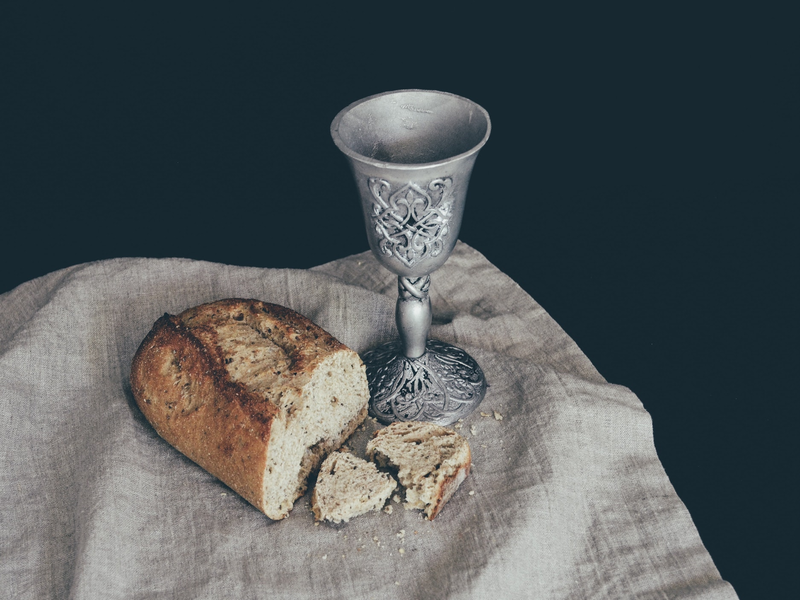
aaron-burden-qjdzyt_k8xg-unsplash
Eucharist

This Is What We Are:

Concerning Sex & the Sacrament of the Lord’s Supper Is not the cup of blessing which we bless a sharing in the blood of Christ? Is not the loaf of bread which we break a sharing in the body of Christ? Since there is one loaf, we who are many…

by Mark HorneJune 3, 1998
debby-hudson-qa74yh6-xlc-unsplash
Baptism

Sacramental Efficacy

Protestant-Catholic debates about the sacraments have usually taken the form of debates about sacramental efficacy. Protestants claim that Catholics believe that sacraments work ex opere operato, virtually a magical view of the sacraments. A priest goes through the motions and says the mumbo-jumbo and — presto! — the sacraments confer…

by Peter LeithartJune 3, 1998
aaron-burden-qjdzyt_k8xg-unsplash
Baptism

Baptism and the Church

In 27.2, the Westminster Confession says that because of the “spiritual relation” between sacraments and the things they represent, “the names and effects of the one are attributed to the other.” Applied to baptism, this means that when the Bible says that we are baptized into Christ (Rom. 6), it…

by Peter LeithartMay 29, 1998

Showing page 249 of 309

See all

Showing page 6 of 43

See all

You shall know them by their fear

Stott notes that 1 John 4:19 indicates that the church’s great characteristic is love, not fear. That is, it should be. Is it? Hardly. Read the next piece of direct mail you get from a Christian advocacy group. Look at the listings in a Christian book catalogue or bookstore. Analyze…

January 20, 2007

Fear and fear

Perfect love casts out fear, John says. But the Bible repeatedly exhorts us to fear God. There’s fear, then there’s fear. How do we tell the difference? The difference is in the direction our fear moves us. Adam feared God, and hid in the garden. Wrong fear drives us away…

January 20, 2007

Kantian modalism?

Post-Kantian thought cannot make room for undistorted revelation of God in history. History, creation, is necessarily a distorting medium. Is this just a form of modalism? Doesn’t this just create an unbridgeable modalist gap between God-in-Himself and God-as-revealed? Isn’t this just saying that God is not what He appears to…

January 20, 2007

God’s body

Time was when you could despise the body and love God, or despise God and love the body. One could be an ascetic or a hedonist. Then God got Himself a body. Despite efforts to retain this choice (Nietzsche, flagellants), the incarnation made the ancient choice of ascetic or hedonist…

January 19, 2007

God’s body

Time was when you could despise the body and love God, or despise God and love the body. One could be an ascetic or a hedonist. Then God got Himself a body. Despite efforts to retain this choice (Nietzsche, flagellants), the incarnation made the ancient choice of ascetic or hedonist…

January 19, 2007

Dionysus and the crucified

Shaftesbury recognized the stark difference between his own rational Deity and the vulgar bodily and crucifiable Christ. Francis Hutcheson, building on Shaftesbury, tried to conflate the two. Hutcheson was a Christian, a Presbyterian professor of moral theology. Shaftesbury loathed Christ. But which of the two was the better friend of…

January 19, 2007

Showing page 1732 of 2212

Browse by Category

In Medias Res

Your weekly digest for all things Theopolis.

Donate

Theopolis is nearly 100% donor-supported. Consider joining us on our mission.