Theopolis Logo

Writing

Explore our collection of theological essays, biblical studies, and reflections on faith and culture.

See all
kristina-flour-bcjdbykwquw-unsplash
Culture

On Foul Language

The Stranger: Do you have to use so many cuss words? The Dude: What the f*ck you talking about? - The Big Lebowski There was a man I knew, an elder at his church, who, whenever he was called upon to announce a pregnancy, preferred the euphemism “with child” because…

by Remy WilkinsJanuary 12, 2016

organ-pipes
How to Worship

Pipes Worth Playing

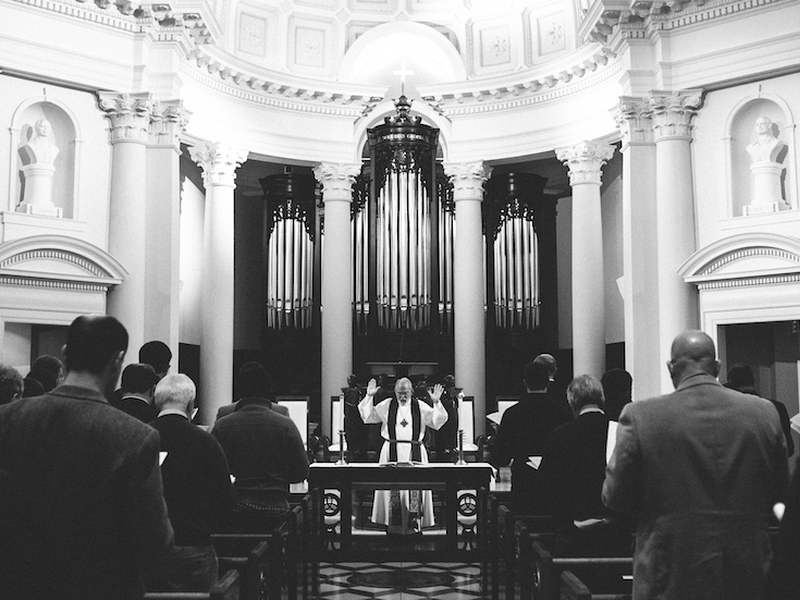
I know what you’re thinking. Organ: funeral, ball game, grand dusty cathedral. Why should modern Christians of such a technological age revisit a thousand year-old instrument? Don’t worry, I will not be trying to punch another hole in my Weird Music Preferences and Opinions card here. The truth is, our…

by Jarrod RicheyJanuary 7, 2016
tree-2
James

Do Things Have Natures?

Do things have natures? As I am posing the question, it is not simply a question of whether there are particular kinds of things in the world that have characteristic features, patterns of behavior, trajectories of growth and development. If that is what the word means, then the answer is…

by Peter LeithartJanuary 5, 2016
jim-leading-worship
Theopolis News

2016 Nevin Lectures with Father John Behr

We are excited to announce our 2016 Nevin Lectures featuring Father John Behr. Fr. John is the Dean of St. Vladimir's Seminary and Professor of Patristics, as well as the author of multiple works. He will be delivering three lectures over the course of two days dealing with "What Protestants…

by Brian MoatsJanuary 4, 2016
times-square
Creation

Time, Curse or Gift?

New Year's Day makes one reflective, at least about the past year, perhaps about life, perhaps, more broadly, about time itself. Many view time as a curse. Some see it as a curse because of missed chances. As one day or year moves on to the next, all we can…

by Peter LeithartDecember 31, 2015
nativity-2
Advent

The Manger

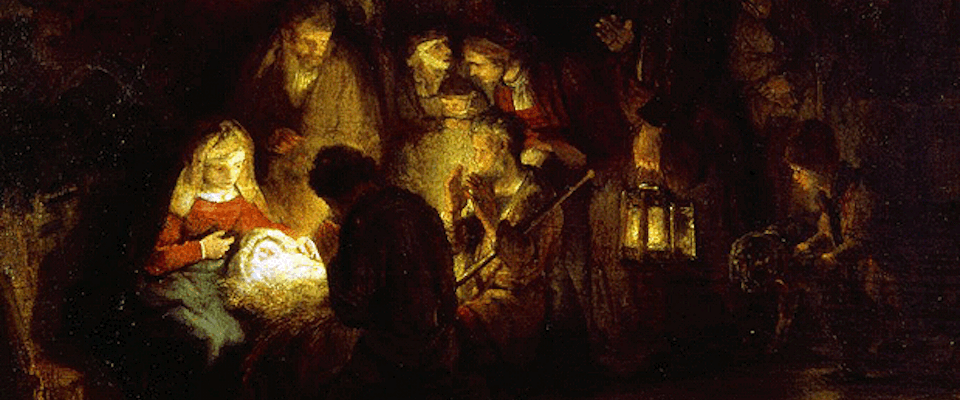
It seems a truism to say that we live in the world: that the world is outside of us. In reality the world is very much inside of us too. In fact the world passes through us as much as we pass through it. We breathe in its air, using…

by Arthur KayDecember 29, 2015

Showing page 138 of 309

See all

Showing page 6 of 43

See all
History

Smokin’ like a Christian

English fairs in earlier centuries displayed wares and displays from all over the world. At one there was an animal described as “a noble creature, which much resembled a Wild Hairy man” whose main skill was to doff his hat and show “his respects to the Company, and smoaks a…

October 14, 2006
Literature

The Moral of Henry V

Much of the moral and political import of Shakespeare’s Henry V is left to the audience’s or reader’s judgment. Is Henry a “pig” or is he the mirror of Christian kings? Is his invasion of France fair or foul? Shakespeare doesn’t show his hand, or not much; and one is…

October 14, 2006
Literature

The climax of Coriolanus

George Barnam notes the careful structure of Act 5 of Shakespeare’s Coriolanus: “Shakespeare had used this scene structurally to build the tension toward the climactic moment when Volumnia should appeal to her son and prevail. Three appeals are made to Marcius, and Shakespeare’s presentation of them matches in structure the…

October 14, 2006
History

Sports and the sacred

A reader wrote to respond to my suggestion that high culture is “sacred” and pop culture “profane,” citing the example of sports. Here’s my response: A football game often is a quasi-religious experience, but I’m not sure we use the same language to describe it. If someone slashed da Vinci’s…

October 14, 2006
Literature

Desacralized drama

In their “cultural history” of English drama, Simon Shepherd and Peter Womack summarize the argument of Glynne Wickham concerning the divorce of stage and sacred: “The English stage - so the argument runs - was predominantly a religious one until Elizabethan Protestantism forced a separation between theatre and the central…

October 14, 2006
History

Civil war and criticism

As Marsden describes it, the growth of neoclassical literary sensibilities developed in part in reaction to the chaos and disorder of the English civil war - following in this regard the development of late 17th century political theory. Orderliness, definiteness, clarity became virtues, while ambiguity, double entendres, and inconclusiveness became…

October 13, 2006

Showing page 1777 of 2212

Browse by Category

In Medias Res

Your weekly digest for all things Theopolis.

Donate

Theopolis is nearly 100% donor-supported. Consider joining us on our mission.