Theopolis Logo

Writing

Explore our collection of theological essays, biblical studies, and reflections on faith and culture.

See all
cloister

Gatekeepers

1 Chronicles 9:1 seems to bring the genealogies of 1 Chronicles to an end. The Chronicler has recorded the genealogy of the human race from Adam, focusing on the descendants of Abraham through Jacob. Summing it all up, he says, “So all Israel was enrolled by genealogies; and behold, they…

by Peter LeithartJune 21, 2016
trinity-1-2
Trinity

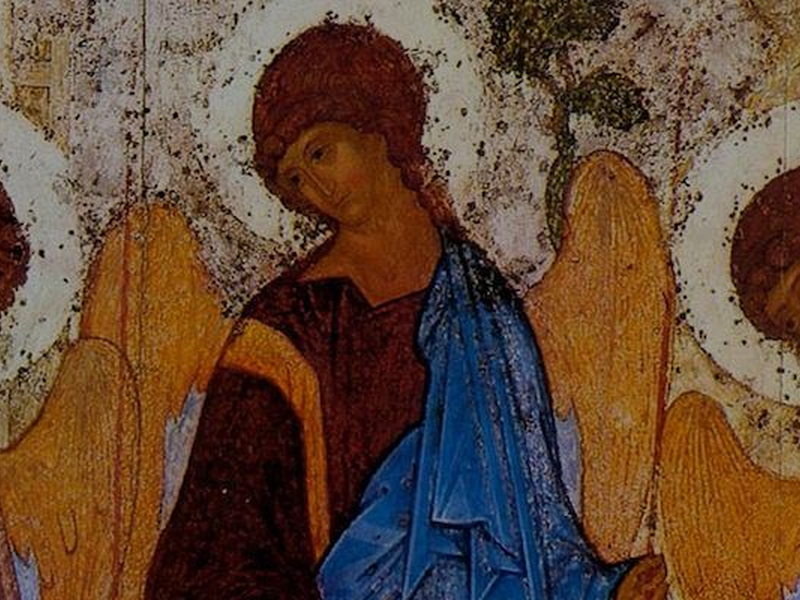
Are the Divine Persons Persons?

The “personalist” understanding of the Trinity, articulated most influentially in the work of John Zizioulas, has fallen on hard times. Recent scholars have attacked Zizioulas’s idea that Cappadocian Trinitarianism represented an ontological revolution, hammering on the distinction between divine and human personhood. Michel Barnes’s conclusion is the most drastic of…

by Peter LeithartJune 16, 2016
img_4660-2
Architecture

On Biblical Theology

Biblical Theology is often defined as the historical unfolding of God’s revelation, or of God’s revelation and of the history of his covenantal redemption and transformation of humanity and the world. In practice, Biblical Theology is usually broader than this, and also includes the study of literary structure and of…

by James B. JordanJune 14, 2016
laughing_statue_by_xxbobbiie-d5f0meh-2
Humor

Wise Laughter

We are made to be happy. Created to enter into the eternal joy of God, our whole being inclines to that end, but the fallen world has put forth barriers and by our own sin we bar ourselves from that endless delight, and death blinds us to that reality. Yet…

by Remy WilkinsJune 7, 2016
img_7664
Liturgy

Why Theopolis? Take Two

At the end of Revelation, John sees the heavenly city descending to earth. The city shines with the brilliance of God's glory, which lightens the nations, so that kings bring their glory to the city. This is not a vision of the final new heaven and new earth. It's a…

by Peter LeithartJune 2, 2016
trinity-1-2
Attributes of God

How Can We Talk About God?

“No one has ever seen God,” writes John (John 1:18). If this is the case, then how can we speak about God? Some people say we actually cannot. Or at least we cannot speak about God positively, i.e. who He is. We can only say who or what God is…

by Bogumil JarmulakMay 31, 2016

Showing page 130 of 309

See all

Showing page 6 of 43

See all

On the History of Charisms

“T he time has come,” writes Luigino Bruni ( The Wound and the Blessing ), “to rewrite the economic and civil history of societies, taking seriously the civil and economic role of charisms.” It's impossible “to understand either the past or the present situation in European economics deeply (or well…

May 8, 2017

Inequality and Inequality

I n Adam Smith and the Character of Virtue , Ryan Patrick Hanley explains why Smith considered the “inequality of precommercial societies [to be] infinitely more pernicious than the inequality to be found in commercial society.” He does this by demonstrating “how the conditions that afford the powerful with maximal…

May 5, 2017

Blue Arrogance

A t the Daily Beast , Joel Kotkin exposes the “arrogance of Blue America,” expressed in talk of Blue State secession and contempt for Red State Trump country. According to Kotkin, “The blue bourgeoisie’s self-celebration rests on multiple misunderstandings of geography, demography, and economics. To be sure, the deep blue…

May 5, 2017

Theology of Gift

I ’ve quoted this before, often, but it's so good it merits re-quotation. From Luther's 1528 “Confession”: These are the three Persons and the one God, Who has given Himself to us wholly with all that He is and all that He has. The Father gives Himself to us, with…

May 5, 2017
Architecture

Architectural Asceticism

R eviewing Adrian Forty's Concrete and Culture in the TLS , James Hall summarizes the shifting fortunes of concrete as a building material: “Reinforced concrete's global heyday spanned roughly from the 1920s to the 60s, when exposed, cantilevered concrete was all the (modernist) rage. Then a pragmatic and/or postmodernist reaction…

May 5, 2017
Shakespeare

Authentic Shakespeare

D on-John Dugas's recent Shakespeare for Everyman offers a revisionist account of the rise of “authentic” stagings of Shakespeare in the twentieth century. The very meaning of “authentic” changed, as Sally Barnden explains in her TLS review of Dugas's book: “Authentic Shakespeare performance was no longer understood to be that…

May 5, 2017

Showing page 178 of 2212

Browse by Category

In Medias Res

Your weekly digest for all things Theopolis.

Donate

Theopolis is nearly 100% donor-supported. Consider joining us on our mission.