Theopolis Logo

Writing

Explore our collection of theological essays, biblical studies, and reflections on faith and culture.

See all
lukasz-lada-q7z-aulhpaw-unsplash
Ascension

The Son of Man in the Clouds | Part 1

References to the Son of Man coming on the clouds occur five times in the Synoptic Gospels. Three times such expressions appear in the parallel accounts of the Olivet Discourse (Matthew 24:30; Mark 13:36; Luke 21:27). Then, in parallel accounts of Jesus’ trial before the leaders of Israel, such expressions…

by Ralph Allan SmithMarch 3, 2020

pierre-bamin-emimj3r5nc4-unsplash-2
Biblical Studies

The New Torahs

Just what the difference is in the work of the Holy Spirit in the Old Testament and the New Testament is a question not so easily answered. The distinction is often said to be that in the Old Testament the Holy Spirit is on the believer, but in the New…

by Richard BledsoeFebruary 25, 2020
8v66_fp_v1678_wide-84d72f58b250a6518de45d8bbfa3fe786c82443b-s800-c85
Movies

1917: A Visible Word

1. Introduction You should think of 1917 at church on Sunday. Why? Let me explain. There's one film every Oscar season which everyone seems to have watched—your parents, your colleagues, even your pastor. This year, it's 1917— Sam Mendes' WW1 epic following two British Tommies on a seemingly impossible quest…

by Rhys LavertyFebruary 18, 2020
robert-bye-6plb5skwiiy-unsplash
Immigration

Greater Israel

This piece was originally part of the Bowyer response to the Theopolis series surrounding Professor McDermott’s essay, “Rethinking Israel.” For the sake of brevity, it was removed from the initial response, to be published as a standalone piece. As we’ve argued previously , we are strongly supportive of the right…

by Jerry and Charles BowyerFebruary 11, 2020
screen-shot-2020-02-04-at-9-37-13-am
Matthew

Matthew the Tax Collector

Richard Bauckham’s groundbreaking work, Jesus and the Eyewitnesses: The Gospels as Eyewitness Testimony , is profoundly insightful, but the message of the book is hampered by the presupposition of Marcan priority. Ironically the place where this assumption perhaps does its most damage is in Bauckham’s discussion of the apostle Matthew…

by Ralph Allan SmithFebruary 4, 2020
reformation960
Good Works

Faith as the Highest Work

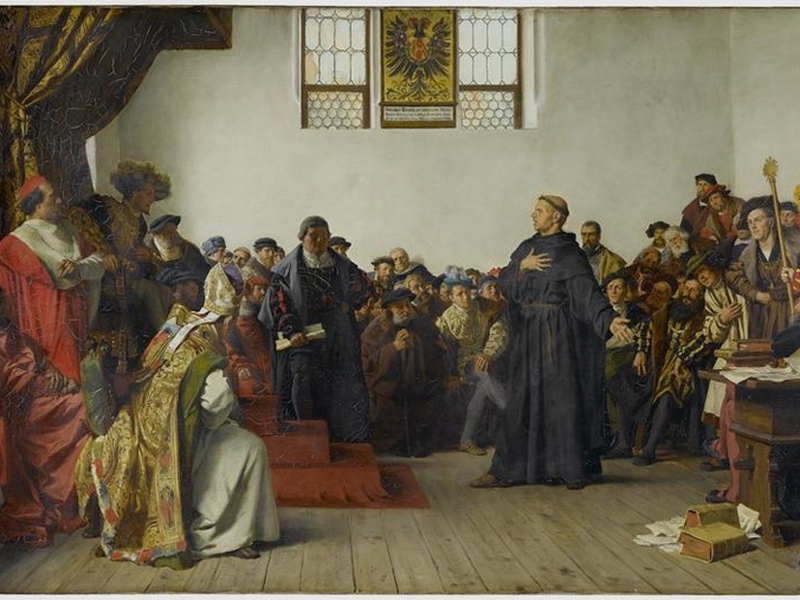
The Protestant Reformation was defined by certain clarifying disagreements between the medieval Church and those who came to be known as Protestant Reformers. Chief among these was the nature of justification: whether one was justified by works, or by faith and works, or—as Martin Luther contended—by faith alone. Now over…

by Alexander WhitakerJanuary 28, 2020

Showing page 70 of 309

See all

Showing page 6 of 43

See all

Necessity of Incarnation

Would the Son have been incarnate if Adam had not sinned? 1 Corinthians 15:44-45 provides a prooftext for an affirmative answer. Verse 44 says that the “spiritual body” is implied by the existence of the “natural body.” Human beings were created in a natural state, but they were destined from…

August 12, 2006
Philosophy

Decentered Self of Modernity

Bishop Joseph Butler of Durham worried about the consequences of Locke’s empiricism: “That personality is not a permanent, but a transcient thing: that it lives and dies, begins and ends continually: that no one can any more remain one and the same person two moments together, than two successive moments…

August 12, 2006
History

Embedded mind

Modernity ignores the social, linguistic, and political context of thought, and the way interest shapes the mind; postmodernity foregrounds all this. Perhaps, but . . . . Descartes said that his travels demonstrates that “all those who hold notions strongly contrary to our own are not for that reason barbarians…

August 12, 2006
History

Self and World

For premoderns - ancients and medievals - there was a homology between the self and the world. Man was seen as microcosm, and, as Seigel puts it, they believed that “the world, like the self, is structured so as to fulfill intelligible moral ends.” The initial shift in early modernity,…

August 12, 2006
Philosophy

Birth of the Modern Self?

Seigel views with “considerable skepticism” the notion that Descartes constructed “a general theory of the human self and subject on the basis of the cogito .” In his treatise on the Passions of the Soul , Descartes claimed that the soul was linked with the body, which acts on the…

August 12, 2006
History

Purity

According to Seigel, “Descartes’s view of reason as most pure and solid when it was free of corruption by the world’s confusions implied nothing less than the attempt to break free of all social and cultural experience.” Not for the first time, I wish there were an anthropological history of…

August 12, 2006

Showing page 1812 of 2212

Browse by Category

In Medias Res

Your weekly digest for all things Theopolis.

Donate

Theopolis is nearly 100% donor-supported. Consider joining us on our mission.