Theopolis Logo

Writing

Explore our collection of theological essays, biblical studies, and reflections on faith and culture.

See all
tanner-mardis-xuxghzhibn4-unsplash-1-2
Biblical Studies

Tweets-turned-Notes on the Bible’s Chronology

Summary In what follows, I will consider the “year-stamps” employed in Scripture, i.e., statements of the form, “Such-and-such an event took place in the Xth year of Y.” In the process, I will suggest some ways in which the Biblical narrative might relate to events in the extra-Biblical world, though…

by James BejonJuly 16, 2019
durer-prodigal-son-2
Luke

Perspectives on the Prodigal, (Part 2)

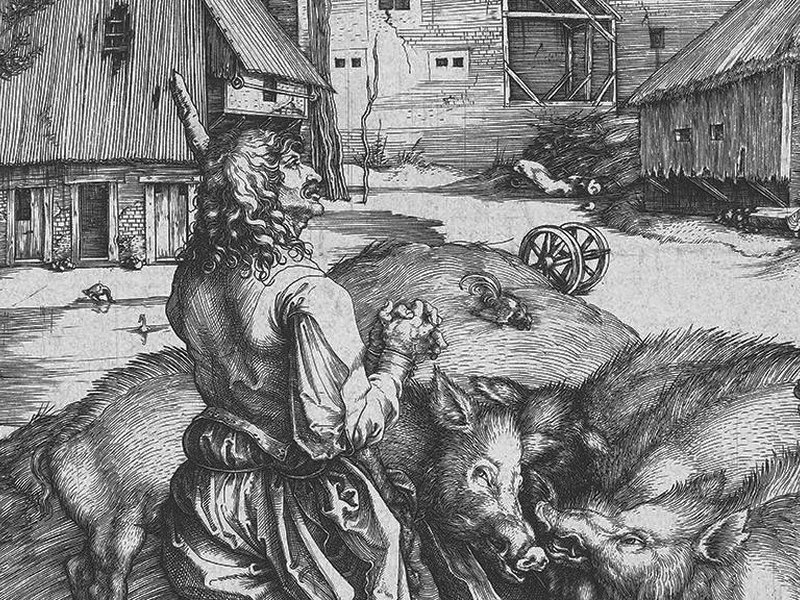
In the first essay on the parable of the Prodigal Son, I suggested that the problems commentators and others encounter in interpreting Jesus three-part parable are not accidental. These are not just problems in our ignorance of cultural background. They are intentional features of the stories —stories designed to poke…

by Ralph Allan SmithJuly 11, 2019
durer-prodigal-son-2
Luke

Perspectives on the Prodigal, (Part 1)

The story of the Prodigal Son is perhaps the most well-known story in the Bible. As others have observed, it may also be one of the most misunderstood. In two short essays, I will point out features of this story that are commonly neglected, aspects of Jesus’ parable that might…

by Ralph Allan SmithJuly 9, 2019
de-rijke-man-en-de-arme-lazarus-by-jacopo-da-ponte-16th-century
Luke

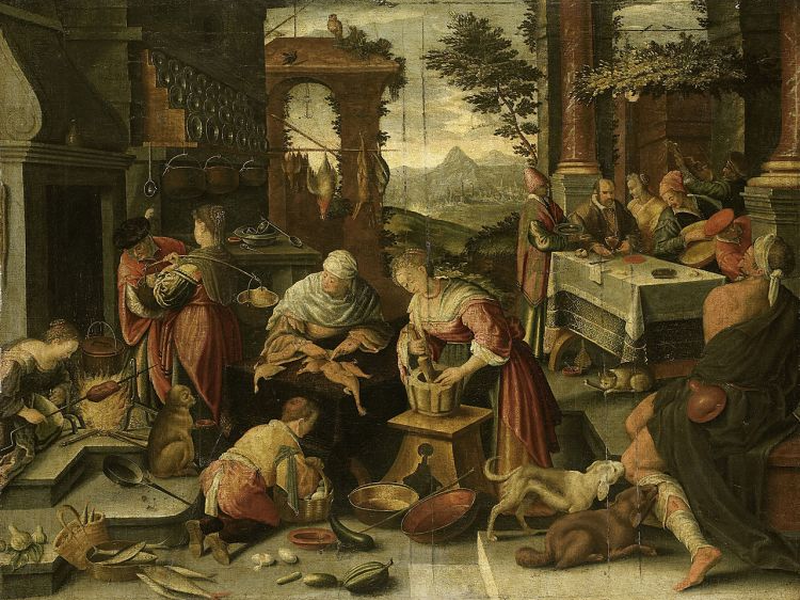
Lazarus and the Rich Man

The parable of Lazarus and the nameless rich man is not an independent story. It is part of a long context that begins in Luke 15:1, where Jesus is eating with tax collectors and sinners and the scribes and Pharisees grumble. In response to their hardheartedness, Jesus tells a three-part…

by Ralph Allan SmithJuly 4, 2019
aaron-burden-uynrnfdkjwg-unsplash
Luke

Everybody has Dropsy - Luke 14:1-24

The Bible is written so that even when a reader cannot pick up on what might be deeper or more detailed aspects of a text, there is virtually always a message to be heard. In the ancient world, where the “reader” of Scripture would likely be a church official facing…

by Ralph Allan SmithJuly 2, 2019
communion
Biblical Theology

Fruit Trees and Grain Plants

The distinction between garden (or vineyard) and field begins in Genesis 2. This relates to the ordering of the formless world. Plants of the field are contrasted with the garden planted by God in Genesis 2:5&8. Later on, under the Old Covenant the Israelites will be required to keep their…

by James B. JordanJune 27, 2019

Showing page 77 of 309

See all

Showing page 6 of 43

See all

Orientation of worship

Throughout the OT, worshipers drew near to God moving from east to west, returning to Eden. The Christian church reversed this, so that Christian worshipers enter by the west door and face east during worship. Is this change justified? What does it signify? No doubt many things, but this at…

April 14, 2006

Easter Musings on Genesis 29

1) Jacob goes to Paddan-Aram fleeing from his father’s house; in that far country, he endures abuse and treachery, yet returns with brides and numerous flocks and herds. When he goes out from his father’s house, he has nothing – a staff (32:10) – but he returns to his father’s…

April 14, 2006
Philosophy

Gift and relation

MG Anspach says that “To give a gift in return, to recognize the generosity of the first giver through a corresponding gesture of reciprocity, is to recognize the relation for which the initial gift is only a vehicle.” This helpfully highlights the fact that the return gift is less a…

April 13, 2006
History

Power of gift

Levi-Srauss doubts Mauss’ spiritualization of the gift that Mauss draws from the Maori concept of “hau,” the power that is communicated in, with, and under the gift. Rather, hau is “the conscious form whereby men of a given society . . . apprehended an unconscious necessity whose explanation lies elsewhere.”…

April 13, 2006
History

Twain on Gratitude

Thanks to NSA librarian Ed Iverson for providing references to Mark Twain’s “Letters from Earth,” where he assaults Christianity, and in several places mocks Christian gratitude to God. For instance: “Just so with diseases. If science exterminates a disease which has been working for God, it is God that gets…

April 13, 2006
History

Late Medieval Gratitude

Andrew Galloway traces the development of explicit discussions of gratitude in a 1994 article from the Journal of the History of Ideas. A few highlights: 1) Though he admits that gratitude was not “‘invented’ at some moment in human culture,” and that it was “the basis for social and religious…

April 13, 2006

Showing page 1859 of 2212

Browse by Category

In Medias Res

Your weekly digest for all things Theopolis.

Donate

Theopolis is nearly 100% donor-supported. Consider joining us on our mission.