Theopolis Logo

Writing

Explore our collection of theological essays, biblical studies, and reflections on faith and culture.

See all
ivan-aleksic-16yxcjsoaek-unsplash
Biblical Chronology

Jubilee (Part 2)

The Building of the Temple Solomon began work on the Temple in the second month of his fourth year. This was the year 2993, a sabbath year. He finished in the eighth month of his eleventh year, the year 3000, also a sabbath. (1 Ki. 6:1, 38). This is said…

by James B. JordanMarch 4, 1993
whichbooksbelongintheot
Biblical Chronology

Jubilee (Part 1)

The Bible expresses its chronology not only in sequences of years, but also in sequences of sabbath years and jubilees. This enables us to make a cross-check of our chronology, and when we find apparent problems, to refine it. If our chronology is right, we should find some significant correlations…

by James B. JordanFebruary 4, 1993
alfons-morales-ylswjsy7stw-unsplash-1
Biblical Studies

Adele Berlin, Poetics and Interpretation of Biblical Narrative

Adele Berlin, Poetics and Interpretation of Biblical Narrative Sheffield, England: Almond Press, 1983. This volume is the ninth in the "Bible and Literature Series" under the general editorship of David M. Gunn. According to its author, who teaches Hebrew at the University of Maryland, the book is an effort to…

by Peter LeithartJanuary 17, 1993
screenshot-2023-08-08-at-11-13-28-am
Ruth

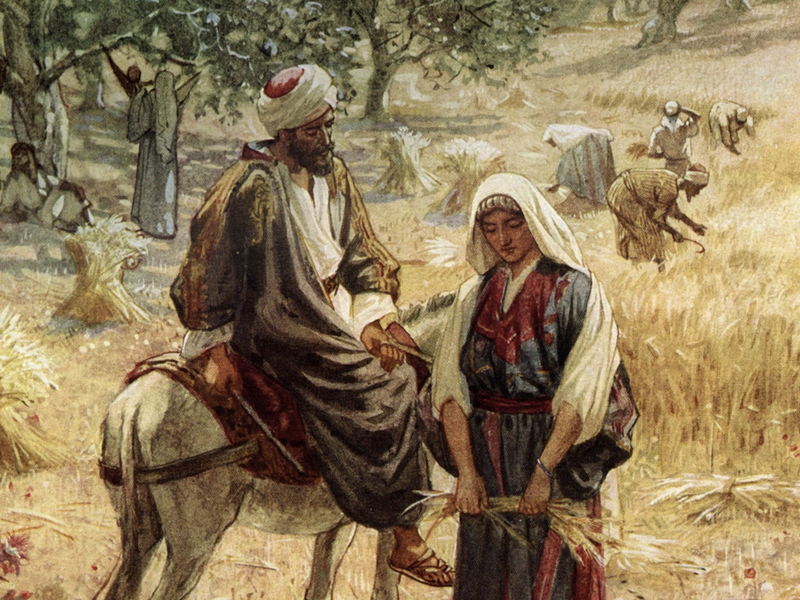
The Structures of Ruth

V. Propp’s classic work Morphology of the Folktale (University of Texas, 1968) argues that one of the basic structures of folk literature is "lack, lack liquidated." A king sets out to look for a wife, and the tale ends with a wedding. Often, the hero sets out on some business…

by Peter LeithartJanuary 17, 1993
painting-of-saint-luke
Luke

Second Samuel

Luke’s gospel begins and ends in the temple. It opens with Gabriel’s annunciation to the priest Zacharias (whose name, appropriately, means "Yahweh remembers") of the coming of a forerunner. Zacharias is performing priestly service at the time. The book ends with the joyful worship of a new priesthood in the…

by Peter LeithartJanuary 17, 1993
screen-shot-2023-01-26-at-3-44-00-pm
Biblical Chronology

Problems With New Testament History

Last time we arrived at the year A.M. 3960 as the date for the inauguration of the New Creation through the death, resurrection, ascension, and session of Christ, and the sending of the Holy Spirit. We also saw that this is most likely the year of Paul’s conversion. Fourteen years…

by James B. JordanJanuary 4, 1993

Showing page 286 of 309

See all

Showing page 6 of 43

See all

Conference

If you’re in the vicinity of Duke, you might be interested in a conference sponsored by the Center for Catholic and Evangelical Theology, in cooperation with the Duke Divinity School, on May 21-23, at Duke. The theme is “Preaching, Teaching, and Living the Bible.” Speakers include Robert Jenson, Rusty Reno,…

March 30, 2006
Literature

Garber on Merchant

Marjorie Garber has, as usual, some insightful things to say about Merchant of Venice: 1) She describes the play as “Shakespeare’s great play about difference,” pointing to the apparent stark contrasts of Christian and Jew, Venice and Belmont, male and female. Yet, she also notes that the play is busy…

March 29, 2006
Literature

Biblical echoes in Merchant of Venice

A.R. Braunmuller offers some suggestive comments in his introduction to the Merchant of Venice in the Pelican Shakespeare. Having summarized Portia’s speech (which he suggests might be a “setup that turns on a technicality” that “turns back on Shylock a legal rigidity he had been duped into demanding”), he notes…

March 29, 2006

Hypostatic union

Thomas argues that “if the human nature is not united to God the Word in person, it is not united to him in any way, and thus belief in the incarnation is altogether done away with, which subverts the entire Christian faith.” But since there is a union, it must…

March 29, 2006

Aquinas and Chalcedon

Frederick Bauerschmidt claims that “Aquinas is in fact the first medieval theologian in the West to quote directly from the Council of Chalcedon.” This is remarkable on all sorts of levels, not least because of the questions it raises about the authority of the ecumenical councils in medieval thought.

March 29, 2006
Theology

Gift and Gratitude in the Middle Ages

INTRODUCTION Seneca’s de Beneficiis was known to the Christian Middle Ages, as were some of the gift and gratitude customs of the Roman world. We’ll examine the use that Aquinas makes of Seneca when we get to the Summa later this week. But in addition to these ancient sources, medieval…

March 28, 2006

Showing page 1865 of 2212

Browse by Category

In Medias Res

Your weekly digest for all things Theopolis.

Donate

Theopolis is nearly 100% donor-supported. Consider joining us on our mission.