Theopolis Logo

Writing

Explore our collection of theological essays, biblical studies, and reflections on faith and culture.

See all
hard-to-be-a-god
Books

Let us Fix the World: An Admonition from the Strugatsky Brothers

That there is something wrong with the world is obvious. It does not take much time or brilliance to notice it. Once we get the feeling that we could imagine a better world, we are tempted to fix it or, if we cannot, to escape it. For both the world-fixers…

by Bogumil JarmulakApril 6, 2021

patrick-fore-b_shpu5m3nk-unsplash
Prayer

The Lord’s Prayer Exposited

“Our Father in heaven,” what is man that we should be called your sons and daughters, beloved children of God Almighty, Maker of heaven and earth, Yahweh of Hosts, the Ancient of Days. You are not a father preoccupied with work or engrossed in your smartphone; you are a present…

by Drew KnowlesMarch 30, 2021
lisanto-4irss8spks4-unsplash
Pastoral Ministry

Pastoral Reflections on Purity Laws

The Son of God took on human flesh and entered into the sin and suffering of our world. His life and teaching and suffering from His conception to His suffering on the cross teaches us a lot about how the good news enters into the world. Recently, I was teaching…

by Nathan ZekveldMarch 23, 2021
foster_balaam
Hermeneutics

The Ass and the Messiah

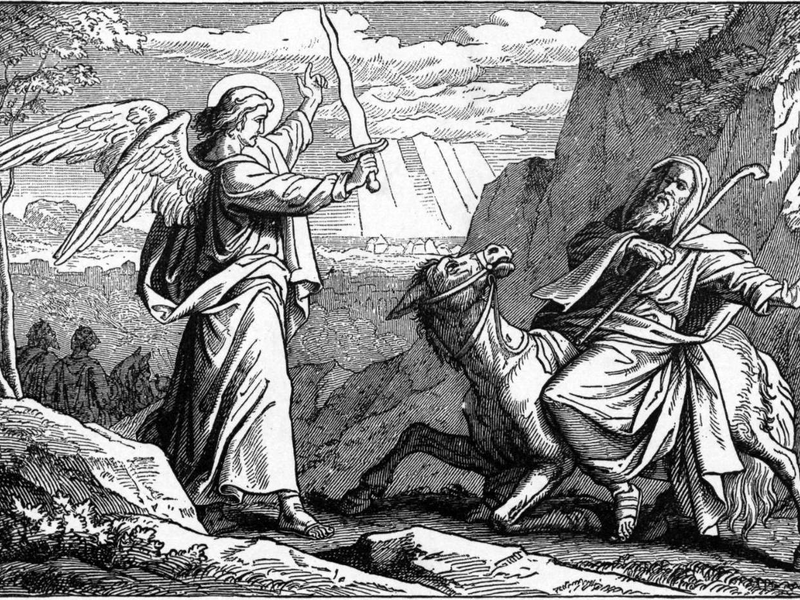
There is an unspoken rule about typology that permeates Evangelical thinking. It goes something like this: “If the New Testament authors don’t use an Old Testament character as a type, we don’t either.” There is a soundness in this reasoning, at least in a preliminary sense. There is no better…

by Garrett SoucyMarch 16, 2021
screen-shot-2021-03-08-at-8-57-36-am
Church Calendar

The Sound of Silence

In The world of Silence, Max Picard writes, “There does not seem to be any space left where there could possibly have been anything but noise. We take it for granted much as we take the air itself for granted. Everything begins and ends with noise.” Is it fair to…

by Jacob SkogenMarch 9, 2021
esther
Hermeneutics

The Absent Presence of God: The Storied Theology of Esther for the Modern Age

God is Not There God is not in the book of Esther. Do a word search and you will get 0 results. Also try Lord, Yahweh, Prayer, Temple, or Sacrifice. Even names with God’s name in them, like Elijah, Jeremiah, or Daniel are missing. The fool says in his heart,…

by Ryan HandermannMarch 4, 2021

Showing page 57 of 309

See all

Showing page 6 of 43

See all

Conference

If you’re in the vicinity of Duke, you might be interested in a conference sponsored by the Center for Catholic and Evangelical Theology, in cooperation with the Duke Divinity School, on May 21-23, at Duke. The theme is “Preaching, Teaching, and Living the Bible.” Speakers include Robert Jenson, Rusty Reno,…

March 30, 2006
Literature

Garber on Merchant

Marjorie Garber has, as usual, some insightful things to say about Merchant of Venice: 1) She describes the play as “Shakespeare’s great play about difference,” pointing to the apparent stark contrasts of Christian and Jew, Venice and Belmont, male and female. Yet, she also notes that the play is busy…

March 29, 2006
Literature

Biblical echoes in Merchant of Venice

A.R. Braunmuller offers some suggestive comments in his introduction to the Merchant of Venice in the Pelican Shakespeare. Having summarized Portia’s speech (which he suggests might be a “setup that turns on a technicality” that “turns back on Shylock a legal rigidity he had been duped into demanding”), he notes…

March 29, 2006

Hypostatic union

Thomas argues that “if the human nature is not united to God the Word in person, it is not united to him in any way, and thus belief in the incarnation is altogether done away with, which subverts the entire Christian faith.” But since there is a union, it must…

March 29, 2006

Aquinas and Chalcedon

Frederick Bauerschmidt claims that “Aquinas is in fact the first medieval theologian in the West to quote directly from the Council of Chalcedon.” This is remarkable on all sorts of levels, not least because of the questions it raises about the authority of the ecumenical councils in medieval thought.

March 29, 2006
Theology

Gift and Gratitude in the Middle Ages

INTRODUCTION Seneca’s de Beneficiis was known to the Christian Middle Ages, as were some of the gift and gratitude customs of the Roman world. We’ll examine the use that Aquinas makes of Seneca when we get to the Summa later this week. But in addition to these ancient sources, medieval…

March 28, 2006

Showing page 1865 of 2212

Browse by Category

In Medias Res

Your weekly digest for all things Theopolis.

Donate

Theopolis is nearly 100% donor-supported. Consider joining us on our mission.