Theopolis Logo

Writing

Explore our collection of theological essays, biblical studies, and reflections on faith and culture.

See all
screen-shot-2019-09-03-at-7-00-44-am-2
Biblical Studies

Genesis 38 from Multiple Angles (Part 2)

Summary : The Bible is a multi-faceted text. As a result, it can fruitfully be analyzed in many ways. Pace, context, flow, imagery: all of these aspects of the Biblical text are significant and instructive. Here, by way of illustration, I analyze Gen. 38 in a range of different ways,…

by James BejonOctober 22, 2019

screen-shot-2019-09-03-at-7-00-44-am-2
Hermeneutics

Genesis 38 from Multiple Angles (Part 1)

Summary: The Bible is a multi-faceted text. As a result, it can fruitfully be analysed in many ways. Pace, context, flow, imagery: all of these aspects of the Biblical text are significant and instructive. Here, by way of illustration, I analyse Gen. 38 in a range of different ways, and…

by James BejonOctober 15, 2019
eco-warrior-princess-tsoeguwwzwo-unsplash
Biblical Theology

Church Planting as Garden Growing

The closing chapters of the Bible bring to fulfillment the mission inaugurated in the opening chapters of the Bible: the dwelling place of God expands to fill the entire new creation. The story of Scripture concludes having achieved God’s original intent for His people in the Garden of Eden, and…

by Drew KnowlesOctober 8, 2019
annie-spratt-rx1ij59jryu-unsplash
Economics

Gift Economies Aren't So Giving

Oddly, the nature of pre -modern economies plays a central role in today’s policy debate over economic globalization and neo-liberalism. Analysts take ancient non-market economies as the standard against which to measure the economic and social effects of the market system. Scholars compare the distribution of economic goods and services…

by James R. RogersOctober 1, 2019
20121120_1642723459__76354-1391444640-1280-1280-1014x487
Luke

Zacchaeus, (Part 2)

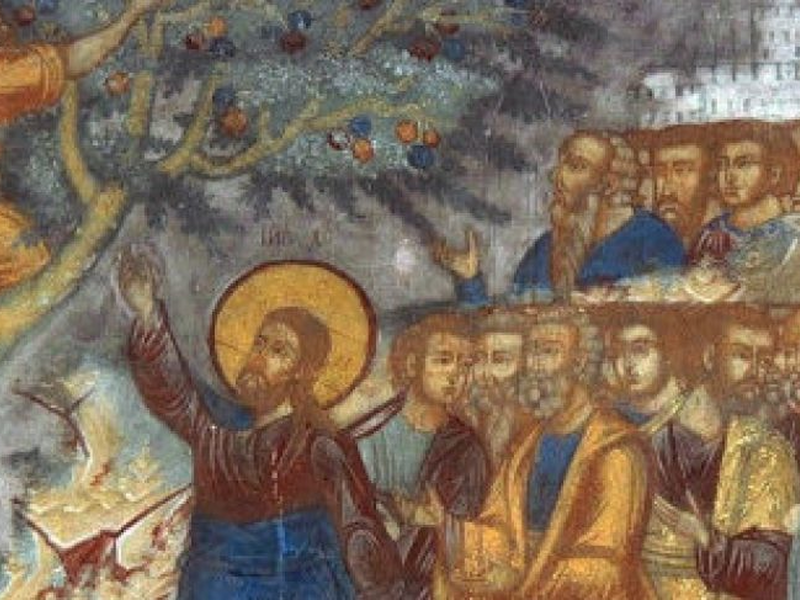
In part one of this essay, I mentioned that the story of Zacchaeus includes not only many details that point to other passages in Luke, but also details that point to the Old Testament, though we might not initially think of them. The first detail I have in mind is…

by Ralph Allan SmithSeptember 24, 2019
20121120_1642723459__76354-1391444640-1280-1280-1014x487
Luke

Zacchaeus (Part 1)

The story of Zacchaeus includes numerous interesting details that link this story with others in the Gospel of Luke. There are also details that tie the story of Zacchaeus to the Old Testament in ways that we might not initially take note of. In the Gospel of Luke, the story…

by Ralph Allan SmithSeptember 17, 2019

Showing page 74 of 309

See all

Showing page 6 of 43

See all

Conveniens

Bauerschmidt notes that Aquinas frequently argues, especially when speaking of the incarnation, not for “proof” of doctrine but for its “fittingness.” Reason has the role of “manifesting how [the incarnation] fits together (convenire means literally ‘to come together’) with other things that Christians hold true about God.” Perhaps this can…

March 23, 2006

Extra-Augustinisticum

In Epistle 137, Augustine writes: “The Christian teaching nowhere holds that God was so poured into human flesh as either to desert or lose - or to transfer and, as it were, compress within this frail body - the care of governing the universe. This is the thought of people…

March 23, 2006

Thomas on Merit

Commenting on ST I-II, q. 109, Frederick Bauerschmidt says that Thomas uses the word “merit” analogically when we speak of God rewarding human action “since we can act in the first place only because God has given us the capacity to act.” This applies even to Jesus: “even when Thomas…

March 23, 2006

On Seneca, de Beneficiis, Books 1-2

Seneca suggests that ingratitude is the worst of vices, and nothing is more “harmful to society” than ingratitude (I.1). Later in Book I, he lists a series of moral ills that plague society – “homicides, tyrants, thieves, adulterers, ravishers, sacrilegious, traitors” – but concludes that “worse than all these is…

March 23, 2006
Literature

Prospero the Magus

I am grateful to Ralph Smith for references to Frances Yates’ work on Shakespeare’s plays. In an analysis of The Tempest, Frances Yates writes: “It is inevitable and unavoidable in thinking of Prospero to bring in the name of John Dee, the great mathematical magus of whom Shakespeare must have…

March 22, 2006
History

Elizabethan Magic

Educated Elizabethans lived in a world of similitudes. As EMW Tillyard argued, the Elizabethan world picture was constituted by a series of analogous chains of being. The social world manifested and was manifested by the natural world; the universe as a whole resembled human beings; there was a hierarchy among…

March 22, 2006

Showing page 1867 of 2212

Browse by Category

In Medias Res

Your weekly digest for all things Theopolis.

Donate

Theopolis is nearly 100% donor-supported. Consider joining us on our mission.