Theopolis Logo

Writing

Explore our collection of theological essays, biblical studies, and reflections on faith and culture.

See all
jefferson-santos-fcejgbzakru-unsplash
Interview

The Way My Story Goes: Interview with Singer-Songwriter Jamie Soles

Jamie Soles is the reason I know my way around a guitar. When my guitar teacher put the sheet music for Eine Kleine Nachtmusick in my fourteen-year-old hands, I balked. He gave me “Foggy Mountain Breakdown.” I learned half of it. At home, I ignored my teacher’s instructions and tugged…

by Christian LeithartMarch 12, 2019
screenshot-2023-10-27-at-1-23-26-pm
Epistemology

The Mother’s Smile: Integrative Beauty

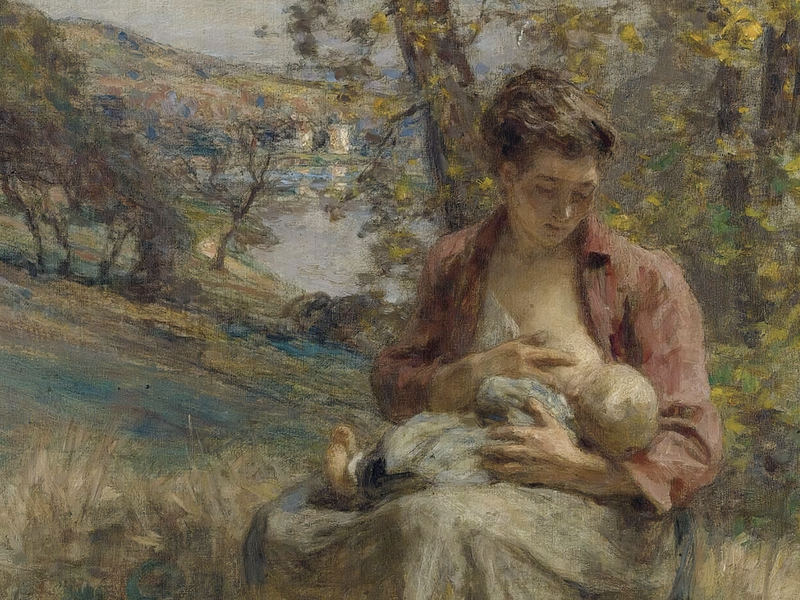
This is a tough era for mothers. Regard for mothers, while it is always booming in some circles, is decidedly lacking in the prevailing winds of the milieu. In high demand by contrast is contribution to the work force, being a consumer, and basic economic survival, often as a solitary…

by Esther Lightcap MeekMarch 5, 2019
img_1456
Epistemology

Seeking Integration in a Fragmented World: D.C. Schindler: Are You Open to the Heart of Things?

After the dark quiet of the year’s beginning, I return now to pick up the threads of my reflection on integration. This is my own personal inquiry, and for me it is no academic exercise but rather the forefront of my personal quest for the real. My hope is that…

by Esther Lightcap MeekFebruary 26, 2019
tolkien
Chiasm

The Chiastic Structure of Lord of the Rings

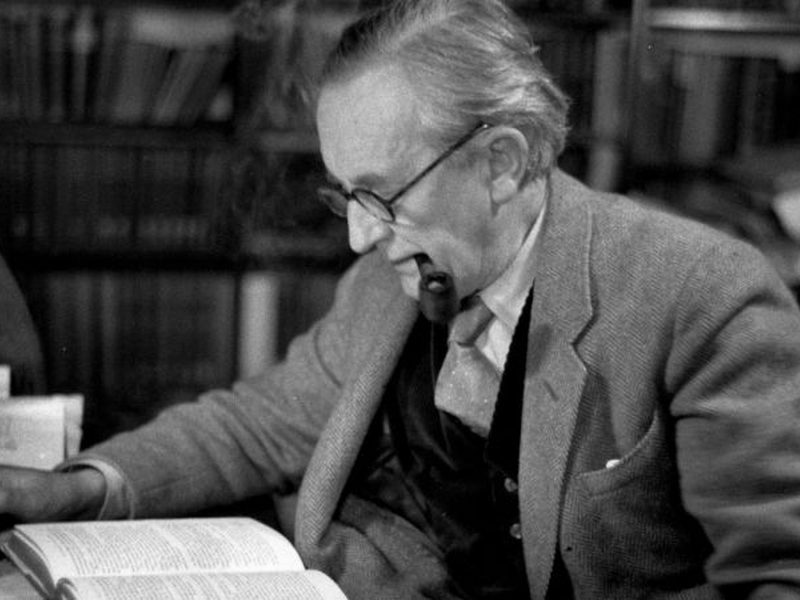
The chiastic structure of The Hobbit we considered in the previous essay is highly suggestive of what might lie in store for The Lord of the Rings saga. It is undoubtedly the case that J. R. R. Tolkien was a literary craftsman. It may even be the case he is…

by Kelly KerrFebruary 19, 2019
tolkien
Chiasm

The Chiastic Structure of the Hobbit

Structure plays an important part of any literary work, whether poetry or prose. It adds to the beauty and depth of the work and allows insight to be gained about what the author is trying to communicate. The question that concerns us here is whether or not there exists an…

by Kelly KerrFebruary 5, 2019
a-giant-alien-spaceship-that-has-landed-in-montana-in-arrival-denis-villeneuves-film-adaptation-of-a-story-by-ted-chiang
Movies

Learning the Language of Arrival

Can we learn to communicate from an outside intelligence? Spoiler Alert! If you have not yet seen the movie, this article may provide you with a great deal more information than you wished to know at this point. Since the 1999 film The Matrix received careful scrutiny on many fronts…

by Eric RobinsonJanuary 29, 2019

Showing page 81 of 309

See all

Showing page 6 of 43

See all

Conveniens

Bauerschmidt notes that Aquinas frequently argues, especially when speaking of the incarnation, not for “proof” of doctrine but for its “fittingness.” Reason has the role of “manifesting how [the incarnation] fits together (convenire means literally ‘to come together’) with other things that Christians hold true about God.” Perhaps this can…

March 23, 2006

Extra-Augustinisticum

In Epistle 137, Augustine writes: “The Christian teaching nowhere holds that God was so poured into human flesh as either to desert or lose - or to transfer and, as it were, compress within this frail body - the care of governing the universe. This is the thought of people…

March 23, 2006

Thomas on Merit

Commenting on ST I-II, q. 109, Frederick Bauerschmidt says that Thomas uses the word “merit” analogically when we speak of God rewarding human action “since we can act in the first place only because God has given us the capacity to act.” This applies even to Jesus: “even when Thomas…

March 23, 2006

On Seneca, de Beneficiis, Books 1-2

Seneca suggests that ingratitude is the worst of vices, and nothing is more “harmful to society” than ingratitude (I.1). Later in Book I, he lists a series of moral ills that plague society – “homicides, tyrants, thieves, adulterers, ravishers, sacrilegious, traitors” – but concludes that “worse than all these is…

March 23, 2006
Literature

Prospero the Magus

I am grateful to Ralph Smith for references to Frances Yates’ work on Shakespeare’s plays. In an analysis of The Tempest, Frances Yates writes: “It is inevitable and unavoidable in thinking of Prospero to bring in the name of John Dee, the great mathematical magus of whom Shakespeare must have…

March 22, 2006
History

Elizabethan Magic

Educated Elizabethans lived in a world of similitudes. As EMW Tillyard argued, the Elizabethan world picture was constituted by a series of analogous chains of being. The social world manifested and was manifested by the natural world; the universe as a whole resembled human beings; there was a hierarchy among…

March 22, 2006

Showing page 1867 of 2212

Browse by Category

In Medias Res

Your weekly digest for all things Theopolis.

Donate

Theopolis is nearly 100% donor-supported. Consider joining us on our mission.