Theopolis Logo

Writing

Explore our collection of theological essays, biblical studies, and reflections on faith and culture.

See all
kiwihug-l4gw27xzn1i-unsplash
Hermeneutics

Beginning and New Beginning in Luke

Although the events are, of course, not perfectly parallel, Luke in his gospel intends us to connect Jesus’ birth from the womb and His re-birth from the tomb. Luke 1:27 introduces us to Joseph and in verse 30 we learn that his betrothed wife was named Mary. An angel appeared…

by James B. JordanDecember 28, 1996
screenshot-2023-08-30-at-11-50-23-am
Matthew

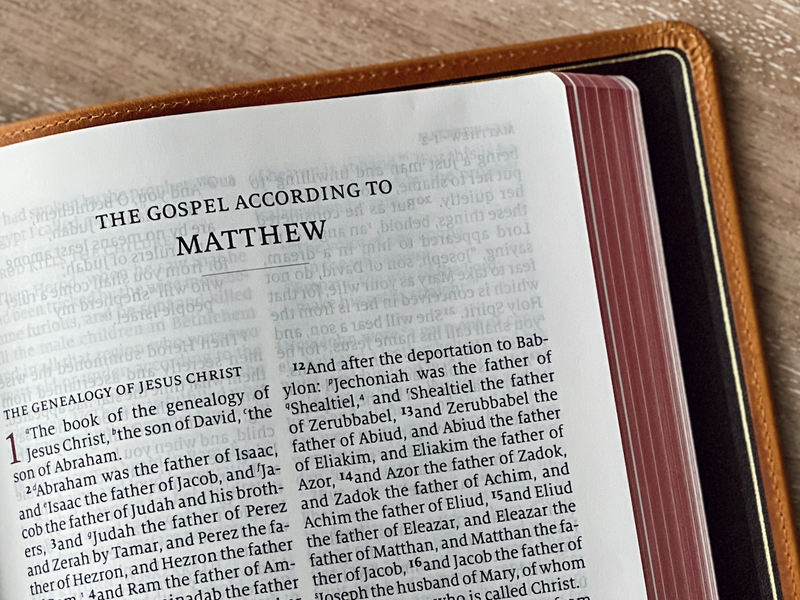
A Note on Matthew

The apostle Matthew is also known as Levi son of Alphaeus. While not much is said about this man, the few things that are told us are significant. Matthew in Greek is Matthaios and comes from the Hebrew name Mattithiah, or Mattith-Yah, "Gift of Yah(weh)." Matthew’s other name is Levi,…

by James B. JordanDecember 28, 1996

aaron-burden-qjdzyt_k8xg-unsplash
Biblical Horizons

Twelve Fundamental Avenues of Revelation (Part 1)

Theologians often speak of "special" and "general" revelation, or of "natural" and "supernatural" revelation, or of "word" and "deed" revelation. While there are many worthwhile insights in these discussions, particularly in the discussions in Cornelius Van Til’s Introduction to Systematic Theology , I have not found any that satisfied my…

by James B. JordanDecember 28, 1996
jan-kahanek-g3o5ztrk2e4-unsplash
Ezekiel

Countdown to Exile IV: Ezekiel and the Structure of History

Ezekiel’s 430 Years In Ezekiel 4, the prophet is told to begin his ministry by setting up a model of Jerusalem and lying on his side and prophesying against it. He is to do this for 430 days, a day for a year. 390 days are against "Israel," and 40…

by James B. JordanDecember 28, 1996

img_7664
Biblical Horizons

The Oddness of the Feast of Booths

The Feast of Ingathering in the seventh month of the Sinaitic calendar is also called the Feast of Sukkoth, of Booths, also called Feast of Tabernacles. I have usually called it by that last phrase, and it is the most common today; but there is a problem: A tabernacle is…

by James B. JordanDecember 28, 1996

sixteen-miles-out-ki3hr9t8t7a-unsplash
Ezekiel

Countdown to Exile III: Warnings Against False Hopes

The End of Jehoiakim’s Reign We have seen that Jehoiakim rejected Jeremiah’s prophetic warnings at the beginning of his reign. Let us now make a year-by-year survey of his reign down to its end. In the spring of 605 BC, Nebuchadnezzar defeated the Egyptians at Carchemish. In the summer, he…

by James B. JordanNovember 28, 1996

Showing page 261 of 309

See all

Showing page 6 of 43

See all
History

Counter-culture and post-modern

Kumar notes that the 1960s counter-culture set itself against everything in modernism: “Pop art and pop music, the ‘new wave’ in cinema and the ‘new novel’ in literature, thne elision of the boundaries between ‘art’ and ‘life,’ the cultivation of sensibility through sex and drugs rather than aesthetic contemplation of…

February 24, 2006
History

Early McLaren?

In a 1965 essay, Leslie Fiedler celebrated the new movements of the 1960s as post-modern, post-Freudian, post-Humanist, post-Protestant, post-white, post-male.

February 24, 2006
History

Postmodernism/ity

Kumar suggests that there is no useful distinction to be made between postmodernity as a socio-political concept and postmodernism as a cultural concept. All the instincts of postmodernists are against such a differentiation of spheres. For postmodernists, it is no longer useful to distinguish subsystems within the social world -…

February 24, 2006
History

Two modernisms

Kumar defines modernism as an intellectual, cultural and artistic revolt against modernity. Yet modernism itself, especially as expressed in architecture, was complex and racked with internal contradictions: “It could denounce the ‘inauthentic’ present in the name of the future, as in Futurism and Constructivism; and it could with equal force…

February 24, 2006
History

Two modernities?

At least two: The modernity of science and technology, the factory system and city planning, of bureacracy and management. And on the other hand the modernity of sensibility, literature, hedonism, the lust for ever-new experience. On the one hand, Industrialization; on the other, the Romanticism that challenged it. On the…

February 24, 2006
History

Liquid modernity

“Constant revolutionizing of production, uninterrupted disturbance of all social conditions, everlasting uncertainty and agitation . . . All fixed, fast-frozen relationships . . . are swept away, all new-formed ones become antiquated before they can ossify.” Zygmunt Bauman? No: Marx and Engels, in the Communist Manifesto .

February 24, 2006

Showing page 1877 of 2212

Browse by Category

In Medias Res

Your weekly digest for all things Theopolis.

Donate

Theopolis is nearly 100% donor-supported. Consider joining us on our mission.