Theopolis Logo

Writing

Explore our collection of theological essays, biblical studies, and reflections on faith and culture.

See all
kalen-emsley-bkci_8qcdvq-unsplash-1
Biblical Horizons

The Sequence of Events in the Creation Week

To begin with the source of this narrative: Since no human being was present to observe these events, we must assume that this narrative was revealed directly by God to a human author. There are three ways this might have happened. First, we might read, "God said to Abraham (or…

by James B. JordanOctober 23, 1997
eq9mnztemoq7lwjacsh3ss
Biblical Horizons

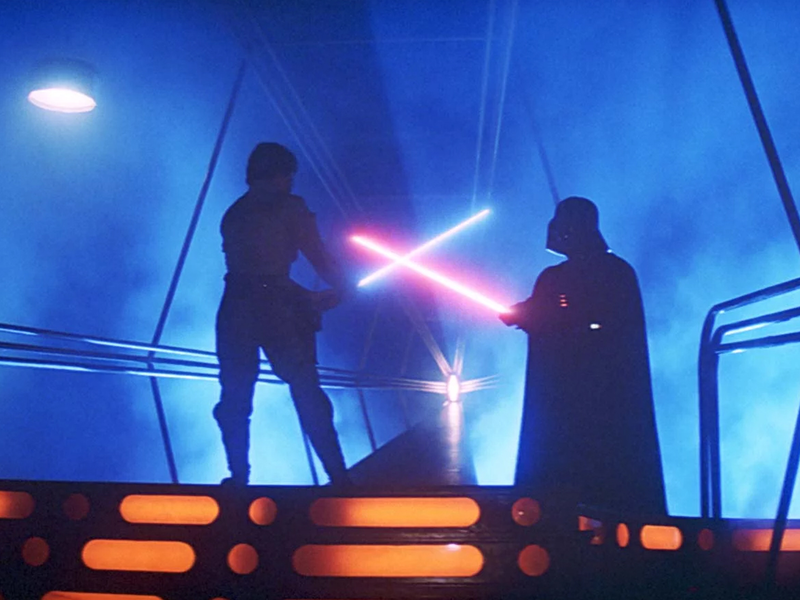
The Empire Strikes Back

The Empire Strikes Back is a movie most of us have seen more than once. It is generally regarded as the best of the three Star Wars films, which is probably due to the fact that unlike the other two, The Empire Strikes Back made use of the services of…

by James B. JordanOctober 4, 1997
lili-popper-lu15z1m_kfm-unsplash
Biblical Chronology

The Sequence of Events in the Creation Week, Part 1

Now that we have examined three unacceptable approaches to the events recorded in Genesis 1, it is only fair for me to set out what does seem to be recorded there. To begin with the source of this narrative: Since no human being was present to observe these events, we…

by James B. JordanOctober 4, 1997
raphael-schaller-gkincd2eniy-unsplash-6
Biblical Horizons

Cracking Up the “Bible Code”

Two books on the "Bible Code" have appeared this year. The first, a current bestseller, is Michael Drosnin’s The Bible Code (Drosnin, 1997). The other is Cracking the Bible Code (William Morrow, 1997), by Jeffrey Satinover, known to Christians for his outstanding 1996 book Homosexuality and the Politics of Truth…

by James B. JordanOctober 4, 1997
hannah-busing-0v6dmtujaik-unsplash
American Culture

The Case Against Western Civilization, Part 1

Part 1: Introduction The collapse of the Western tradition in the United States, seen in the hostility to Christianity in government and education, and the elimination of "traditional" or "canon" learning from our institutions of middle and higher learning, provides a crisis and an opportunity for serious believers at the…

by James B. JordanOctober 4, 1997
amjd-rdwan-erymmvvsy1y-unsplash-1
Theologia

Why Will You Die?

A Brief Defense of John Murray’s “the Free Offer of the Gospel,” & A Question About the Extent of the Atonement John Murray (1898-1975) is probably the last of the great American theologians; he belonged in the same set as that which contains such eminent Presbyterians as Charles Hodge and…

by Mark HorneOctober 3, 1997

Showing page 253 of 309

See all

Showing page 6 of 43

See all

Proverbs 12:8-14

INTRODUCTION This section of Proverbs focuses on issues of image, wealth, work, and treatment of employees (vv. 8-12), and ends with two verses that deal again with the use of the tongue (vv. 13-14). The final verses connect this section to the preceding section of this chapter (12:1-7). Thus, the…

January 6, 2006
Literature

Hamlet in Prufrock

The influence of Hamlet, the play and the character, on modern literature is vast. Consider Hamlet as model for Prufrock: Zulfikar Ghose says the “I am not Hamlet” in Eliot’s Prufrock may be literal or ironic, but then adds: “the more one ponders the language of ‘Prufrock’ and of Hamlet…

January 5, 2006
Literature

Pierre

Herman Melville’s Pierre (1852) was, to put it mildly, not warmly received by critics. One newspaper headlined its review with “HERMAN MELVILLE CRAZY” and another reviewer complained that Melville’s fancy was diseased. Critics are divided over whether it is a grand failure or simply a failure. Updike caught the tone…

January 5, 2006

Schleiermacher

Bauman distinguishes between the “legislative” notion of reason found in Kant and other Enlightenment figures and the “interpretive” rationality that characterizes much postmodern thought. The shift from the former to the latter was not accomplished all at once. Schleiermacher, for all importance in the rise of hermeneutics, was still aiming…

January 5, 2006
Philosophy

Foundations and Tribunals

The architectural model of building a structure of thought on “foundations” is among the metaphors employed by modern thinkers, and in this as in other areas there was a close alliance of philosophy and political action. Bauman notes that this was particularly evident in various utopian writers of the modern…

January 5, 2006
History

Postmodern critique, postmodern re-enchantment

“Postmodernity,” writes Zygmunt Bauman in his 1992 Intimations of Postmodernity , “means many different things to many different people. It may mean a building that arrogantly flaunts the ‘orders’ prescribing what fits what and what should be kept strictly out to preserve the functional logic of steel, glass and concrete.…

January 5, 2006

Showing page 1903 of 2212

Browse by Category

In Medias Res

Your weekly digest for all things Theopolis.

Donate

Theopolis is nearly 100% donor-supported. Consider joining us on our mission.