Theopolis Logo

Writing

Explore our collection of theological essays, biblical studies, and reflections on faith and culture.

See all
last-supper
Luke

Table Talk

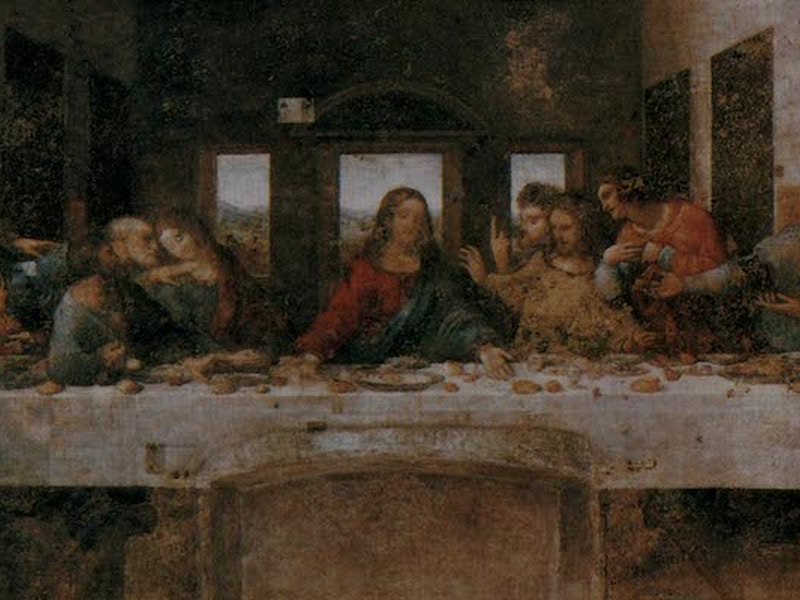
Along His journey to Jerusalem, Jesus stops frequently to have meals, three times with Pharisees (7:37-50; 11:37-54; 14:1-35). Meals were central to Jesus’ ministry. He comes “eating and drinking” (Luke 7:34). While His meals are not just for refreshment, they are opportunities for teaching the protocols of the kingdom. Meals…

by Peter LeithartApril 19, 2016
music-violin
Biblical Theology

A Musical Case for Typological Realism, (Part 4)

Time as a realm of participation can be difficult for us imaginatively to grasp. While music is a profoundly temporal art, exploring the medium of time like no other, most of our temporal experience seems decidedly unmusical in character, disjointed and unorchestrated. The form in which we naturally discover time…

by Alastair RobertsApril 14, 2016
John

Jesus' Burial Clothes

John devotes much attention to Jesus’ burial clothes. He tells us that Nicodemus brought about a hundred pounds of myrrh and aloes to spice Jesus body, and that He was bound in linen wrappings. We find out that His body and His head were wrapped separately. (John 19:39-40; 20:6-7). When…

by James B. JordanApril 12, 2016
clock
Biblical Theology

A Musical Case for Typological Realism, (Part 3)

Thinking about time in terms of music also helps us to appreciate its unity and inner relations. Henri Bergson observes our cultural habit of dividing time into discrete moments, and conceiving of these as if akin to objects in a spatial succession. [1] Against such a notion, Bergson argues for…

by Alastair RobertsApril 7, 2016
screen-shot-2016-03-31-at-9-32-11-am
Biblical Theology

A Musical Case for Typological Realism, (Part 2)

As we attend to these and other aspects of music’s temporality, Begbie suggests, we will find means by which to resist some of our habitual modern ways of conceptualizing time, most especially our tendency to conceive of time as if it were a homogeneous set of technologically quantifiable units laid…

by Alastair RobertsMarch 31, 2016
biblioteca-vasconcelos-crop
Biblical Theology

Systematic Typology (Part Three)

The Hidden Dimension In many fields of scientific study, the apparent complications and contradictions are dispelled once the internal logic is perceived. Biblical hermeneutics is no different, since the author of Creation is the Author of the Word. The Bible’s literary labyrinth radiates organically from an algorithm so simple it…

by Mike BullMarch 29, 2016

Showing page 133 of 309

See all

Showing page 6 of 43

See all
Literature

Wormwood and Rotten Denmark

During the staging of his play before the king, Hamlet mutters the word “Wormwood.” Why? Irwin Matus suggests the following: “Rarely glossed in editions of the play, wormwood is accepted as meaning only something bitter, from the taste of the plant of that name. However, the plant was also used…

August 22, 2005
Literature

Sacral politics in Shakespeare

Shakespeare’s two tetrologies on English history trace the shift from a sacrally based political order (Richard II) to a “Machiavellian” one (Richard III). That is the sequence of actual history. But the sequence of Shakespeare’s composition is different. Shakespeare wrote the historically later tetrology (2 Parts of Henry VI and…

August 22, 2005

Proving grace

Markus Barth highlights the judicial cast of Paul’s statement in Ephesians 2:7 that we “show the surpassing riches of His grace.” The verb “show” or “prove” is a lawcourt term, pointing to the presentation of evidence or a judicial demonstration. God has raised us up in Jesus to the heavenly…

August 21, 2005

Communion meditation, August 21

Ephesians 2:14: He Himself is our peace. Jesus is the one who brings peace between God and man. He has reconciled us to God, and brought near those who have been far off. But in our sermon text Paul is chiefly concerned with the peace that Jesus has brought between…

August 21, 2005

Exhortation, August 21

According to Paul, the church is being built into a holy dwelling, a temple in which the Spirit dwells. This has many implications, but let me highlight one. According to the Old Testament, temples were holy places whose holiness had to be guarded and defended. Levites guarded the tabernacle and…

August 21, 2005

Wise as serpents

From Francis Bacon’s De Augmentis Scientiarum , 7.1: “For as the fable goes of the basilisk, that if he sees you first, you die for it, but if you see him first, he dies; so itis with deceits, impostures, and evil arts, which, if they be first espied, they lose…

August 20, 2005

Showing page 1953 of 2212

Browse by Category

In Medias Res

Your weekly digest for all things Theopolis.

Donate

Theopolis is nearly 100% donor-supported. Consider joining us on our mission.