Theopolis Logo

Writing

Explore our collection of theological essays, biblical studies, and reflections on faith and culture.

See all
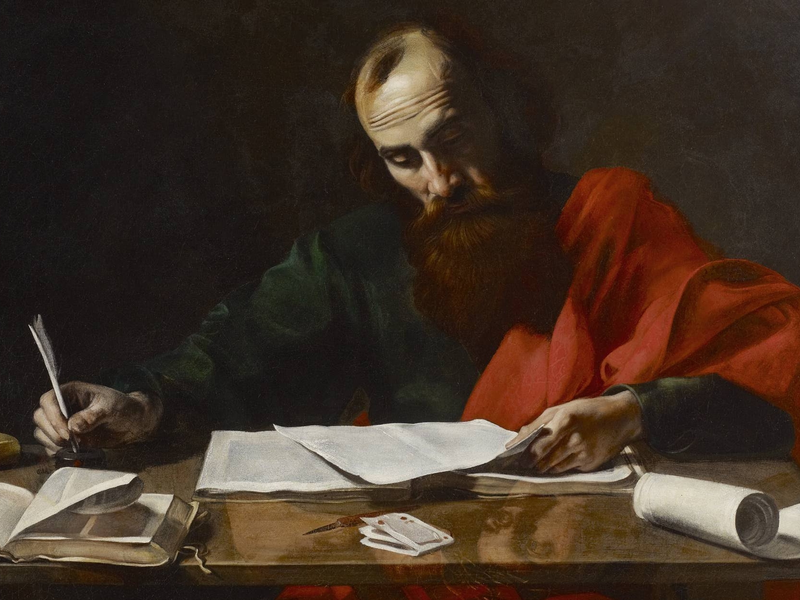
13071-probablyvalentindeboulogne-saintpaulwritinghi-1
1 Corinthians

The Great Exchange: Understanding Second Corinthians 5.21

He made Him who knew no sin to be sin on our behalf, that we might become the righteousness of God in Him. My argument is simple: What Paul means in writing the quotation above in context is the same as what he was telling the Ephesians when he wrote,…

by Mark HorneJune 7, 2004

ben-white-w8qqn1pmqh0-unsplash
Biblical Theology

What is Biblical Theology (Part 3) : The Art of Biblical Theology

THE ART OF BIBLICAL THEOLOGY IN PRACTICE: INTERTEXTUALITY AND TWO PAULINE CASE STUDIES The Art of Biblical Theology: Intertextuality Biblical Theology is really an art. Like other skills of this sort, it is not a matter of following rules (though there are certainly guidelines and techniques). Rather, it’s matter of…

by Rich LuskJune 6, 2004
malcolm-lightbody-tc2f02iq8le-unsplash
Biblical Theology

What is Biblical Theology: (Part 2) The Christotelic Spiral

Click HERE for Part 1 Reading Christotelically Jesus Christ is the heart of God’s plan for creation and history. There is no “hidden plan” or “hidden God” lurking behind Christ; rather, in and through Christ God has revealed himself and his intentions towards the world. In Christ, the Father has…

by Rich LuskJune 6, 2004
aaron-burden-qjdzyt_k8xg-unsplash
Biblical Studies

What is Biblical Theology? (Part 1)

STORY THEOLOGY AND A THEOLOGY OF STORY Defining Biblical Theology What is Biblical Theology? How does it compare to other ways of doing theology, such as Systematic Theology? Geerhardus Vos suggested that whereas Biblical Theology draws a line, Systematic Theology draws a circle. That is to say, Biblical Theology is…

by Rich LuskJune 6, 2004
screenshot-2023-09-21-at-3-59-23-pm
Hebrews

Living by His Faith: Some Rough Thoughts on the Faithfulness of Christ

The gospels strongly imply Jesus lived by faith in the promise of his heavenly Father. How else can his prayer life understood? How else could he have wrestled through the Gethsemane experience? How else could he have committed himself into his Father’s care at death? How could Jesus have presented…

by Rich LuskJune 6, 2004
sixteen-miles-out-al48tflf4e8-unsplash
John

John 3:16

John 3:16 is probably best-known, or at least, best-liked Bible passage in North America: “For God so loved the world, that he gave his only Son, that whoever believes in him should not perish but have eternal life.” This declaration of God’s love of the whole world is greatly comforting…

by Mark HorneJune 6, 2004

Showing page 223 of 309

See all

Showing page 6 of 43

See all

Translation, 2 Kings 10

Now to ‘Achav [were] seventy sons in Shomron And wrote Jehu’ scrolls And he sent [to] Shomron to the princes of Yizre’e’l, the elders And to the trustees of ‘Achav, saying, “Now you yourselves according to the entering of this scroll to you And with you [are] the sons of…

June 30, 2005

Anthropology and soteriology

Explaining the meaning of the image of God, Calvin writes, “there is no solidity in Augustine’s speculation, that the soul is a mirror of the Trinity, inasmuch as it comprehends within itself, intellect, will, and memory. Nor is there any probability in the opinion of those who place likeness to…

June 29, 2005
History

Delayed Globalization

In his account of the beginning of World War I, Europe’s Last Summer , David Fromkin notes that globalization was already well underway prior to 1914, and in fact was in some ways more advanced than at any time since: “You could go to practically anywhere in the world without…

June 29, 2005

Modernity thesis revisited

I have been deeply skeptical about the arguments of Jacques Ellul and others concerning our enslavement to technology, as well as the arguments of Peter Berger about the “heretical imperative” that modernity imposes on us. Technological modernity tempts us, as Craig Gay has argued, to act as if God does…

June 29, 2005

High Context Societies

Ronald Simkins has distinguished between “high context” and “low context” societies. In the former, the members of the society share many cultural assumptions and meanings; in the latter, the shared meanings are much thinner and more sporadic. Of course, the distinction is not absolute, since within a relatively “low context”…

June 28, 2005

Eucharistic meditation, June 26

2 Kings 5:17: Naaman said to Elisha, “Your servant will no more offer burnt offering nor will he sacrifice to other gods, but to Yahweh.” Naaman, we noted in the exhortation, was a baptized Gentile convert. That baptism in the Jordan healed him of his leprosy. That baptism was an…

June 26, 2005

Showing page 1967 of 2212

Browse by Category

In Medias Res

Your weekly digest for all things Theopolis.

Donate

Theopolis is nearly 100% donor-supported. Consider joining us on our mission.