Theopolis Logo

Writing

Explore our collection of theological essays, biblical studies, and reflections on faith and culture.

See all
stalker
Advent

Why Stalker Should be Added to Your Christmas Watchlist

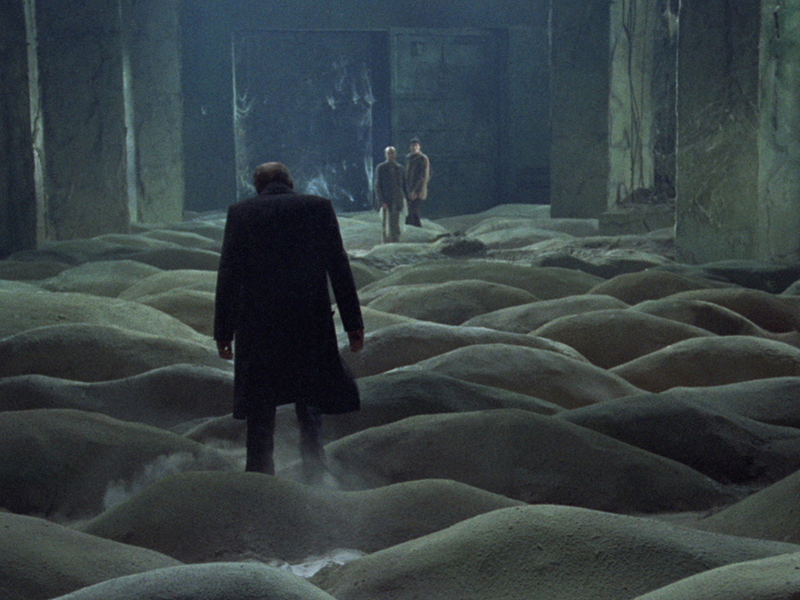
Stalker is a Soviet-era film by Andrei Tarkovsky in which an enigmatic location comes into existence either through an alien crash or a nuclear disaster; the film never makes it clear, but knowing Tarkovsky’s criticism of the spectacle nature of the alien motif after his own filming of Solaris and…

by Garrett SoucyDecember 19, 2023

jessica-rockowitz-5nlcaz2wjxe-unsplash
Motherhood

A Greater Capacity

I was scrolling through Instagram on the night of Thanksgiving, the only one awake (as usual), coming down from my extrovert-high after all the conversation and merriment of the day, when I came across a post that stopped me in my tracks. The post contained a picture-perfect image of some…

by Lindsey MurphyDecember 18, 2023
screen-shot-2020-12-03-at-1-47-33-pm
Theopolis News

The 2024 James B. Jordan Prize

The Theopolis Institute is pleased to announce the fourth round of the James B. Jordan Prize to honor outstanding doctoral dissertations in biblical theology. James Jordan is one of the most insightful biblical scholars of our time. The Jordan Prize exists to encourage more of the deep Scriptural investigation of…

by Peter LeithartDecember 15, 2023
screenshot-2023-12-12-at-10-36-28-am-2
Eschatology

What Kind of Story Is History?

Suppose I were to write three versions of a story. In every version, the first half of the book looks forward to the coming of the king. There are promises about him and about how glorious his kingdom will be, about how his kingdom will fill the earth with peace…

by John BarachDecember 12, 2023
13071-probablyvalentindeboulogne-saintpaulwritinghi-1
Galatians

Re-Considering Doug Wilson's "Covenant with Hagar"

Introduction Doug Wilson’s American Milk and Honey is now available. There’s a great deal in the book worth commenting on, and I anticipate engaging with that material more broadly in the near future. In the lead up to its release, however, Moscow has not been silent concerning Israel, the Jews,…

by Gabe HarderDecember 11, 2023
screenshot-2023-12-05-at-5-51-01-pm
Parables

The Older Son

Our telling of the Prodigal Son parable usually (and rightly) focuses on the runaway younger brother: the lost son returns, and his father joyfully and graciously receives him. But the full story has an additional element: an angry older brother. Jesus uses the older brother to rebuke the religious leaders…

by Tim NicholsDecember 6, 2023

Showing page 25 of 309

See all

Showing page 6 of 43

See all
Literature

Ibsen

Ibsen, Steiner argues, did not write tragedies. Ibsen wrote “dramatic rhetoric” calling society to reform. For real tragedy, there is no such “solution” to be found, there is no remedy, except destructive sacrifice and perhaps a deus ex machina. From this angle, tragedy is perhaps among the STOICHEIA that prepared…

January 7, 2004
Literature

More Quotations from Steiner

Some more quotations from Steiner’s Death of Tragedy : “We cannot understand the romantic movement if we do not perceive at the heart of it the impulse toward drama . . . . The romantic mode is neither an ordering nor a criticism of life; it is a dramatization. And…

January 7, 2004
Theology

NT Wright’s Rutherford House Lecture

Some thoughts on NT Wright’s Rutherford House Lecture, August 2003. I have little disagreement with much of the lecture, and it clarified a number of things for me. Wright’s views on justification, however, continue to puzzle me at a number of points. Here’s an attempt to clarify my (or NTW’s)…

January 7, 2004
Theology

NT Wright’s Rutherford House Lecture

Some thoughts on NT Wright’s Rutherford House Lecture, August 2003. I have little disagreement with much of the lecture, and it clarified a number of things for me. Wright’s views on justification, however, continue to puzzle me at a number of points. Here’s an attempt to clarify my (or NTW’s)…

January 7, 2004
Literature

European Drama

Steiner notes that, following the Renaissance, European drama operated under the shadows of neo-classical and Elizabethan dramatic practice, the former “closed” and rigidly adhering to Aristotelian criteria, the other open and experimental. He discusses the theory of Thomas Rymer (a neo-classicist) at some length, concluding that the controversies that Rymer…

January 6, 2004
Literature

Shakespearean Difference

George Steiner in his Death of Tragedy describes the “Shakespearean difference” as mainly due to Shakespeare’s avoidance of fascination with Hellenic models: “The neo-classic view [which rigidified Aristotelian conceptions of tragedy] expresses a growing perception of the miracle of Greek drama. This perception was fragmentary. There were few translations of…

January 6, 2004

Showing page 2141 of 2212

Browse by Category

In Medias Res

Your weekly digest for all things Theopolis.

Donate

Theopolis is nearly 100% donor-supported. Consider joining us on our mission.