Theopolis Logo

Writing

Explore our collection of theological essays, biblical studies, and reflections on faith and culture.

See all
or
Abortion

Political Hermeneutics: The Argument From Silence, Part 2

Click HERE for part 1. III This leads to a further question. I have argued that silence cannot by itself establish a Scriptural principle, but does Scripture’s silence carry any weight in itself? Does the fact that something is unbiblical in a weak sense tell us anything at all? In…

by Peter LeithartMarch 13, 1990

hebrew-manuscript-6
Biblical Chronology

Groping Through the Gaps

Although nowadays gap theories are associated with dispensationalism, it was not always so. In the nineteenth century, scholars from a variety of backgrounds (Anglican, Reformed, and proto-fundamentalist) seem to have become fascinated by gaps. If you are not familiar with what I am talking about, this newsletter will acquaint you…

by James B. JordanFebruary 26, 1990
or
Abortion

Political Hermeneutics: The Argument from Silence, Part 1

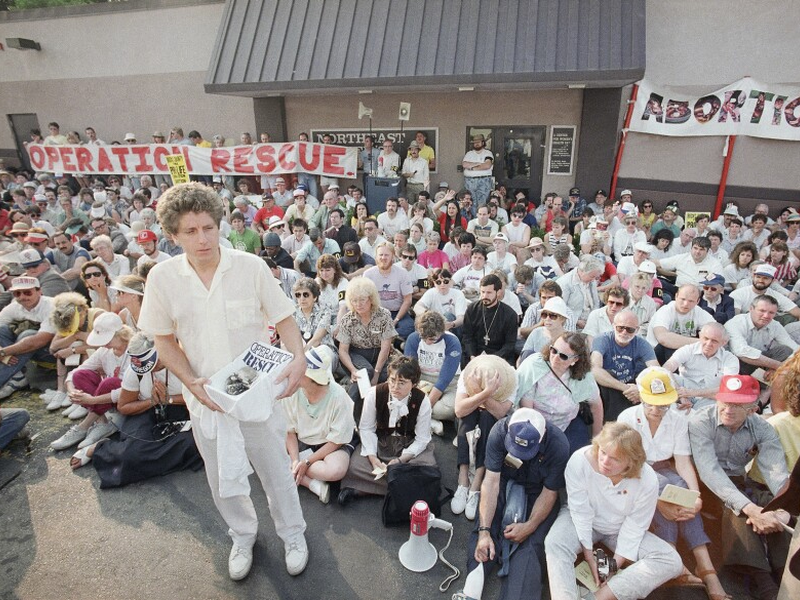
If the debate over Operation Rescue has proven anything, it has proven that there is absolutely no consensus among evangelicals in general, or among "reconstructionists" in particular, about how to use the Bible to judge political actions and movements. Each side of the debate claims biblical authority for its position,…

by Peter LeithartFebruary 13, 1990
49980-nicolas_poussin_-_the_judgment_of_solomon_-_wga18330-800w-tn
Biblical Studies

Advice From a Sojourner, Part 4

Two things I asked of Thee, Do not refuse me before I die: Keep deception and words of falsehood far from me, Give me neither poverty nor riches, Feed me with the food that it my portion, Lest I be full and deny Thee, And say, "Who is the LORD?"…

by James B. JordanFebruary 2, 1990
image-2
Biblical Horizons

Foucault’s Pendulum

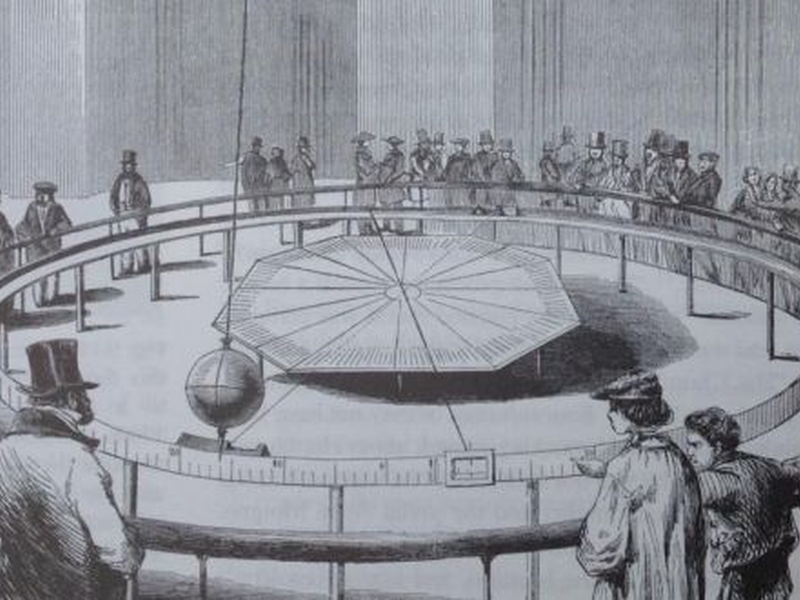
Umberto Eco’s "The Name of the Rose" was certainly one of the best literary works of the past decade, though the film version hardly measured up to it. Now Eco has given us a new novel, "Foucault’s Pendulum." Like Rose, Foucault’s Pendulum reflects on the limitations of human knowledge, and…

by James B. JordanJanuary 26, 1990
tanner-mardis-xuxghzhibn4-unsplash-1-2
Biblical Studies

What Is “Interpretive Maximalism”?

From time to time people ask me about "interpretive maximalism." They want to know what it is, and sometimes want to know if it represents some departure from the Reformed grammatico-historical, Biblico-theological approach to the Bible. I have something of a problem with these questions, because "interpretive maximalism" is not…

by James B. JordanJanuary 26, 1990

Showing page 305 of 309

See all

Showing page 6 of 43

See all

Are Trinitarian Persons Persons?

B oethius defined persona as an “individual substance of a rational nature ( natuae rationalis individua substantia ). This definition is often cited as evidence that medieval Trinitarian theology, deeply influenced by Boethius, did not teach that the Trinitarian “Persons” are persons in the modern sense of the term -…

January 19, 2017

Justice and Righteousness

N estled within several chapters of 1 Chronicles that describe David's wars, 1 Chronicles 18:14–17 explains the purpose of those wars: To establish Yahweh's order of justice in Israel, an order of justice that David himself administers and mediates. Having conquered Philistia, Moab, Ammon, and Edom, David reigns over “all…

January 18, 2017

God's Sacramental Self-Gift

What does God give in creation and redemption? He gives us our own existence, and that the gift He gives is Himself. Both are true. Luther captures this latter point in his 1528 “Confession”: “These are the three Persons and the one God, Who has given Himself to us wholly…

January 17, 2017

Anthropomorphism and Nature

I n his Essays in Anthropology , Robert Spaemann observes that “the beginning of modern science was marked by polemics against the concept of nature. The concept of nature is now taken to be anthropomorphic, while the essentially teleological idea of things in the cosmos having ‘movement in themselves' is…

January 17, 2017

American Covenant

P hilip Gorski's American Covenant examines the American tradition of civil religion or civic republicanism from the Puritans through President Obama. Gorski contrasts this tradition with the two most belligerent contenders in contemporary American politics, religious nationalism and radical secularism. Civil religion differs from radical secularism in its anthropology (communitarian…

January 16, 2017

Conrad’s Mesmerizing Obscurity

K ate Symondson begins her TLS review of recent editions of Joseph Conrad’s letters and his novel Victory with a reminder of FR Leavis's complaint about Conrad's “insistence on inexpressible and incomprehensible mystery.” Symondson writes, “Instead of the Victorian preference for pellucid—almost pedantic—hardened detail, mist shrouds and encircles Conrad's fiction.…

January 13, 2017

Showing page 216 of 2212

Browse by Category

In Medias Res

Your weekly digest for all things Theopolis.

Donate

Theopolis is nearly 100% donor-supported. Consider joining us on our mission.