Theopolis Logo

Writing

Explore our collection of theological essays, biblical studies, and reflections on faith and culture.

See all
tanner-mardis-xuxghzhibn4-unsplash-1-2
Biblical Studies

Tweets-turned-Notes on the Bible’s Chronology

Summary In what follows, I will consider the “year-stamps” employed in Scripture, i.e., statements of the form, “Such-and-such an event took place in the Xth year of Y.” In the process, I will suggest some ways in which the Biblical narrative might relate to events in the extra-Biblical world, though…

by James BejonJuly 16, 2019
durer-prodigal-son-2
Luke

Perspectives on the Prodigal, (Part 2)

In the first essay on the parable of the Prodigal Son, I suggested that the problems commentators and others encounter in interpreting Jesus three-part parable are not accidental. These are not just problems in our ignorance of cultural background. They are intentional features of the stories —stories designed to poke…

by Ralph Allan SmithJuly 11, 2019
durer-prodigal-son-2
Luke

Perspectives on the Prodigal, (Part 1)

The story of the Prodigal Son is perhaps the most well-known story in the Bible. As others have observed, it may also be one of the most misunderstood. In two short essays, I will point out features of this story that are commonly neglected, aspects of Jesus’ parable that might…

by Ralph Allan SmithJuly 9, 2019
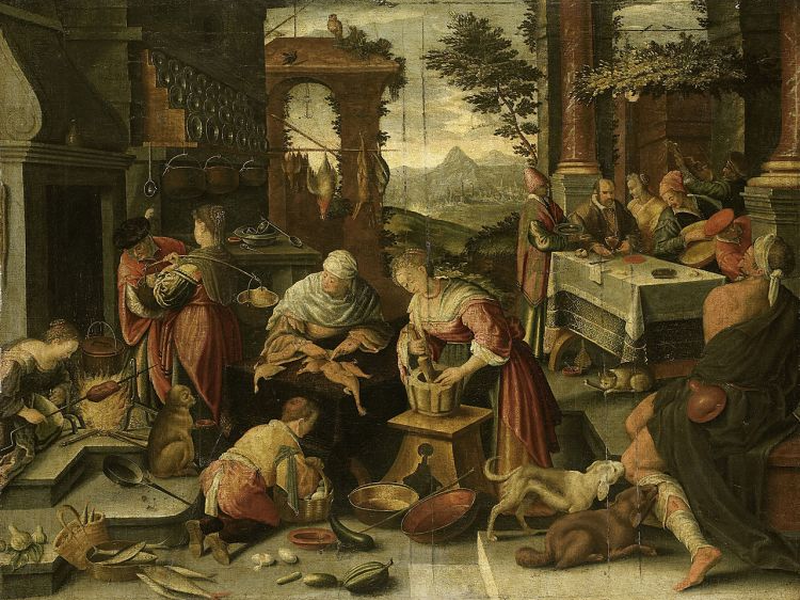
de-rijke-man-en-de-arme-lazarus-by-jacopo-da-ponte-16th-century
Luke

Lazarus and the Rich Man

The parable of Lazarus and the nameless rich man is not an independent story. It is part of a long context that begins in Luke 15:1, where Jesus is eating with tax collectors and sinners and the scribes and Pharisees grumble. In response to their hardheartedness, Jesus tells a three-part…

by Ralph Allan SmithJuly 4, 2019
aaron-burden-uynrnfdkjwg-unsplash
Luke

Everybody has Dropsy - Luke 14:1-24

The Bible is written so that even when a reader cannot pick up on what might be deeper or more detailed aspects of a text, there is virtually always a message to be heard. In the ancient world, where the “reader” of Scripture would likely be a church official facing…

by Ralph Allan SmithJuly 2, 2019
communion
Biblical Theology

Fruit Trees and Grain Plants

The distinction between garden (or vineyard) and field begins in Genesis 2. This relates to the ordering of the formless world. Plants of the field are contrasted with the garden planted by God in Genesis 2:5&8. Later on, under the Old Covenant the Israelites will be required to keep their…

by James B. JordanJune 27, 2019

Showing page 77 of 309

See all

Showing page 6 of 43

See all

Justice, Justification, Baptism

Michael Gorman ( Becoming the Gospel ) points out what Richard Hays has called the “deft word-play” on the dik - root in 1 Corinthians 6:1-11. The word-play is sometimes lost because English translations use different word groups to translate different forms of the root. If we stick to a…

February 4, 2016
Atonement

Atonement theory?

Since Harnack, theologians have glibly spoken of Anselm's Cur Deus Homo as a form of “atonement theory” or a “model” of atonement. According to Katherine Sonderegger, Harnack told the story of atonement theology in terms of a set of “competing ‘models,' each with schools and eponymous heads”: “Harnack’s nineteenth-century magisterial…

February 4, 2016

Second Exodus

In an essay form Israel's Prophetic Heritage , Bernard W. Anderson analyzes the “exodus typology” in what he calls “second Isaiah” (available here ). He acknowledges that “there are numerous linguistic echoes of the Exodus tradition” throughout the text, he finds ten places where “the new exodus is the specific…

February 3, 2016

Schumpeter on Ideology

In a famous 1949 essay on “ Science and Ideology ,” published in American Economic Review , Joseph Schumpeter highlighted the role of ideology is scientific research, including economic research. The majority of economists, he said, “are ready enough to admit its presence though, like Marx, they find it only…

February 3, 2016

Cinema, Time, Space

In his book, The Culture of Time and Space, 1880-1918 , Stephen Kern explores how technological innovations of the late 19th and early 20th centuries (“telephone, wireless telegraph, x-ray, cinema, bicycle, automobile, and airplane,” 1) reoriented the experience of time and space. Simultaneous communication seemed to erase space, and rapid…

February 3, 2016

Seal of the Spirit

The New Testament speaks of the “seal of the Spirit” in several places (2 Corinthians 1:22; Ephesians 1:13; 4:30). The Spirit marks out believers, sealing them for the day of redemption. The Spirit is the seal, or affixes the seal - a brand, a mark of ownership, a regimental tattoo…

February 3, 2016

Showing page 325 of 2212

Browse by Category

In Medias Res

Your weekly digest for all things Theopolis.

Donate

Theopolis is nearly 100% donor-supported. Consider joining us on our mission.