
Theopolis Logo

Writing

Explore our collection of theological essays, biblical studies, and reflections on faith and culture.

See all
kiwihug-l4gw27xzn1i-unsplash
Hermeneutics

Beginning and New Beginning in Luke

Although the events are, of course, not perfectly parallel, Luke in his gospel intends us to connect Jesus’ birth from the womb and His re-birth from the tomb. Luke 1:27 introduces us to Joseph and in verse 30 we learn that his betrothed wife was named Mary. An angel appeared…

by James B. JordanDecember 28, 1996
screenshot-2023-08-30-at-11-50-23-am
Matthew

A Note on Matthew

The apostle Matthew is also known as Levi son of Alphaeus. While not much is said about this man, the few things that are told us are significant. Matthew in Greek is Matthaios and comes from the Hebrew name Mattithiah, or Mattith-Yah, "Gift of Yah(weh)." Matthew’s other name is Levi,…

by James B. JordanDecember 28, 1996

aaron-burden-qjdzyt_k8xg-unsplash
Biblical Horizons

Twelve Fundamental Avenues of Revelation (Part 1)

Theologians often speak of "special" and "general" revelation, or of "natural" and "supernatural" revelation, or of "word" and "deed" revelation. While there are many worthwhile insights in these discussions, particularly in the discussions in Cornelius Van Til’s Introduction to Systematic Theology , I have not found any that satisfied my…

by James B. JordanDecember 28, 1996

jan-kahanek-g3o5ztrk2e4-unsplash
Ezekiel

Countdown to Exile IV: Ezekiel and the Structure of History

Ezekiel’s 430 Years In Ezekiel 4, the prophet is told to begin his ministry by setting up a model of Jerusalem and lying on his side and prophesying against it. He is to do this for 430 days, a day for a year. 390 days are against "Israel," and 40…

by James B. JordanDecember 28, 1996

img_7664
Biblical Horizons

The Oddness of the Feast of Booths

The Feast of Ingathering in the seventh month of the Sinaitic calendar is also called the Feast of Sukkoth, of Booths, also called Feast of Tabernacles. I have usually called it by that last phrase, and it is the most common today; but there is a problem: A tabernacle is…

by James B. JordanDecember 28, 1996

sixteen-miles-out-ki3hr9t8t7a-unsplash
Ezekiel

Countdown to Exile III: Warnings Against False Hopes

The End of Jehoiakim’s Reign We have seen that Jehoiakim rejected Jeremiah’s prophetic warnings at the beginning of his reign. Let us now make a year-by-year survey of his reign down to its end. In the spring of 605 BC, Nebuchadnezzar defeated the Egyptians at Carchemish. In the summer, he…

by James B. JordanNovember 28, 1996

Showing page 261 of 309

See all

Showing page 7 of 43

See all

Paul and Israel

N. T. Wright’s views on Paul and justification will be misconstrued if they are examined outside the context of his views on Israel’s history and Jesus’ role in that history. That is, Wright’s work is of a piece – his historical Jesus studies are essential to a proper understanding of…

April 17, 2007

Sanders and Bultmann

To understand EP Sanders’s “revolution” in Pauline studies, it’s helpful to look at Bultmann’s understanding of Paul, against which Sanders and others are explicitly and implicitly reacting. (I’m following the superb summary in Stephen Westerholm’s Perspectives Old and New on Paul.) Bultmann’s starting point is anthropological. As a creature, man…

April 17, 2007
Literature

Troubadours and courtly love

In his book, The Reign of Chivalry , Richard Barber gives a very fine summary of the courtly love tradition and the romantic tradition that it produced. I reproduce here only some of the main points of his discussion of the lyric love poetry of the troubadours. 1) Courtly love,…

April 17, 2007

Sermon Outline, Second Sunday after Easter

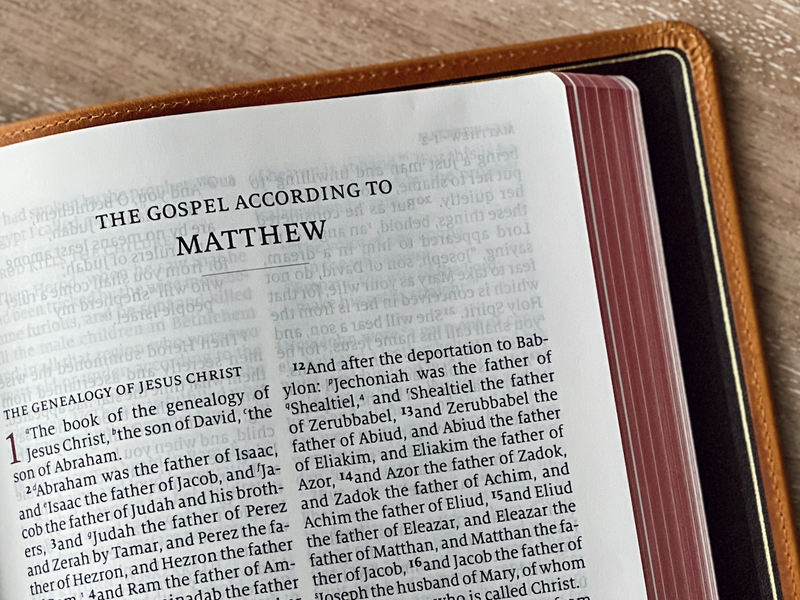
INTRODUCTION Matthew’s gospel is organized to show that Jesus is the True Israel, reliving Israel’s history faithfully. But Matthew also shows that Jesus is Israel’s God, who is rejected by His own people but triumphs over their rejection. THE TEXT “The book of the genealogy of Jesus Christ, the Son…

April 16, 2007

Literal and spiritual senses

Early in the Summa theologiae , Thomas defends the fourfold interpretation of the Old Testament Scripture by saying that the words of Scripture refer univocally to things, and that God providentially uses those things to signify later things. In this, he was anticipated by Hugh of St. Victor. In his…

April 11, 2007
Theology

Place of theology

Roch Kereszty asks why, if “Scriptural formulas are the most accurate and the best suited for expressing christological doctrine,” we need “theological speculation.” He answers that theology exists to clarify and explain the Bible: “Systematic theologians . . . will follow the direction given in the New Testament itself (that…

April 11, 2007

Showing page 1693 of 2212

Browse by Category

In Medias Res

Your weekly digest for all things Theopolis.

Donate

Theopolis is nearly 100% donor-supported. Consider joining us on our mission.