Theopolis Logo

Writing

Explore our collection of theological essays, biblical studies, and reflections on faith and culture.

See all
alfons-morales-ylswjsy7stw-unsplash-1
Judges

Book Review: E. John Hamlin, At Risk in the Promised Land: A Commentary on the Book of Judges

E. John Hamlin, At Risk in the Promised Land: A Commentary on the Book of Judges International Theological Commentary. Grand Rapids: Eerdmans, 1990. For anyone who has developed a taste for the rich biblical theology of Meredith Kline, James B. Jordan, Vern Poythress, and others, it is difficult to find…

by Peter LeithartJuly 17, 1993
Exodus

The Rock That Followed Them

". . . and all drank the same spiritual drink, for they were drinking from a spiritual rock that followed them; and the rock was Christ" (1 Corinthians 10:4). Paul’s passing comment about the rock that followed the Israelites in the wilderness has often been treated as a bit of…

by Peter LeithartJuly 17, 1993

elijah-1200x630-min
Biblical Studies

Elijah and Moses

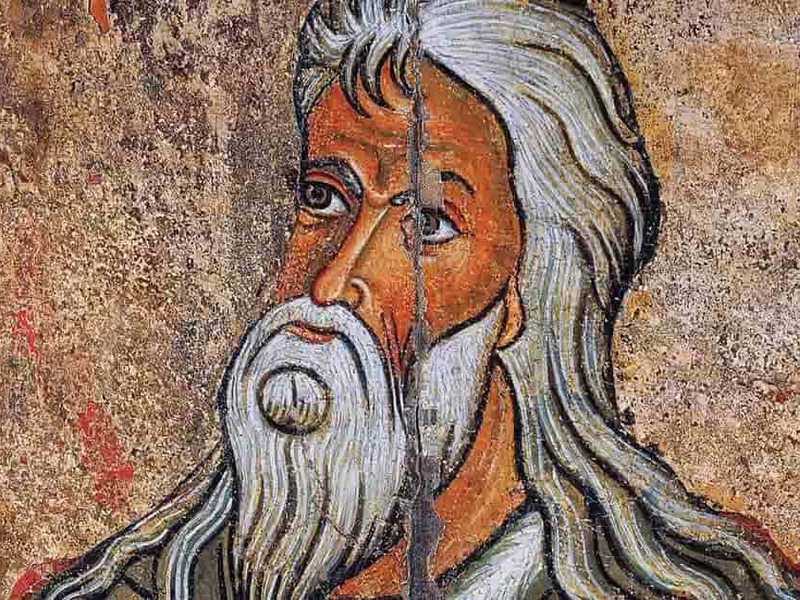
Several months ago, my brief article entitled "Elijah’s Exodus" was published in Biblical Horizons . Since that time, further study has made it evident that Elijah’s exodus in 1 Kings 17 is part of a larger pattern in which Elijah’s ministry closely parallels Moses’. The following parallels are evident: Elijah…

by Peter LeithartJuly 17, 1993

screenshot-2023-08-24-at-8-20-17-am
Exodus

The Footstool of His Feet

The translation and theology of the Hebrew term kapporet have long been puzzling to scholars. On the translation of the term, I have nothing new to offer. I wish instead to concentrate on the theological symbolism of the kapporet . The kapporet was the solid gold slab that laid "above"…

by Peter LeithartJune 17, 1993
Exodus

A Note on Exodus 22:31

Peter Leithart's article entitled " Prey in My House" pointed out that tearing flesh is a sign of kingly rule and dominion, and that God is portrayed as the Lion-King who tears flesh. The tithe brought to God’s house provides the money for the torn flesh of the sacrifices offered…

by James B. JordanJune 4, 1993
screen-shot-2022-05-12-at-12-07-23-pm
Biblical Chronology

Jubilee (Part 3)

The Seventy Years of Sabbaths 2 Chronicles 36:20-21 reads: "And those who had escaped from the sword he carried away to Babylon; and there they were slaves to him and to his sons until the rule of the kingdom of Persia, to fulfill the word of Yahweh by the mouth…

by James B. JordanApril 4, 1993

Showing page 285 of 309

See all

Showing page 7 of 43

See all

You shall know them by their fear

Stott notes that 1 John 4:19 indicates that the church’s great characteristic is love, not fear. That is, it should be. Is it? Hardly. Read the next piece of direct mail you get from a Christian advocacy group. Look at the listings in a Christian book catalogue or bookstore. Analyze…

January 20, 2007

Fear and fear

Perfect love casts out fear, John says. But the Bible repeatedly exhorts us to fear God. There’s fear, then there’s fear. How do we tell the difference? The difference is in the direction our fear moves us. Adam feared God, and hid in the garden. Wrong fear drives us away…

January 20, 2007

Kantian modalism?

Post-Kantian thought cannot make room for undistorted revelation of God in history. History, creation, is necessarily a distorting medium. Is this just a form of modalism? Doesn’t this just create an unbridgeable modalist gap between God-in-Himself and God-as-revealed? Isn’t this just saying that God is not what He appears to…

January 20, 2007

God’s body

Time was when you could despise the body and love God, or despise God and love the body. One could be an ascetic or a hedonist. Then God got Himself a body. Despite efforts to retain this choice (Nietzsche, flagellants), the incarnation made the ancient choice of ascetic or hedonist…

January 19, 2007

God’s body

Time was when you could despise the body and love God, or despise God and love the body. One could be an ascetic or a hedonist. Then God got Himself a body. Despite efforts to retain this choice (Nietzsche, flagellants), the incarnation made the ancient choice of ascetic or hedonist…

January 19, 2007

Dionysus and the crucified

Shaftesbury recognized the stark difference between his own rational Deity and the vulgar bodily and crucifiable Christ. Francis Hutcheson, building on Shaftesbury, tried to conflate the two. Hutcheson was a Christian, a Presbyterian professor of moral theology. Shaftesbury loathed Christ. But which of the two was the better friend of…

January 19, 2007

Showing page 1732 of 2212

Browse by Category

In Medias Res

Your weekly digest for all things Theopolis.

Donate

Theopolis is nearly 100% donor-supported. Consider joining us on our mission.