Theopolis Logo

Writing

Explore our collection of theological essays, biblical studies, and reflections on faith and culture.

See all
dji_0055
City

Sex and the City (Part 2)

The first quotation at the heading of PART 1 is from J. D. Unwin's Sex and Culture, a 676 page volume published in 1934. The second quotation is from a lecture given by Freud at the University of Vienna, and it parallels the theme of his book, Civilization and Its…

by Richard BledsoeJanuary 24, 2019

dji_0055
Biblical Theology

Sex and the City (Part 1)

Sometimes a man has been heard to declare that he wishes both to enjoy the advantage of high culture and to abolish compulsory continence. The inherent desire of the human organism, however, seems to be such that these desires are incompatible, or even contradictory. Any human society is free to…

by Richard BledsoeJanuary 17, 2019
e99a2313
Baptism

Waters of Earth and Heaven

Genesis 2:5 says that no shrub yet existed in the earth and no field plant had sprouted for two reasons. The first is that "Yahweh God had not caused rain upon the earth," and the second is that "there was no man to serve the soil." Then v. 6 explains…

by James B. JordanJanuary 10, 2019
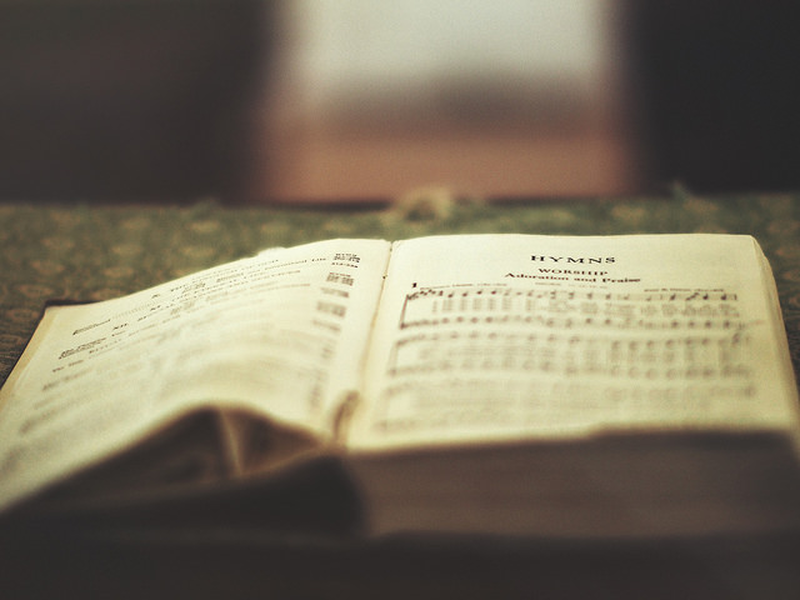
hymnal
Church Calendar

An Epiphany Hymn: Nations to Him Shall Come

This hymn was written by Brian Daigle and is based on the Epiphany lectionary readings. It follows the tune of "We Three Kings." Brian is Headmaster and teacher at Sequitur Classical Academy and Director of Chesterton College . Brian lives in Baton Rouge with his wife, Lauren, and their three…

by Brian G DaigleJanuary 8, 2019
13714bedda625c2ec1816f0890ed72f4-snow-storms-image-photography
Church Calendar

The Church Calendar in Outline

As a rite of command performance worship, danced before the throne of God for His pleasure, the Church Year is a form of covenant recital or covenant rehearsal. The recital of the covenant in Scripture takes two forms. The first is the recounting of the great acts of redemption that…

by James B. JordanJanuary 4, 2019
powering-progress
Evangelism

A New Evangelism? Reconsidering Evangelism in Light of Social Justice and Sexual Assault

The recent developments of the #metoo and #churchtoo movements has shed new light on sexual assault in the United States. Its impact has been felt at the highest court in the country. Amid this, a new statement distinguishing the gospel from social justice was published by some within conservative evangelicalism.…

by Mario A. RussoJanuary 1, 2019

Showing page 82 of 309

See all

Showing page 7 of 43

See all

You shall know them by their fear

Stott notes that 1 John 4:19 indicates that the church’s great characteristic is love, not fear. That is, it should be. Is it? Hardly. Read the next piece of direct mail you get from a Christian advocacy group. Look at the listings in a Christian book catalogue or bookstore. Analyze…

January 20, 2007

Fear and fear

Perfect love casts out fear, John says. But the Bible repeatedly exhorts us to fear God. There’s fear, then there’s fear. How do we tell the difference? The difference is in the direction our fear moves us. Adam feared God, and hid in the garden. Wrong fear drives us away…

January 20, 2007

Kantian modalism?

Post-Kantian thought cannot make room for undistorted revelation of God in history. History, creation, is necessarily a distorting medium. Is this just a form of modalism? Doesn’t this just create an unbridgeable modalist gap between God-in-Himself and God-as-revealed? Isn’t this just saying that God is not what He appears to…

January 20, 2007

God’s body

Time was when you could despise the body and love God, or despise God and love the body. One could be an ascetic or a hedonist. Then God got Himself a body. Despite efforts to retain this choice (Nietzsche, flagellants), the incarnation made the ancient choice of ascetic or hedonist…

January 19, 2007

God’s body

Time was when you could despise the body and love God, or despise God and love the body. One could be an ascetic or a hedonist. Then God got Himself a body. Despite efforts to retain this choice (Nietzsche, flagellants), the incarnation made the ancient choice of ascetic or hedonist…

January 19, 2007

Dionysus and the crucified

Shaftesbury recognized the stark difference between his own rational Deity and the vulgar bodily and crucifiable Christ. Francis Hutcheson, building on Shaftesbury, tried to conflate the two. Hutcheson was a Christian, a Presbyterian professor of moral theology. Shaftesbury loathed Christ. But which of the two was the better friend of…

January 19, 2007

Showing page 1732 of 2212

Browse by Category

In Medias Res

Your weekly digest for all things Theopolis.

Donate

Theopolis is nearly 100% donor-supported. Consider joining us on our mission.