Theopolis Logo

Writing

Explore our collection of theological essays, biblical studies, and reflections on faith and culture.

See all
james-coleman-qej5dhl4mwq-unsplash
Galatians

Getting the Galatian Heresy Right

Misunderstanding “Galatianism” has caused several problems in the Reformed church. Because circumcision is at issue in the Galatian epistle, some have fallen into thinking that ritual per se, rather than anything uniquely Mosaic or Jewish, is the object of Paul’s critique. Likewise, his polemic against “works of the law” is…

by Rich LuskJune 6, 2003

screenshot-2023-09-21-at-3-59-23-pm
Romans

Jewish Rejection of the Gospel

Many texts in the NT become more perspicuous if we keep in mind the possibility — and indeed ubiquity — of Gentile God-fearers in the Old Covenant. After the special covenant with Israel is set up, Gentiles are not altogether excluded from the hope of salvation. Israel’s special status in…

by Rich LuskJune 6, 2003
aaron-burden-1ebsmyrau-s-unsplash
Ephesians

An X-File

I was once trying to get a sermon out of Ephesians 1.12-14 and it seemed obvious that I should look for two parallel statements both ending with the phrase, “to the praise of his glory.” Paul here begins talking about two groups of people (“you” and “we”), and he later…

by Mark HorneJune 5, 2003
screenshot-2023-12-12-at-10-36-28-am-2
New Perspective on Paul

The PCA and the New Perspective on Paul

WHY A DENOMINATION WITH SOUTHERN PRESBYTERIAN ROOTS SHOULD CAREFULLY CONSIDER THE “NEW PERSPECTIVE ON PAUL” In my denomination, the PCA, we are continually haunted by the sins of our racist Southern past. It has become an annual rite at General Assembly for the issue to be addressed one way or…

by Rich LuskJune 5, 2003
screenshot-2023-09-21-at-3-59-23-pm
Justification

The Centrality of Justification

Recent debates over whether or not, “justification is central” to Paul’s theology have reminded me of a sermon I once heard by a Presbyterian seminary student. This African American student challenged his audience on the sin of racism and the ways it might manifest itself among us. Like any good…

by Mark HorneJune 5, 2003
charles-hodge-islandora6062_crop_0
Ecclesiology

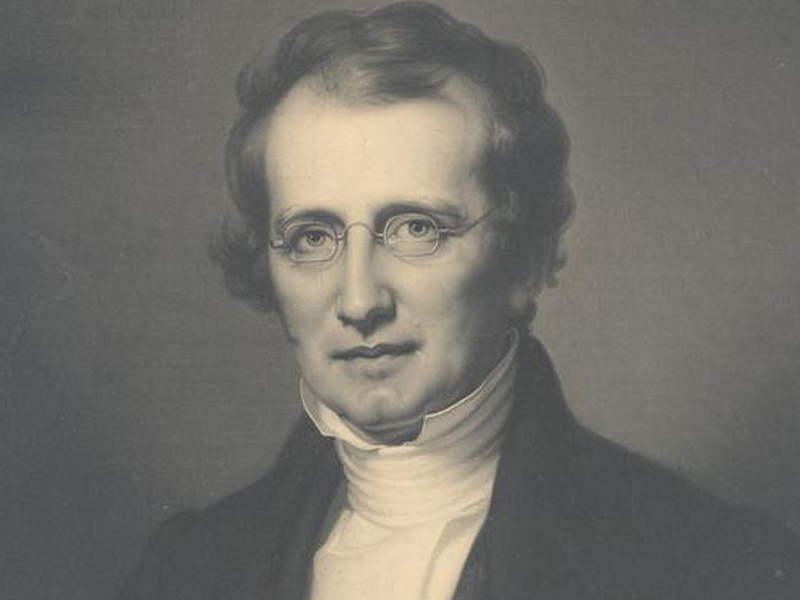
Charles Hodge’s Deficient Idea of the Church

In Charles Hodge’s 1853 article, “Idea of the Church,” his stated aim is to analyze the idea of the Church proposed in the Apostles’ Creed, in which, “the Church is declared to be “the Communion of the Saints.” He writes: The conception of the Church as the communion of saints…

by Mark HorneJune 5, 2003

Showing page 231 of 309

See all

Showing page 7 of 43

See all
Literature

Living in fictions

In a discussion of King Lear , David Bevington suggests that Edgar saves his father at the cliffs of Dover by constructing a cosmology in which the gods are merciful and perform miracles: “Edgar stages his fiction in this particular way because he knows his father well enough to realize…

December 27, 2006
Literature

Tyranny of gratitude

Many of Shakespeare’s plays explore the moral and political consequences of ingratitude, but Shakespeare is also cognizant of the tyrannical uses to which the demand for gratitude may be put. Lear is certainly about ingratitude, the “marble-hearted fiend” that infects and distorts the monsters of ingratitude Goneril and Regan, as…

December 27, 2006
Theology

In praise of Pietism

Friedrich Oetinger was a leading German pietist intellectual and theologian, deeply interested in the science of his day. And critical of science and rationalist philosophy as well. Against thinkers who placed a primacy on reason, Oetinger argued that sheer logical clarity is insufficient “for living knowledge.” Living knowledge takes form…

December 26, 2006

Communion in humor

I tell a joke, and you get it. I include a veiled allusion to, say, Faust in a casual conversation; you catch it; and we exchange a mental wink. Humor provides a pathway into the hermeneutics of texts and communication. It also seems to provide a pathway into the sociology…

December 26, 2006

Keeping in mind

Gadamer notes the ambiguity of “keeping something in mind.” We sometimes hold something in our mental “gaze” in order to knock into it head on. We watch it carefully until we can grab it. But keeping in mind can also be a form of forgetfulness. We might also keep something…

December 26, 2006
History

Mysticism and culture

Gadamer notes that the concept of Bildung (culture) has its origins in medieval and baroque mysticism, and continues to carry a mystical connotation when it begins to be used of the cultivated humanness. Von Humboldt, for instance, says “when in our language we say Bildung, we mean something both higher…

December 26, 2006

Showing page 1747 of 2212

Browse by Category

In Medias Res

Your weekly digest for all things Theopolis.

Donate

Theopolis is nearly 100% donor-supported. Consider joining us on our mission.