Theopolis Logo

Writing

Explore our collection of theological essays, biblical studies, and reflections on faith and culture.

See all
or
Abortion

Political Hermeneutics: The Argument From Silence, Part 2

Click HERE for part 1. III This leads to a further question. I have argued that silence cannot by itself establish a Scriptural principle, but does Scripture’s silence carry any weight in itself? Does the fact that something is unbiblical in a weak sense tell us anything at all? In…

by Peter LeithartMarch 13, 1990

hebrew-manuscript-6
Biblical Chronology

Groping Through the Gaps

Although nowadays gap theories are associated with dispensationalism, it was not always so. In the nineteenth century, scholars from a variety of backgrounds (Anglican, Reformed, and proto-fundamentalist) seem to have become fascinated by gaps. If you are not familiar with what I am talking about, this newsletter will acquaint you…

by James B. JordanFebruary 26, 1990
or
Abortion

Political Hermeneutics: The Argument from Silence, Part 1

If the debate over Operation Rescue has proven anything, it has proven that there is absolutely no consensus among evangelicals in general, or among "reconstructionists" in particular, about how to use the Bible to judge political actions and movements. Each side of the debate claims biblical authority for its position,…

by Peter LeithartFebruary 13, 1990
49980-nicolas_poussin_-_the_judgment_of_solomon_-_wga18330-800w-tn
Biblical Studies

Advice From a Sojourner, Part 4

Two things I asked of Thee, Do not refuse me before I die: Keep deception and words of falsehood far from me, Give me neither poverty nor riches, Feed me with the food that it my portion, Lest I be full and deny Thee, And say, "Who is the LORD?"…

by James B. JordanFebruary 2, 1990
image-2
Biblical Horizons

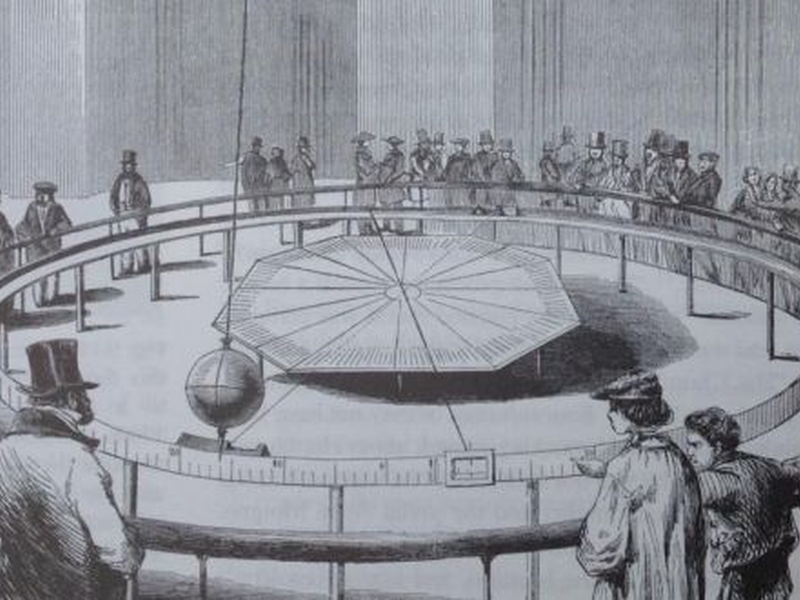
Foucault’s Pendulum

Umberto Eco’s "The Name of the Rose" was certainly one of the best literary works of the past decade, though the film version hardly measured up to it. Now Eco has given us a new novel, "Foucault’s Pendulum." Like Rose, Foucault’s Pendulum reflects on the limitations of human knowledge, and…

by James B. JordanJanuary 26, 1990
tanner-mardis-xuxghzhibn4-unsplash-1-2
Biblical Studies

What Is “Interpretive Maximalism”?

From time to time people ask me about "interpretive maximalism." They want to know what it is, and sometimes want to know if it represents some departure from the Reformed grammatico-historical, Biblico-theological approach to the Bible. I have something of a problem with these questions, because "interpretive maximalism" is not…

by James B. JordanJanuary 26, 1990

Showing page 305 of 309

See all

Showing page 7 of 43

See all
Economics

Rational Actors

Featherstone claims that economics has generally focused on the production rather than the consumption side of things, perhaps because of “the assumption that consumption was unproblematic because it was based upon the concept of rational individuals buying goods to maximize their satisfaction.” Only in the late 19th century was attention…

September 13, 2006
History

Elites and the Market

Cultural elites have, Featherstone suggests, an inherently ambivalent relationship with the market. His argument, if I understand it, goes something like this: Cultural elites want to preserve a monopolization of cultural products. Hence, for instance, peer review of scholarly work; work that hasn’t passed peer review can be dismissed as…

September 13, 2006
History

McDonald’s and Postmodernity

McDonald’s provides a helpful glimpse at the complexities surrounding postmodernity. On the one hand, the global reach of McDonald’s seems a perfect illustration of one part of the postmodern situation - the global diffusion of American culture and tastes, the plasticity and airiness of postmodern culture, the breaching of national…

September 13, 2006
History

McDonald’s and Postmodernity

McDonald’s provides a helpful glimpse at the complexities surrounding postmodernity. On the one hand, the global reach of McDonald’s seems a perfect illustration of one part of the postmodern situation - the global diffusion of American culture and tastes, the plasticity and airiness of postmodern culture, the breaching of national…

September 13, 2006
History

Postmodernism and Globalization

Though often conceived as a crisis within Western civilization, postmodernism, Featherstone argues, is partly impelled by globalization. Globalization, he begins, usually conveys two images - the spread of a single, increasingly uniform culture throughout the world, and the “compression” or layering and juxtaposition of various cultures within a particular location…

September 13, 2006
History

Consumer Culture and Fragmentation

Culture, Mike Featherstone suggests in Undoing Culture , becomes problematic in consumer societies. How? As developed in cultural anthropology, culture is “somehow homologous to the distinctions, differences, and divisions between social groups who unconsciously use culture as relatively fixed markers in status games.” But in consumer societies, there is little…

September 12, 2006

Showing page 1795 of 2212

Browse by Category

In Medias Res

Your weekly digest for all things Theopolis.

Donate

Theopolis is nearly 100% donor-supported. Consider joining us on our mission.