Theopolis Logo

Writing

Explore our collection of theological essays, biblical studies, and reflections on faith and culture.

See all
or
Abortion

Political Hermeneutics: The Argument From Silence, Part 2

Click HERE for part 1. III This leads to a further question. I have argued that silence cannot by itself establish a Scriptural principle, but does Scripture’s silence carry any weight in itself? Does the fact that something is unbiblical in a weak sense tell us anything at all? In…

by Peter LeithartMarch 13, 1990

hebrew-manuscript-6
Biblical Chronology

Groping Through the Gaps

Although nowadays gap theories are associated with dispensationalism, it was not always so. In the nineteenth century, scholars from a variety of backgrounds (Anglican, Reformed, and proto-fundamentalist) seem to have become fascinated by gaps. If you are not familiar with what I am talking about, this newsletter will acquaint you…

by James B. JordanFebruary 26, 1990
or
Abortion

Political Hermeneutics: The Argument from Silence, Part 1

If the debate over Operation Rescue has proven anything, it has proven that there is absolutely no consensus among evangelicals in general, or among "reconstructionists" in particular, about how to use the Bible to judge political actions and movements. Each side of the debate claims biblical authority for its position,…

by Peter LeithartFebruary 13, 1990
49980-nicolas_poussin_-_the_judgment_of_solomon_-_wga18330-800w-tn
Biblical Studies

Advice From a Sojourner, Part 4

Two things I asked of Thee, Do not refuse me before I die: Keep deception and words of falsehood far from me, Give me neither poverty nor riches, Feed me with the food that it my portion, Lest I be full and deny Thee, And say, "Who is the LORD?"…

by James B. JordanFebruary 2, 1990
image-2
Biblical Horizons

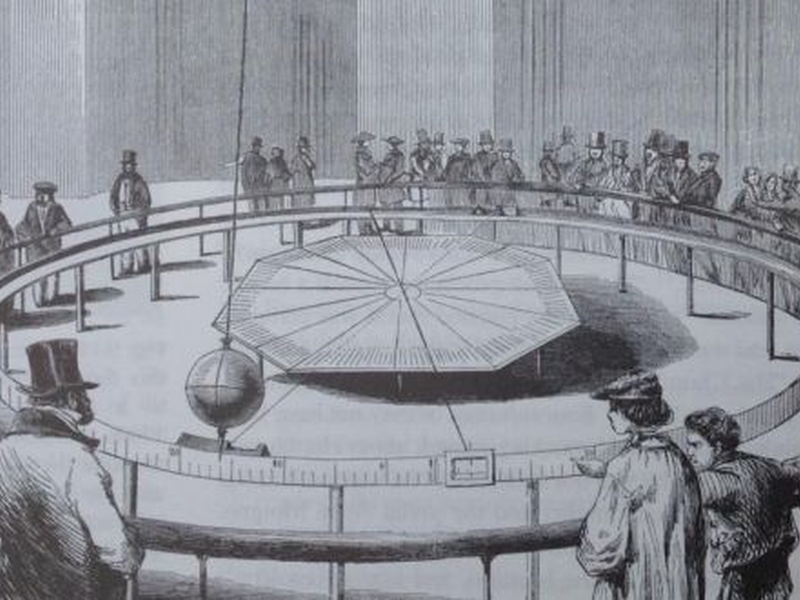
Foucault’s Pendulum

Umberto Eco’s "The Name of the Rose" was certainly one of the best literary works of the past decade, though the film version hardly measured up to it. Now Eco has given us a new novel, "Foucault’s Pendulum." Like Rose, Foucault’s Pendulum reflects on the limitations of human knowledge, and…

by James B. JordanJanuary 26, 1990
tanner-mardis-xuxghzhibn4-unsplash-1-2
Biblical Studies

What Is “Interpretive Maximalism”?

From time to time people ask me about "interpretive maximalism." They want to know what it is, and sometimes want to know if it represents some departure from the Reformed grammatico-historical, Biblico-theological approach to the Bible. I have something of a problem with these questions, because "interpretive maximalism" is not…

by James B. JordanJanuary 26, 1990

Showing page 305 of 309

See all

Showing page 7 of 43

See all
History

Bacon’s Induction

Stanley Fish, in a renowned essay on Bacon’s Essays , concludes that the essays are “unfinished with a purposefulness that makes the bestowing of the adjective less a criticism than a compliment.” He insists on the provisionality of knowledge, and “communicates that provisionality [in the Essays ] by letting the…

September 5, 2006
Science

Lamarck Redux?

In a fascinating review of a recent book on evolution (TNR, Sept 4), Oren Harman suggests that reports of the death of Lamarck, proclaimed in every middle school science classroom for well over a century, may be somewhat exaggerated: Lamarckism “is and isn’t” dead. Insofar as Lamarckism meant “direct adaptive…

September 5, 2006

Trinity and Self-Gift

One of Barth’s main contentions that only a Triune God can give Himself. A monadic God might give, but would give something less than Himself. Only if God is both Himself and another, and only if that other is fully God, can God give Himself .

September 5, 2006

Complex reprobation

Bavinck writes: “It is wrong to conceive the decree as if it determined only a person’s end and coerced him or her in that direction regardless of what they did. The decree is as inconceivably rich as reality itself. It is, in fact, the fountainhead of all reality. It encompasses…

September 5, 2006
History

Epistemology of ingratitude

Blumenberg writes ( Legitimacy of the Modern Age ) that with Bacon, Kepler, and particularly Leibniz, the Augustinian suspicion of curiosity is overcome, and knowledge thereafter “justifies itself; it does not owe thanks for itself to God; it no longer has any tinge of illumination or graciously permitted participation but…

September 4, 2006
History

Physics and Metaphysics

Blumenberg says that Bacon drew a distinction between metaphysics and physics in terms of human control: “The former has as its object the unalterable law beyond man’s influence; the latter comprises all knowledge of the operative and material causes that man can transpose in order to influence given states of…

September 4, 2006

Showing page 1799 of 2212

Browse by Category

In Medias Res

Your weekly digest for all things Theopolis.

Donate

Theopolis is nearly 100% donor-supported. Consider joining us on our mission.