
Theopolis Logo

Writing

Explore our collection of theological essays, biblical studies, and reflections on faith and culture.

See all
giammarco-zeh-ljawhtg-unsplash
Biblical Horizons

OPEN BOOK: Views and Reviews

Isaac E. Mozeson, The Word: The Dictionary that Reveals the Hebrew Sources of English (Northvale, NJ: Jacob Aaronson Inc., 1995), 310 pp. Reviewed by James B. Jordan. Once there was only one language in the world, the language God spoke to Adam. At the Tower of Babel, there came to…

by James B. JordanJune 28, 1996
tim-wildsmith-j6jv-mkdzqs-unsplash
Esther

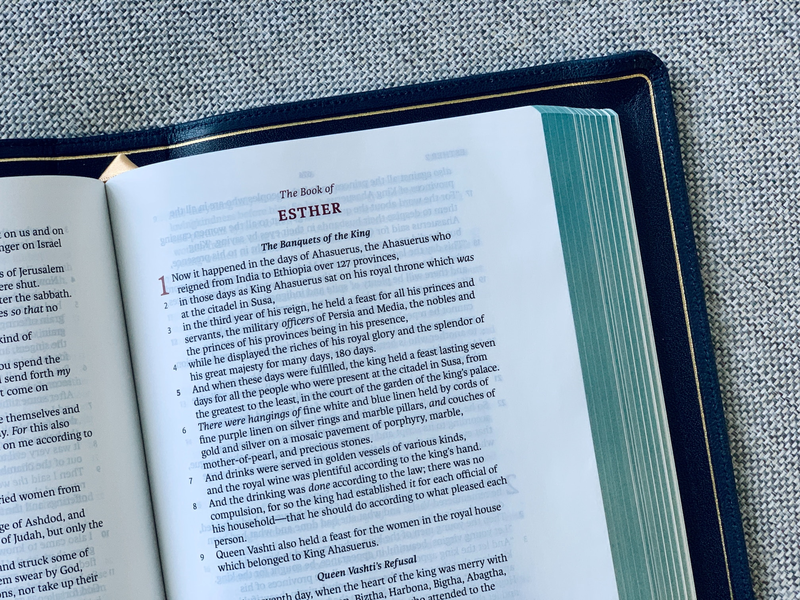
Esther: Historical & Chronological Comments (IV)

2. The Setting of the Book of Esther A. Xerxes (continued from previous issue) Ezra 6:14 says that the Jews finished building "according to the command of the God of Israel and the decree of Cyrus and Darius and Artaxerxes king of Persia." The problem with this verse is that…

by James B. JordanJune 28, 1996

ales-krivec-4mibe6zg5r0-unsplash
Acts

Jesus and Amalek

This essay goes with our previous study of the Amalek pattern back in Biblical Horizons No. 2. Since many do not have this essay, entitled "The Battle of Gog and Magog," let me cite the relevant paragraphs: Note in Genesis 12-15 that Abram moves into the land after escaping Pharaoh…

by James B. JordanJune 28, 1996

aaron-burden-1ebsmyrau-s-unsplash
Proverbs

The Strange Woman

Proverbs 7:6-23 is one of several passages early in the Proverbs in which Solomon warns his son about the wiles and dangers of the "strange woman." It is certainly quite proper to take these as straightforward warnings against sexual sins, and these are certainly warnings that need to be impressed…

by Peter LeithartJune 27, 1996
jan-kahanek-g3o5ztrk2e4-unsplash
Biblical Studies

Some Observations

1. In Luke 4:20 we read that after Jesus finished reading from Isaiah, "the eyes of all in the synagogue were fixed upon Him." This is usually taken in a psychological sense: They were amazed at Jesus somehow. I suggest that, as always, a merely psychological reading is a modern…

by James B. JordanMay 28, 1996
tim-wildsmith-j6jv-mkdzqs-unsplash
Esther

Esther: Historical & Chronological Comments (III)

2. The Setting of the Book of Esther Up to now we have assumed what we must prove, that the king in Esther is Darius the Great. While Biblical chronologists have usually taken this position, commentators on the book of Esther have often taken others as the king. One view,…

by James B. JordanMay 28, 1996

Showing page 265 of 309

See all

Showing page 7 of 43

See all
Science

Bacon’s Program

Antonio Perez-Ramos argues in his contribution to the Cambridge Companion to Bacon that while Bacon’s method has been severely criticized, Bacon’s program of human improvement through scientific and technological progress has not been, until the early part of the 20th century (he references Hans Jonas, Adorno and Horkheimer as skeptics…

August 24, 2006
Science

Bacon’s Program

Antonio Perez-Ramos argues in his contribution to the Cambridge Companion to Bacon that while Bacon’s method has been severely criticized, Bacon’s program of human improvement through scientific and technological progress has not been, until the early part of the 20th century (he references Hans Jonas, Adorno and Horkheimer as skeptics…

August 24, 2006
History

Pre-Socratics

Bacon says in a number of places that Western history is like a stream that carries everything light and airy on the surface (like Plato and Aristotle) while submerging all the heavy stuff (Hermes and the Pre-Socratics). Intriguing that one of the “fathers of modernity” should make this Heideggerian kind…

August 23, 2006
History

Be the Bee

Aphorism 95 from Part I of Bacon’s New Organon says: “Those who have handled sciences have been either men of experiment or men of dogmas. The men of experiment are like the ant, they only collect and use; the reasoners resemble spiders, who make cobwebs out of their own substance.…

August 23, 2006

Boyish Greeks

Stephen McKnight points out in his recent The Religious Foundations of Francis Bacon’s Thought (University of Missouri, 2006) that Bacon dismissed classical Greek thought in favor of a knowledge both more ancient and more recent: “Bacon introduces another memorable image when he likens classical philosophy to an adolescent boy: both…

August 23, 2006

Fiction and creation

Reflecting on Rosendale’s treatment of sacramental kingship in Henry V, it occurs to me that a sacramental theology that highlights the effective fictionality of the sacramental signs is more consistent with the doctrine of creation than the notion that sacramental signs have some inherent virtue of their own or the…

August 21, 2006

Showing page 1805 of 2212

Browse by Category

In Medias Res

Your weekly digest for all things Theopolis.

Donate

Theopolis is nearly 100% donor-supported. Consider joining us on our mission.