Theopolis Logo

Writing

Explore our collection of theological essays, biblical studies, and reflections on faith and culture.

See all
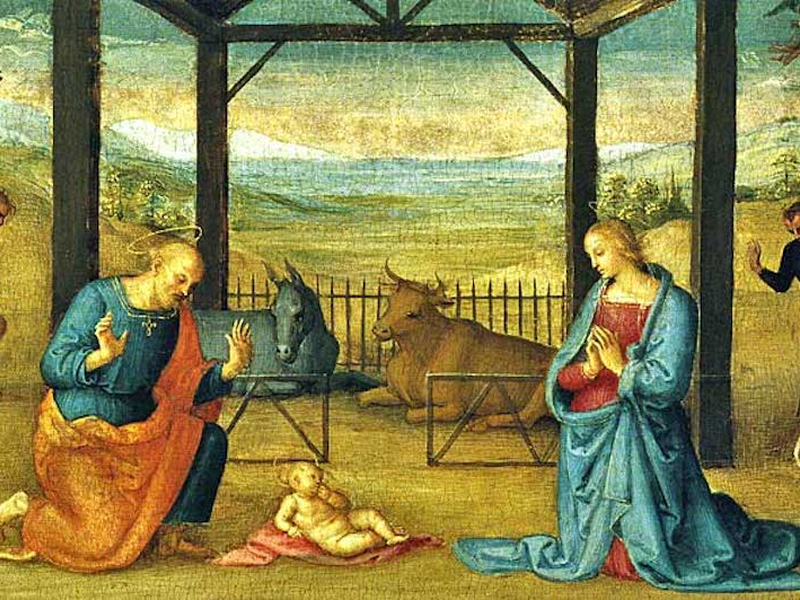
nativity
Advent

The Rough Places Plain

“What’s the fastest route” he asks me as we quickly come to a stop behind a sea of red brake lights. I pull out my phone and map all the options. Every way is red with traffic backed up. Deep down I must be a small town girl because traffic…

by Lindsey TollefsonDecember 24, 2015

markus-winkler-aid-xyrtlec-unsplash
Theopolis News

2015 Letter from the President

Dear Friend of Theopolis, I have signed a stack of documents in the years since we started Theopolis, but my heart jumped a few beats as I looked at the thick lease contract. “This is real,” I thought. “This makes it really real.” Theopolis has been real for nearly three…

by Brian MoatsDecember 23, 2015
trinity-1-3
Books

Headship of Christ and Queens

In the Edenic world of Perelandra, from C.S. Lewis’s Space Trilogy, Ransom notices something about how the Green Lady treats the animals: [1] “There was in her face an authority, in her caresses a condescension, [2] which by taking seriously the inferiority of her adorers made them somehow less inferior…

by Remy WilkinsDecember 22, 2015
baptism-of-christ
Baptism

Embracing Embodiment: Baptism and the Nuptial Meaning of the Body

In my previous two articles, I argued for the significance of the fact that baptism addresses our bodies in their objectivity. In the body, the self has an existence that runs deeper than our consciousness, decision, self-expression, and action. In washing our passive bodies, baptism seals us with an anticipatory…

by Alastair RobertsDecember 17, 2015
holy-family
Advent

A Child Is Born

Judah is a sinful nation, weighed down with iniquity. They are not the seed of Abraham, but the seed of iniquity. Their worship is abominable to Yahweh, because their hands are covered with innocent blood. They have not done good, or sought justice, or reproved the ruthless, or defended the…

by Peter LeithartDecember 15, 2015
baptism-2
Baptism

Presenting Limbs and Organs: Baptism and Sacrificial Ethics

Although we tend to define ourselves by our subjectivity —our perceptions, thoughts, feelings, decisions, actions—we are frequently forgetful of the objectivity of the self as body, the reality of the self that underlies and precedes all of our subjectivity. The body is the site of our ‘givenness’, where we are…

by Alastair RobertsDecember 10, 2015

Showing page 139 of 309

See all

Showing page 7 of 43

See all

Conference

If you’re in the vicinity of Duke, you might be interested in a conference sponsored by the Center for Catholic and Evangelical Theology, in cooperation with the Duke Divinity School, on May 21-23, at Duke. The theme is “Preaching, Teaching, and Living the Bible.” Speakers include Robert Jenson, Rusty Reno,…

March 30, 2006
Literature

Garber on Merchant

Marjorie Garber has, as usual, some insightful things to say about Merchant of Venice: 1) She describes the play as “Shakespeare’s great play about difference,” pointing to the apparent stark contrasts of Christian and Jew, Venice and Belmont, male and female. Yet, she also notes that the play is busy…

March 29, 2006
Literature

Biblical echoes in Merchant of Venice

A.R. Braunmuller offers some suggestive comments in his introduction to the Merchant of Venice in the Pelican Shakespeare. Having summarized Portia’s speech (which he suggests might be a “setup that turns on a technicality” that “turns back on Shylock a legal rigidity he had been duped into demanding”), he notes…

March 29, 2006

Hypostatic union

Thomas argues that “if the human nature is not united to God the Word in person, it is not united to him in any way, and thus belief in the incarnation is altogether done away with, which subverts the entire Christian faith.” But since there is a union, it must…

March 29, 2006

Aquinas and Chalcedon

Frederick Bauerschmidt claims that “Aquinas is in fact the first medieval theologian in the West to quote directly from the Council of Chalcedon.” This is remarkable on all sorts of levels, not least because of the questions it raises about the authority of the ecumenical councils in medieval thought.

March 29, 2006
Theology

Gift and Gratitude in the Middle Ages

INTRODUCTION Seneca’s de Beneficiis was known to the Christian Middle Ages, as were some of the gift and gratitude customs of the Roman world. We’ll examine the use that Aquinas makes of Seneca when we get to the Summa later this week. But in addition to these ancient sources, medieval…

March 28, 2006

Showing page 1865 of 2212

Browse by Category

In Medias Res

Your weekly digest for all things Theopolis.

Donate

Theopolis is nearly 100% donor-supported. Consider joining us on our mission.