Theopolis Logo

Writing

Explore our collection of theological essays, biblical studies, and reflections on faith and culture.

See all
alfons-morales-ylswjsy7stw-unsplash-1
Biblical Horizons

Fun Reading

The name of Harry Turtledove is well known to readers of fantasy and science fiction. Turtledove is an historian, and most of what he writes is in the "alternative history" genre. A fine collection of short stories, available in paperback, is his Agent of Byzantium . These stories are set…

by James B. JordanAugust 28, 1996

paul-bill-u2tjtlje4z0-unsplash
Biblical Horizons

Concerning Unicorns

In answer to a question, the following about the unicorn, a supposed "New Age" symbol: The unicorn, or monoceros (one-horn), was known around the ancient world. Some scholars believe it may have been the one-horned goat that is still bred today. Others think it may have originated in tales of…

by James B. JordanAugust 28, 1996

tim-wildsmith-j6jv-mkdzqs-unsplash
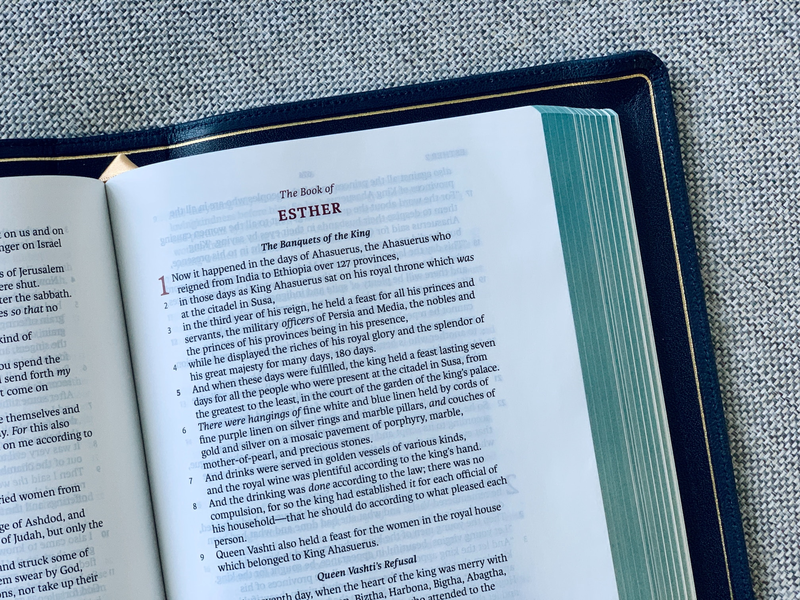
Esther

Esther: Historical & Chronological Comments (VI)

3. A Brief Survey of Esther (continued from the previous issue) Haman told the king that "a certain people" were rebellious against him, and that Haman wanted to rid the king of their noxious presence. The king agreed, and the two sat down to a feast. This is the third…

by James B. JordanAugust 28, 1996

sacre-bleu-r__kixb0i5m-unsplash
Biblical Horizons

Concerning Halloween

It has become routine in October for some Christian schools to send out letters warning parents about the evils of Halloween, and it has become equally routine for me to be asked questions about this matter. "Halloween" is simply a contraction for All Hallows’ Eve. The word "hallow" means "saint,"…

by James B. JordanAugust 28, 1996

tim-wildsmith-j6jv-mkdzqs-unsplash
Esther

Esther: Historical & Chronological Comments (V)

2. The Setting of the Book of Esther (continued from previous issue) Astyages E. W. Faulstich presents his arguments in his book History, Harmony, The Exile & Return . 1 To understand it, we have to have some background. The Assyrians ruled the near east. Median king Cyaxeres decided to…

by James B. JordanJuly 28, 1996
516976ldsdl
Revelation

Jephthah’s Daughter

In my commentary on Judges, I demonstrated that Jephthah in his Spirit-led vow intended to offer to Yahweh the first person who greeted him from the doors of his house after the battle. Since it was a custom for the young women to come out dancing to greet the returning…

by James B. JordanJune 28, 1996

Showing page 264 of 309

See all

Showing page 7 of 43

See all

Conveniens

Bauerschmidt notes that Aquinas frequently argues, especially when speaking of the incarnation, not for “proof” of doctrine but for its “fittingness.” Reason has the role of “manifesting how [the incarnation] fits together (convenire means literally ‘to come together’) with other things that Christians hold true about God.” Perhaps this can…

March 23, 2006

Extra-Augustinisticum

In Epistle 137, Augustine writes: “The Christian teaching nowhere holds that God was so poured into human flesh as either to desert or lose - or to transfer and, as it were, compress within this frail body - the care of governing the universe. This is the thought of people…

March 23, 2006

Thomas on Merit

Commenting on ST I-II, q. 109, Frederick Bauerschmidt says that Thomas uses the word “merit” analogically when we speak of God rewarding human action “since we can act in the first place only because God has given us the capacity to act.” This applies even to Jesus: “even when Thomas…

March 23, 2006

On Seneca, de Beneficiis, Books 1-2

Seneca suggests that ingratitude is the worst of vices, and nothing is more “harmful to society” than ingratitude (I.1). Later in Book I, he lists a series of moral ills that plague society – “homicides, tyrants, thieves, adulterers, ravishers, sacrilegious, traitors” – but concludes that “worse than all these is…

March 23, 2006
Literature

Prospero the Magus

I am grateful to Ralph Smith for references to Frances Yates’ work on Shakespeare’s plays. In an analysis of The Tempest, Frances Yates writes: “It is inevitable and unavoidable in thinking of Prospero to bring in the name of John Dee, the great mathematical magus of whom Shakespeare must have…

March 22, 2006
History

Elizabethan Magic

Educated Elizabethans lived in a world of similitudes. As EMW Tillyard argued, the Elizabethan world picture was constituted by a series of analogous chains of being. The social world manifested and was manifested by the natural world; the universe as a whole resembled human beings; there was a hierarchy among…

March 22, 2006

Showing page 1867 of 2212

Browse by Category

In Medias Res

Your weekly digest for all things Theopolis.

Donate

Theopolis is nearly 100% donor-supported. Consider joining us on our mission.