Theopolis Logo

Writing

Explore our collection of theological essays, biblical studies, and reflections on faith and culture.

See all
screen-shot-2020-07-28-at-7-12-05-am
John

A Conversation at the Sheep Pool (John 5)

One evening at dusk two men met under a portico near the North wall in Jerusalem. They greeted one another cordially and sat down on a stone bench. They were both Pharisees. One of the men appeared to be uncomfortable and kept looking around nervously. The other said, “Don’t worry,…

by Jeff MeyersJuly 28, 2020
screen-shot-2020-07-21-at-10-29-59-am
Christology

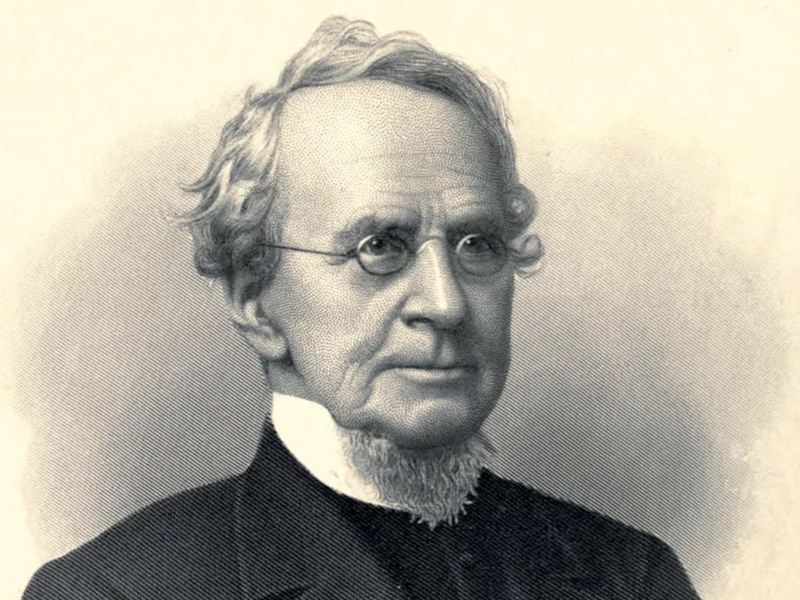
Real Union or Legal Fiction? | Nevin’s Controversy With Charles Hodge Over the Imputation of Adam’s Sin

John Williamson Nevin’s Controversy With Charles Hodge Over the Imputation of Adam’s Sin (with a Comparison to Robert L. Dabney) If one is blessed to discover George P. Hutchinsons’s monograph on Original Sin in nineteenth-century Reformed thought, 1 no student of American presbyterianism can fail to be fascinated. What once…

by Mark HorneJuly 21, 2020
thijs-van-diessen-ihhert2uh5y-unsplash-2
Biblical Theology

Fire on the Mountain

If you stop people on the street and ask them, “Where is God?” you’ll get a range of responses from a vague sense that He’s “up there somewhere” to a generic omnipresence (and it goes downhill from there!) What God does in Acts 2 challenges us to develop and apply…

by Tim NicholsJuly 14, 2020
jonah
Matthew

The Sign of Jonah

Then some of the scribes and Pharisees answered him, saying, “Teacher, we wish to see a sign from you.” But he answered them, “An evil and adulterous generation seeks for a sign, but no sign will be given to it except the sign of the prophet Jonah. For just as…

by Ken HicksJuly 7, 2020
tanner-mardis-xuxghzhibn4-unsplash-2
Genesis

Lost Worlds?

John Walton believes that modern Christians have lost multiple worlds: The Lost World of Genesis One; The Lost World of Adam and Eve; The Lost World of Scripture; The Lost World of the Israelite Conquest; The Lost World of the Flood; The Lost World of the Torah. I believe this…

by Ralph Allan SmithJuly 2, 2020
stephanie-leblanc-z4lxu7niii4-unsplash
Interview

N.T. Wright on How the Church Should Respond to the Pandemic

How should the church respond to the pandemic? N.T. Wright has written a book which searches the depths of Scripture to answer this question. Our challenge is that we do not yet understand the pandemic, at least not with any degree of consensus. We don't know whose fault it is,…

by Jerry Bowyer & N.T. WrightJune 30, 2020

Showing page 65 of 309

See all

Showing page 7 of 43

See all

Conveniens

Bauerschmidt notes that Aquinas frequently argues, especially when speaking of the incarnation, not for “proof” of doctrine but for its “fittingness.” Reason has the role of “manifesting how [the incarnation] fits together (convenire means literally ‘to come together’) with other things that Christians hold true about God.” Perhaps this can…

March 23, 2006

Extra-Augustinisticum

In Epistle 137, Augustine writes: “The Christian teaching nowhere holds that God was so poured into human flesh as either to desert or lose - or to transfer and, as it were, compress within this frail body - the care of governing the universe. This is the thought of people…

March 23, 2006

Thomas on Merit

Commenting on ST I-II, q. 109, Frederick Bauerschmidt says that Thomas uses the word “merit” analogically when we speak of God rewarding human action “since we can act in the first place only because God has given us the capacity to act.” This applies even to Jesus: “even when Thomas…

March 23, 2006

On Seneca, de Beneficiis, Books 1-2

Seneca suggests that ingratitude is the worst of vices, and nothing is more “harmful to society” than ingratitude (I.1). Later in Book I, he lists a series of moral ills that plague society – “homicides, tyrants, thieves, adulterers, ravishers, sacrilegious, traitors” – but concludes that “worse than all these is…

March 23, 2006
Literature

Prospero the Magus

I am grateful to Ralph Smith for references to Frances Yates’ work on Shakespeare’s plays. In an analysis of The Tempest, Frances Yates writes: “It is inevitable and unavoidable in thinking of Prospero to bring in the name of John Dee, the great mathematical magus of whom Shakespeare must have…

March 22, 2006
History

Elizabethan Magic

Educated Elizabethans lived in a world of similitudes. As EMW Tillyard argued, the Elizabethan world picture was constituted by a series of analogous chains of being. The social world manifested and was manifested by the natural world; the universe as a whole resembled human beings; there was a hierarchy among…

March 22, 2006

Showing page 1867 of 2212

Browse by Category

In Medias Res

Your weekly digest for all things Theopolis.

Donate

Theopolis is nearly 100% donor-supported. Consider joining us on our mission.