Theopolis Logo

Writing

Explore our collection of theological essays, biblical studies, and reflections on faith and culture.

See all
or
Abortion

Political Hermeneutics: The Argument From Silence, Part 2

Click HERE for part 1. III This leads to a further question. I have argued that silence cannot by itself establish a Scriptural principle, but does Scripture’s silence carry any weight in itself? Does the fact that something is unbiblical in a weak sense tell us anything at all? In…

by Peter LeithartMarch 13, 1990
hebrew-manuscript-6
Biblical Chronology

Groping Through the Gaps

Although nowadays gap theories are associated with dispensationalism, it was not always so. In the nineteenth century, scholars from a variety of backgrounds (Anglican, Reformed, and proto-fundamentalist) seem to have become fascinated by gaps. If you are not familiar with what I am talking about, this newsletter will acquaint you…

by James B. JordanFebruary 26, 1990
or
Abortion

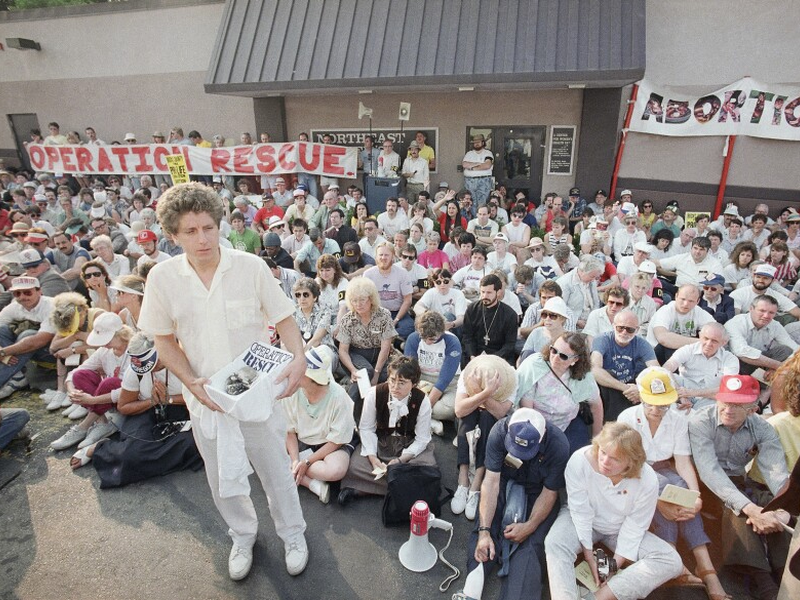
Political Hermeneutics: The Argument from Silence, Part 1

If the debate over Operation Rescue has proven anything, it has proven that there is absolutely no consensus among evangelicals in general, or among "reconstructionists" in particular, about how to use the Bible to judge political actions and movements. Each side of the debate claims biblical authority for its position,…

by Peter LeithartFebruary 13, 1990
49980-nicolas_poussin_-_the_judgment_of_solomon_-_wga18330-800w-tn
Biblical Studies

Advice From a Sojourner, Part 4

Two things I asked of Thee, Do not refuse me before I die: Keep deception and words of falsehood far from me, Give me neither poverty nor riches, Feed me with the food that it my portion, Lest I be full and deny Thee, And say, "Who is the LORD?"…

by James B. JordanFebruary 2, 1990
image-2
Biblical Horizons

Foucault’s Pendulum

Umberto Eco’s "The Name of the Rose" was certainly one of the best literary works of the past decade, though the film version hardly measured up to it. Now Eco has given us a new novel, "Foucault’s Pendulum." Like Rose, Foucault’s Pendulum reflects on the limitations of human knowledge, and…

by James B. JordanJanuary 26, 1990
tanner-mardis-xuxghzhibn4-unsplash-1-2
Biblical Studies

What Is “Interpretive Maximalism”?

From time to time people ask me about "interpretive maximalism." They want to know what it is, and sometimes want to know if it represents some departure from the Reformed grammatico-historical, Biblico-theological approach to the Bible. I have something of a problem with these questions, because "interpretive maximalism" is not…

by James B. JordanJanuary 26, 1990

Showing page 305 of 309

See all

Showing page 8 of 43

See all

Philosophy On Trial

Speech exists that we may "lovingly create names," writes Eugen Rosenstock-Huessy ( In the Cross of Reality , 149). "Speaking is always courting" (149). Courtrooms exist for those times when speech falters. In a courtroom, speech turns from courtship to dispute and this setting changes the character of speech: "In…

December 1, 2017

Coriolanus and Christ

Jay Zysk's Shadow and Substance is a recent contribution to a growing literature linking early modern theology with early modern drama. Zysk focuses on the ways Reformation disputes about the Eucharist play into plays, how Eucharistic semiotics shapes understandings of bodies and signs, flesh and spirit, letter and figure, words…

December 1, 2017

Faith, Love, Marriage

For Luther, faith isn't mere assent to truth, nor even confidence and trust in a distant savior. As David Fink puts it, "Faith . . . becomes the unitive force," or, in Luther's words, it "takes hold of Christ and has Him present, enclosing Him as the ring encloses a…

December 1, 2017

Jerome's Perspective on Paul

In his analysis of Luther's treatment of Galatians (in Reformation Readings of Paul ), David Fink gives a brief overview of pre-Reformation interpretations of the letter. Jerome said that the letter "is concerned especially with establishing the 'cessation of the old Law and the introduction of the new Law.'" Jerome…

December 1, 2017

The True and the Made

Vico's claim that verum et factum convertuntur , "the true and the made are convertible," has been taken as a sign of the foundational atheism of modernity. Benedict XVI sees Vico's claim as a secularization, a turn from the uncreated truth that is God to constructed human things. As Robert…

December 1, 2017

The Faith of Liberalism

"Liberals and communists," writes Eugen Rosenstock-Huessy ( In the Cross of Reality ), "have in common that they wish to make do without church and dogma, and indeed without faith. . . . reason is enough, for we can say what we think" (141). Both retain the term "believe," but…

December 1, 2017

Showing page 118 of 2212

Browse by Category

In Medias Res

Your weekly digest for all things Theopolis.

Donate

Theopolis is nearly 100% donor-supported. Consider joining us on our mission.