Theopolis Logo

Writing

Explore our collection of theological essays, biblical studies, and reflections on faith and culture.

See all
trnava-university-beeyeib-am8-unsplash
Biblical Chronology

Meredith G. Kline Strikes Back, Part 2

In our first essay we looked at Kline’s flawed exegesis of Genesis 2:5 as it relates to Day 3 of creation. Now we turn to Kline’s new argument against a chronological reading of Genesis 1, as found, again, in "Space and Time in the Genesis Cosmogony," Perspectives on Science and…

by James B. JordanMarch 29, 1997
30211-bathsheba-800w-tn
Hermeneutics

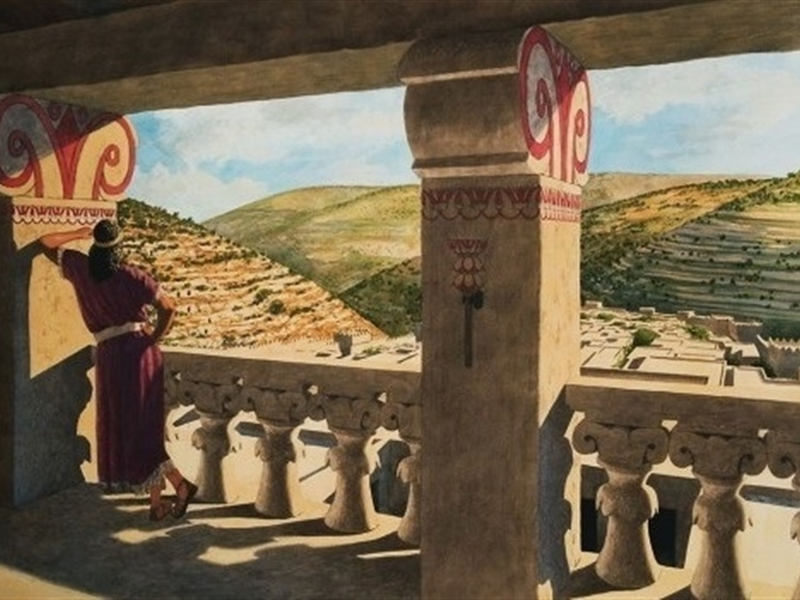
Bathsheba: The Real Story

One of the advantages of paying very close attention to the details in the Bible, especially chronological and genealogical details, is that they can shed light on situations that don’t seem to make much sense apart from them. One such situation is that of Bathsheba. It appears that Bathsheba willingly…

by James B. JordanMarch 28, 1997
jonathan-cooper-ygxq7hfdjzq-unsplash
Church Calendar

Is the Church Year Biblical? | A Parking Lot Parable

Once upon a time, Jeff Meyers and Tony Rollins–old friends who had not seen each other for a few years–met in the parking lot of a neighborhood church. They were dropping off their pre-school children at the church for Mother’s Day Out. They were such conscientious and helpful fathers. As…

by Jeff MeyersMarch 20, 1997
annie-spratt-upxf6to3fea-unsplash
Daniel

The Allegory of Susanna

Years ago, when I was at the briefly-existing Geneva Divinity School, I taught a course in the Apocrypha. One thing that struck me at that time is that two of the stories are almost certainly religious allegories (as well as moral tales): Judith and Susanna. Since "Susanna" means "Lily," this…

by James B. JordanFebruary 28, 1997
serafima-lazarenko-_ivuwprfczi-unsplash
Biblical Horizons

A Blossom of Yahweh’s Field

Peter’s essay inspires me to write up some similar thoughts about the flower of the field. Rightly does Peter associate the almond with Yahweh’s garden, because the Garden of Eden is symbolically positioned as parallel to the Holy Place of the Tabernacle and Temple. To wit: Since Aaron’s rod blossomed…

by James B. JordanFebruary 28, 1997
trnava-university-beeyeib-am8-unsplash
Biblical Chronology

Meredith G. Kline Strikes Back, Part 1

We have had occasion to discuss the views of Meredith G. Kline previously in these newsletters, and now it is time to do so again. Kline teaches at Gordon-Conwell Theological Seminary and also at the Westminster Theological Seminaries (Philadelphia and San Diego). He is the author of some interesting insights…

by James B. JordanFebruary 28, 1997

Showing page 259 of 309

See all

Showing page 8 of 43

See all
History

Eschatological self

Jerrold Seigel suggests that Locke’s self has “three different aspects”: We are selves to others “by virtue of what they know about our mental and moral life”; we are “selves to ourselves, but incompletely so, through the imperfect consciousness we have of our lives and deeds in the here and…

August 15, 2006
Science

Interior Senses

Murphy goes into admiring detail describing Thomas’s theory of interior senses in higher animals. Apart from its purely historical interest and the anticipations of later scientific theories, Thomas’s discussion has philosophical and theological interest in its own right. He claims, for instance, that there are a number of interior senses…

August 14, 2006
Science

Dueling Theodicies

Robert Young claims that the controversy over Darwinism in the 19th century was not so much a religion-v.-science controversy as a duel between competing theodicies. At one level, he argues, “the protagonists in the debate were in fundamental agreement. They were fighting over the best ways of rationalizing the same…

August 14, 2006
Philosophy

Mind-Body and Energy

Murphy offers an amusing discussion of the question, Assuming a Cartesian dualism of mind and body, how can the mind cause a physical object like the body to move? If one assumes that physicists are correct that physical energy can be transferred to a physical system, it has to arise…

August 14, 2006
Theology

Effects of dualism

Murphy makes this interesting comment, which she admits is an oversimplification: “the adoption of a dualist anthropology in the early centuries of the church was largely responsible for changing Christians’ conception of what Christianity is basically all about. I am suggesting that original Christianity is better understood in socio-political terms…

August 14, 2006
Theology

Physicalism and the Bible

In her Bodies and Souls, or Spirited Bodies? (Cambridge, 2006), Nancey Murphy argues for a non-reductionist version of physicalism on the question of the “body-soul” problem: “This is the view that humans are composed of only one ‘part,’ a physical body.” She spends a bit over six pages near the…

August 14, 2006

Showing page 1810 of 2212

Browse by Category

In Medias Res

Your weekly digest for all things Theopolis.

Donate

Theopolis is nearly 100% donor-supported. Consider joining us on our mission.