Theopolis Logo

Writing

Explore our collection of theological essays, biblical studies, and reflections on faith and culture.

See all
tanner-mardis-xuxghzhibn4-unsplash-1-2
Biblical Studies

Tweets-turned-Notes on the Bible’s Chronology

Summary In what follows, I will consider the “year-stamps” employed in Scripture, i.e., statements of the form, “Such-and-such an event took place in the Xth year of Y.” In the process, I will suggest some ways in which the Biblical narrative might relate to events in the extra-Biblical world, though…

by James BejonJuly 16, 2019
durer-prodigal-son-2
Luke

Perspectives on the Prodigal, (Part 2)

In the first essay on the parable of the Prodigal Son, I suggested that the problems commentators and others encounter in interpreting Jesus three-part parable are not accidental. These are not just problems in our ignorance of cultural background. They are intentional features of the stories —stories designed to poke…

by Ralph Allan SmithJuly 11, 2019
durer-prodigal-son-2
Luke

Perspectives on the Prodigal, (Part 1)

The story of the Prodigal Son is perhaps the most well-known story in the Bible. As others have observed, it may also be one of the most misunderstood. In two short essays, I will point out features of this story that are commonly neglected, aspects of Jesus’ parable that might…

by Ralph Allan SmithJuly 9, 2019
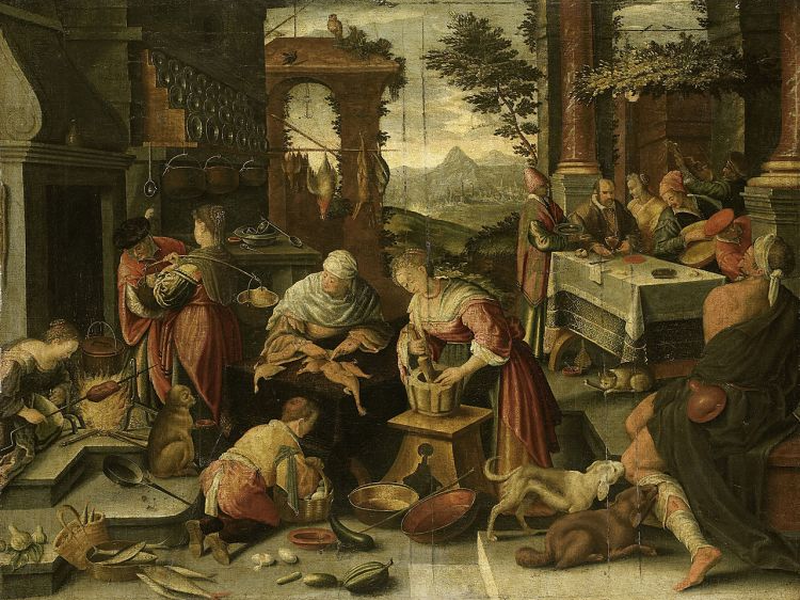
de-rijke-man-en-de-arme-lazarus-by-jacopo-da-ponte-16th-century
Luke

Lazarus and the Rich Man

The parable of Lazarus and the nameless rich man is not an independent story. It is part of a long context that begins in Luke 15:1, where Jesus is eating with tax collectors and sinners and the scribes and Pharisees grumble. In response to their hardheartedness, Jesus tells a three-part…

by Ralph Allan SmithJuly 4, 2019
aaron-burden-uynrnfdkjwg-unsplash
Luke

Everybody has Dropsy - Luke 14:1-24

The Bible is written so that even when a reader cannot pick up on what might be deeper or more detailed aspects of a text, there is virtually always a message to be heard. In the ancient world, where the “reader” of Scripture would likely be a church official facing…

by Ralph Allan SmithJuly 2, 2019
communion
Biblical Theology

Fruit Trees and Grain Plants

The distinction between garden (or vineyard) and field begins in Genesis 2. This relates to the ordering of the formless world. Plants of the field are contrasted with the garden planted by God in Genesis 2:5&8. Later on, under the Old Covenant the Israelites will be required to keep their…

by James B. JordanJune 27, 2019

Showing page 77 of 309

See all

Showing page 8 of 43

See all
Theology

Metaphysical Ascesis

Sacra doctrina, for Aquinas, involves the stripping of idols. So says Fergus Kerr: “Step by step, once we learn to read the text in this way, one idolatrous temptation after another is stripped away. The apophatic theology is designed to liberate us of the pictures of God that only too…

May 27, 2004
Theology

Derrida and Apophaticism

Denys Turner considers tradition and faith in the January 2004 issue of the IJST , but the more obvious subject is Derrida and the tradition of negative theology, particularly as expressed in Pseudo-Denys (no relation) and Eckhart. Turner deftly disposes of Derrida’s dictum that ” tout autre est tout autre…

May 26, 2004
Theology

Christ as Art

Robert Jenson continues his series of essays on Christ as Culture in the January 2004 issue of IJST , arguing that “Christ is Art.” Here are a few of the highlights: 1) Jenson defines art as experimentation with possible worlds. One of his examples is Mondrian: “Mondrian and his allies,…

May 26, 2004

Coetzee on the Classics

J. M. Coetzee, the South African novelist who won the Nobel Prize for literature last year, offers an intriguing exchange concerning the classics and faith in his novel, Elizabeth Costello (I can’t read that without thinking “Elvis.”) Costello is a highly successful novelist now in her sixties who hits the…

May 25, 2004
Theology

Beauty

It would seem that non-Trinitarian ontologies cannot secure a notion of beauty, and this seems to be the case because of the tragic ontologies that dominate non-Christian thought. 1) Beauty is fittingness, a matter of harmonics. Thus, beauty requires that there be plurality. Need at least two for things to…

May 25, 2004

Exhortation, Ascension Sunday, 2004

Thursday was Ascension Day. It is celebrated to mark Jesus’ ascent to heaven that occurred forty days after His death and resurrection at the time of Passover. Though Ascension Day is rarely emphasized in the church calendar, it is essential to the whole of Jesus?Elife and ministry and to the…

May 23, 2004

Showing page 2087 of 2212

Browse by Category

In Medias Res

Your weekly digest for all things Theopolis.

Donate

Theopolis is nearly 100% donor-supported. Consider joining us on our mission.