Theopolis Logo

Writing

Explore our collection of theological essays, biblical studies, and reflections on faith and culture.

See all
aaron-burden-h8s0pf2rcqs-unsplash
Galatians

The Restoration of the Galatians

While controversies over the writings of Paul continue in various corners of the intellectual globe, the word of God given through Paul and his scribe and all of the church’s interpreters and translators over the last two millennia is still readily available to the lofty and the lowly. Paul, as…

by Grace LangnessMarch 25, 2013

kiwihug-l4gw27xzn1i-unsplash
Deuteronomy

Law and History: How to Read the Law of Moses (Part 2)

The second in a series of studies in Deuteronomy. Deuteronomy 22:30: A man shall not take his father’s wife, and shall not uncover his father’s wing (Hebrew: kanaf ). There are a number of unusual features in this law that mark it out from the previous context, indicating that it…

by Ralph Allan SmithMarch 20, 2013
200403-moss-pilate-tease_pncfq5
History

Victimhood and the Gospel

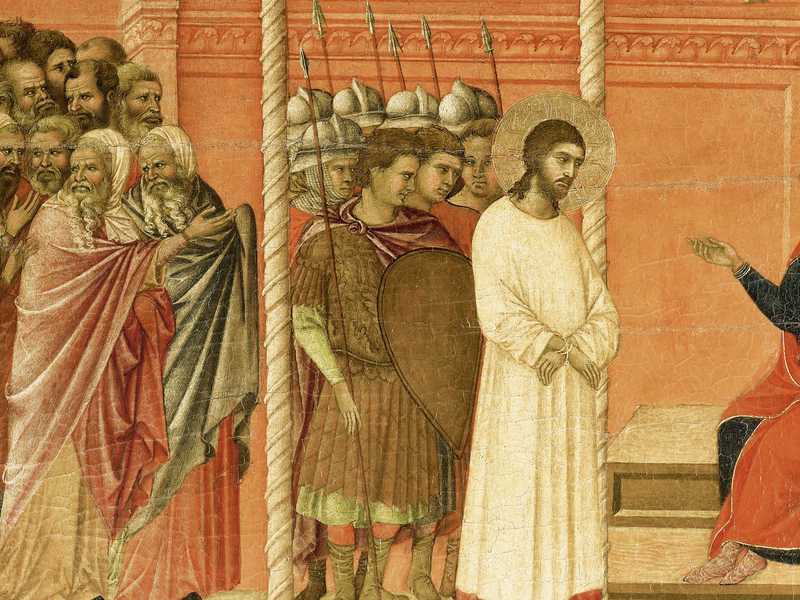
The texts of Christianity have been slowly at work, under the power of the Holy Spirit for 2000 years now. If we could be magically transported back into the world of two millennia ago, modern Americans would be shocked at the cruelty of that world. There was no concern for…

by Richard BledsoeMarch 18, 2013
aaron-burden-1ebsmyrau-s-unsplash
Luke

The Dysfunctional Family of the Gadarene Madman

The Story of the Gadarene Madman is told in all three synoptic Gospels (Matthew 8:28-34, Mark 5:1-20, Luke 8:26-37). Jesus ventures into a Gentile area when He passes over the Sea of Galilee. Upon disembarking from his boat, he is immediately met by a demon-possessed madman. Upon meeting Jesus, he…

by Richard BledsoeMarch 13, 2013
aaron-burden-1ebsmyrau-s-unsplash
Deuteronomy

Law and History: How to Read the Law of Moses

Part 1 of a multi-part series of studies on Deuteronomy 22:30-23:8. Eric Auerbach, in his classic work on Western literature, devotes his first chapter to contrasting Homer with the Bible. Of Homer, he writes of the “need of Homeric style to leave nothing which it mentions half in darkness and…

by Ralph Allan SmithMarch 12, 2013
markus-winkler-aid-xyrtlec-unsplash
Theopolis News

James Jordan in Korea, Japan

Trinity House Fellow James B. Jordan will be a speaker at an International Conference on Biblical Symbolism that will be held in Seoul on Monday, May 27 in 2013. He will address "The Importance of Biblical Symbolism and Symbolic Interpretation of the Bible." The conference will have three other speakers…

by Peter LeithartMarch 9, 2013

Showing page 197 of 309

See all

Showing page 8 of 43

See all

They Knew God

Natural law arguments often conclude that every human being can know, without the help of revelation, that there is some deity, an ultimate reality, an absolute. Paul says that human beings know “about God” from creation, but also that they “knew God ” (Romans 1:19, 21)—that is, from creation they…

January 21, 2014

Apocalyptic Politics

My latest First Things column sparked some reflections on apocalyptic politics from the Economist’s Erasmus columnist. He moves my observations about apocalyptic philosophy to apocalyptic politics. It comes up in all sorts of places. “Iran’s former president, Mahmoud Ahmadinejad, seemed obsessed with eschatology to a degree that irritated the country’s…

January 21, 2014
Uncategorized

Bashing Twitter’s Bashers

Roger Cohen is tired of Twitter bashers: “It’s not easy, being of a certain generation, to avoid the dinner conversation that veers into a lament about the short attention spans, constant device distraction, sad superficiality and online exhibitionism of a younger generation geared to life in 140 characters or less.…

January 21, 2014
Uncategorized

Charismatic work

“Work is charismatic,” writes Craig Keen in After Crucifixion (80-1). Keen elaborates in a beautiful passage: “What we are given to work upon precedes us, a gift sent our way the first five days of creation, the days when the Spirit hovered over the face of the waters, before our…

January 21, 2014
Uncategorized

Progress(es)

Progress, Eugen Rosenstock-Huessy points out ( Christian Future ), was originally a plural term. “ Les progres ” was Condorcet’s phrase. What he had in mind were improvements, new gadgets and machines and gizmos. The singular form of the term came from early Christianity and referred to the spiritual improvement…

January 21, 2014
Uncategorized

Science and Society

Sciences today often occupy ruts, separated from each other, each as incomprehensible to non-specialists as languages were at the tower of Babel, and separated too from the larger currents of culture. But it is a myth, Rosenstock-Huessy says ( Christian Future ), to believe that “sciences can advance without regard…

January 21, 2014

Showing page 702 of 2212

Browse by Category

In Medias Res

Your weekly digest for all things Theopolis.

Donate

Theopolis is nearly 100% donor-supported. Consider joining us on our mission.