Theopolis Logo

Writing

Explore our collection of theological essays, biblical studies, and reflections on faith and culture.

See all
kelly-sikkema-aageorr0iqs-unsplash
Lent

Embrace Pessimism

Optimism is “an inclination to put the most favorable construction upon actions and events or to anticipate the best possible outcome.” 1 On the other hand, pessimism is “an inclination to emphasize adverse aspects, conditions, and possibilities or to expect the worst possible outcome.” We can see that optimism and…

by Bogumil JarmulakFebruary 21, 2024

michael-hamments-0vzptqdw2-i-unsplash-1
Biblical Theology

2 Trees of Eden & What They Mean: Knowledge of Good & Evil vs. Life

If we wish to understand the Tree of Life and the Tree of the Knowledge of Good and Evil, we must begin with seeing them as a part of the creational order. Trees, along with plants and seed-bearing things, come to life by the word of God as part of…

by Mark BriansFebruary 13, 2024
screenshot-2024-02-06-at-5-44-53-pm
Death

Training to Die

“I chant slips and irreversible disasters, wiltings, failures, scars, the little disappointments and the large, blue streaks down a world that wishes it was only suncolors.” Paul J. Pastor from Kintsugi Song I recently lost something very valuable. Something I’d had for years and used every day. But, it wasn’t…

by Mandi GerthFebruary 7, 2024
screenshot-2024-01-11-at-2-38-07-pm
Jonah

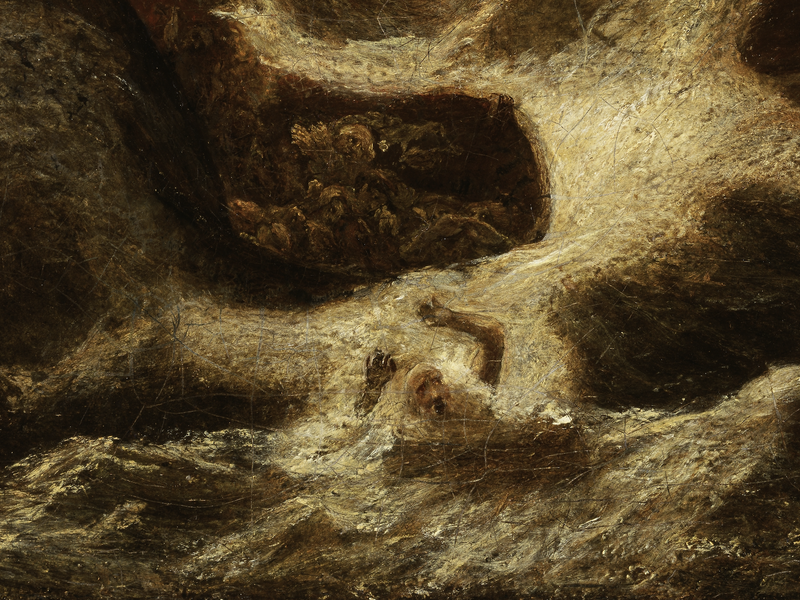
Jonah’s Backward Exodus

In his eponymous book, Jonah follows an exodus pattern. He travels through the waves and east of the city into the wilderness. On a first reading, it looks like another use of this common literary shape in the Old Testament: salvation through the waters of death and the wilderness of…

by Tim SuffieldJanuary 30, 2024
johann-siemens-epy0gbjzzzu-unsplash
Revelation

Where is the Tree of Knowledge in New Jerusalem?

“Everyone serves the good wine first, and when people have drunk freely, then the poor wine. But you have kept the good wine until now.” The unknowing master of ceremonies didn’t know how right he was. We see this play out in John’s apocalypse. The end is like the beginning,…

by David AppoldJanuary 23, 2024
sincerely-media-gf0ngcju5lw-unsplash
Luke

The Test of Adultery

Read in isolation, The Test of Adultery (Num 5:11-31) presents the reader with a seemingly bizarre ritual, conjuring up ideas bordering on the Salem Witch Trials. Beyond this, pressing questions linger—such as, “Why is the woman in particular singled out, while no test is provided for the husband of a…

by Ben LoveladyJanuary 17, 2024

Showing page 23 of 309

See all

Showing page 9 of 43

See all
History

What is “Christianization”?

Peter Brown asks this question in the first essay in Authority and the Sacred: Aspects of the Christianisation of the Roman World (Canto original series) and sensibly, following the lead of RA Markus, tries to let early Christians themselves answer. There isn’t a single answer. Early in the fourth century,…

June 12, 2009
History

Polis and Oikos

Milbank often makes this point, but it’s huge: “Likewise the household, the site of productive provision, was not an arena of ‘politics’ and dialectical disputation, but of unquestioned paternal control. The Christian gothic ‘merging’ of oikos and polis , which as Ruskin in particular grasped, opened the question of virtue…

June 11, 2009
History

Against Mediating Institutions

Mediating institutions - those formations and associations that stand between the individual and the state - are essential for freedom, we’re often told. I agree with the aim, but have questions about whether the notion of mediating institutions gets at it. The main objection is that the theory appears to…

June 11, 2009

Benediction

The Aaronic blessing promises the “face” and “countenance” of Yahweh, and places the name of God on the people of God (Numbers 6:27). Psalm 44 explains these words of blessing. Yahweh’s hand drove out nations and planted Israel in the land (v. 2) because He shone the “light of [His]…

June 9, 2009

Libido dominandi

David Potter confirms Augustine’s claim that the foreign wars of Rome were an extension of a lust for domination and honor: Roman “thinking [about the outside world] involved terms such as gloria , the glory that was won in battle, the ability to compel a foreign people to do something.…

June 9, 2009

Early Archaeology

David Stone Potter again: “Homeric archaeology did not begin with Calvert or Schliemann. It was a feature of life in the second and third centuries AD, when ancient monuments were recognized as such and attached to the world of the poems. There is no reason to doubt that the scepter…

June 9, 2009

Showing page 1371 of 2212

Browse by Category

In Medias Res

Your weekly digest for all things Theopolis.

Donate

Theopolis is nearly 100% donor-supported. Consider joining us on our mission.