Theopolis Logo

Writing

Explore our collection of theological essays, biblical studies, and reflections on faith and culture.

See all
screen-shot-2021-06-03-at-8-49-15-am
Ezra

Ezra: The Aaronic Rest-Giver

If you’re a preacher looking for good commentaries on Ezra, you’ll struggle. Certainly to find ones that wrestle in good detail with the text. And certainly ones that don’t cost you an arm and a leg. There’s a good bit more for Nehemiah, which is odd, as the two are…

by Rhys LavertyJune 8, 2021

christian-lue-k1e6994p3t8-unsplash
1 John

1 John in Community

Quick thought experiment: try to pretend you’ve never read 1 John before. Read 1:1-6. Go ahead; I’ll wait. Now, on to v. 7: “But if we walk in the light as He is in the light, we have fellowship with ______….” What word would you expect in that blank, based…

by Tim NicholsJune 1, 2021
noahs-ark-genesis
Hermeneutics

Spending Time with Noah: Reflections on Prepositions in the Flood Narrative

In my work as a Bible translator, I was recently checking our translation team’s draft of Genesis 8:8, which says of Noah (translating the Hebrew quite literally): And he sent out the dove from with him to see: had the waters lessened from upon the face of the ground? Part…

by Josh JensenMay 25, 2021
86758
Philosophy

Steven Weinberg Destroyed My Faith

Just in case a reader may not know Weinberg, he is a theoretical physicist and the winner of the Nobel prize in physics in 1979, as well as countless other prizes for his research. He is also a prolific, lucid, and captivating writer. If you want to read something on…

by Ralph Allan SmithMay 18, 2021
screen-shot-2020-09-17-at-9-11-45-am
Colossians

Reconciliation in Colossians 1:20

Colossians 1:15-20 is a famous passage in Paul’s epistles because it is a succinct and powerful poem. It appears even to have been a hymn. Given the uniquely Pauline language — “reconciliation” is a term used only by Paul — it should not seem odd to attribute the poem/hymn to…

by Ralph Allan SmithMay 11, 2021
stalker_still
Movies

Terror of Knowing Myself

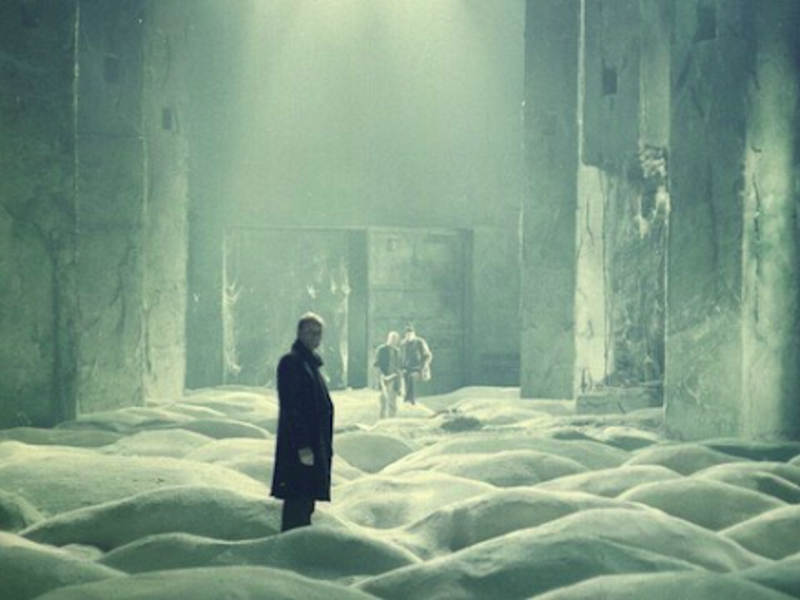
Stalker (1979) is a film by Andrei Tarkovsky based on Roadside Picnic by the Strugatsky brothers. It shows a day from the life of a stalker, a man who enters the so-called "Zone", an Alien landing site, where he leads people to a room that grants people’s innermost desires, which…

by Bogumil JarmulakMay 4, 2021

Showing page 55 of 309

See all

Showing page 9 of 43

See all
History

Between Burckhardt and Baynes

H.A. Drake’s Constantine and the Bishops: The Politics of Intolerance (Ancient Society and History) is a remarkable piece of work. One of his opening moves is to show how, despite clear and overt differences, both Burckhardt’s pure-political Constantine and Baynes’s sincere-Christian Constantine share common assumptions about politics and religion. He…

May 27, 2009

Blessed are the poor

Niebuhr has this nice harmonization of the Matthean and Lukan beatitude to the poor: “Both versions are necessary to catch the full flavor of the beatitude. For the Lukan version alone would make poverty a guarantee of virtue, particularly of the virtue of humility, which it is not. The Matthean…

May 27, 2009
Theology

Christian irony

Niebuhr claims that irony is inherent in the Christian view of history: Christianity’s “interpretation of the nature of evil in human history is consistently ironic. This consistency is achieved on the basis of the belief that the whole drama of human history is under the scrutiny of a divine judge…

May 27, 2009
History

American idealism

Niebuhr ( Irony ) quotes an unnamed European statesman who expresses gratitude for America’s help in resisting tyranny, but fear “that we might become an American ally.” America’s idealism doesn’t reassure him: “The idealism does indeed prevent America from a gross abuse of its power. But it might well accentuate…

May 26, 2009
History

Having and Being Empire

Charles Maier’s comparative study Among Empires: American Ascendancy and Its Predecessors reaches the waffly but accurate conclusion that the “United States reveals many, but not all - at least not yet - of the traits that distinguished empires.” Early on, he makes the helpful distinction between “being” and “having” an…

May 26, 2009
Uncategorized

Demoting the Emperor

Van Dam ( Roman Revolution of Constantine ) suggests that Eusebius’s Life was simultaneously a political tract celebrating the elevation of a Christian emperor and a theological apology promoting Eusebius’s Christological subordinationism. The afterlife of Eusebius’s treatise, though, put the emperors in their place. Rufinus’s translation/paraphrase of Eusebius’s Church History…

May 26, 2009

Showing page 1377 of 2212

Browse by Category

In Medias Res

Your weekly digest for all things Theopolis.

Donate

Theopolis is nearly 100% donor-supported. Consider joining us on our mission.